Und dann auf "Zum Home-Bildschirm [+]".

Stöbern
genialokal zum Startbildschirm hinzufügen
Installieren Sie die genialokal App auf Ihrem Startbildschirm für einen schnellen Zugriff und eine komfortable Nutzung.
Installieren Sie die genialokal App auf Ihrem Startbildschirm für einen schnellen Zugriff und eine komfortable Nutzung.
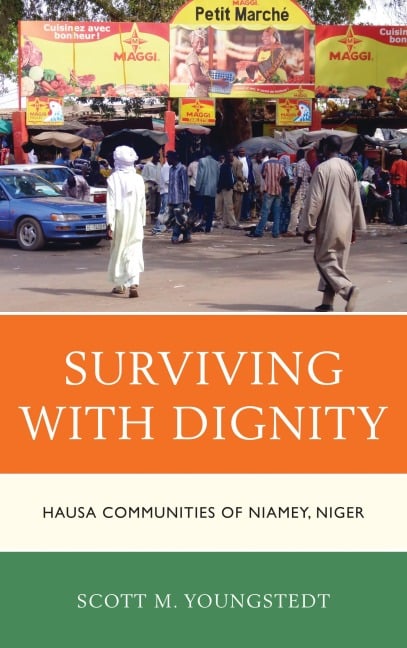
Surviving with Dignity explores three key interconnected themes-structural violence, suffering, and surviving with dignity-through examining the lived experiences of first and second-generation migrant Hausa men in Niamey over the past two decadesin the current neoliberal moment. Colonialism, state mismanagement, structural adjustment, and global neoliberalism have inflicted structural violence on Nigeriens by denying them human and particularly socioeconomic rights and relegating them to a status at-or very near-the bottom of UN Human Development Index in each year of the past decade. As a result of structural violence, most Hausa of Niamey suffer grinding and intractable poverty that has intensified over the past two decades. Suffering is a recurrent and expected condition; it is the normal condition.The central goal of the book is to explain the material (migration and informal economy work) and symbolic (meaning-making) strategies that Hausa individuals and communities have deployed in their struggles not only to literally survive in the face of economic austerity on the outer periphery of the global economy, but also to survive with dignity. Despite daunting challenges, many Hausa men find strength and patience in their humble devotion to Islam, cherish their vibrant sociability and gracious hospitality, deeply value extraordinary conversational virtuosity and knowledge, deploy humor in complex transcendent, defensive and self-critical ways, perpetuate a sense of hope and optimism for the future, articulate their own modernities, and strive relentlessly to feel connected to the modern world at large. Extreme poverty created by socioeconomic injustice constitutes an unacceptable assault on human dignity. Hausa men's remarkable strength does not negate the reality of the socioeconomic injustices they face. Their dire poverty in a world of plenty is unacceptable even when they handle it gracefully.
Scott M. Youngstedt earned his Ph.D. in Anthropology at UCLA in 1993, and is currently Professor of Anthropology at Saginaw Valley State University. His ethnographic research in Niger over the past 24 years is primarily concerned with exploring the ways by which migrant Hausa construct communities in diaspora, create modernities, and negotiate personal identities in the context of neoliberal globalization. His work has been published in Africa Insight, African Studies Quarterly, African Studies Review, and City and Society, among other places. Youngstedt currently serves as Vice President of the West African Research Association and is in line to become its President in November 2012.
Chapter 1: Introduction - Making Sense of the World
Chapter 2: Niamey Yesterday and Today
Chapter 3: Niamey and the Global Hausa Diaspora
Chapter 4: Striving for Survival and Meaning in Hausa Communities of Niamey
Chapter 5: Multiple Articulations of Modernity
Chapter 6: Growing Up Male in Niamey
Conclusion: Uncertain Futures
Dieses eBook wird im PDF-Format geliefert und ist mit einem Adobe Kopierschutz (DRM) versehen. Sie können dieses eBook mit allen Geräten lesen, die das PDF-Format und den Adobe Kopierschutz (DRM) unterstützen.
Zum Beispiel mit den folgenden Geräten:
• tolino Reader
Laden Sie das eBook direkt über den Reader-Shop auf dem tolino herunter oder übertragen Sie das eBook auf Ihren tolino mit einer kostenlosen Software wie beispielsweise Adobe Digital Editions.
• Sony Reader & andere eBook Reader
Laden Sie das eBook direkt über den Reader-Shop herunter oder übertragen Sie das eBook mit der kostenlosen Software Sony READER FOR PC/Mac oder Adobe Digital Editions auf ein Standard-Lesegeräte mit epub- und Adobe DRM-Unterstützung.
• Tablets & Smartphones
Möchten Sie dieses eBook auf Ihrem Smartphone oder Tablet lesen, finden Sie hier unsere kostenlose Lese-App für iPhone/iPad und Android Smartphone/Tablets.
• PC & Mac
Lesen Sie das eBook direkt nach dem Herunterladen mit einer kostenlosen Lesesoftware, beispielsweise Adobe Digital Editions, Sony READER FOR PC/Mac oder direkt über Ihre eBook-Bibliothek in Ihrem Konto unter „Meine eBooks“ - „online lesen“.
Schalten Sie das eBook mit Ihrer persönlichen Adobe ID auf bis zu sechs Geräten gleichzeitig frei.
Bitte beachten Sie, dass die Kindle-Geräte das Format nicht unterstützen und dieses eBook somit nicht auf Kindle-Geräten lesbar ist.