Und dann auf "Zum Home-Bildschirm [+]".

Stöbern
genialokal zum Startbildschirm hinzufügen
Installieren Sie die genialokal App auf Ihrem Startbildschirm für einen schnellen Zugriff und eine komfortable Nutzung.
Installieren Sie die genialokal App auf Ihrem Startbildschirm für einen schnellen Zugriff und eine komfortable Nutzung.
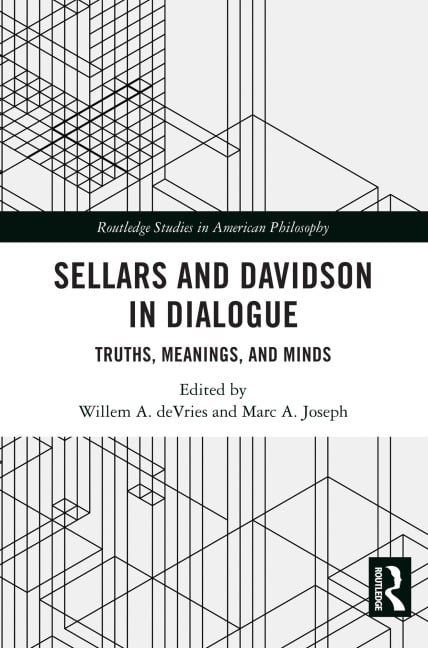
Wilfrid Sellars and Donald Davidson were two of the most influential American philosophers of the 20th century. This volume explores the deep similarities and differences between these two philosophers. Both Sellars and Davidson worked through the mid-to-late 20th-century re-evaluation of the empiricist inheritance that shaped what became analytic philosophy, and both are critical of key elements of that picture. In the broadest terms, both philosophers challenge the solipsistic, mentalistic conception of knowledge and meaning that informs the tradition and set in its place systems of interrelated views that prioritize a holistic and social conception of mind, action, and language. At the same time, there are several differences in method and philosophical semantics that divide Sellars and Davidson. The chapters in this volume address the deep relations of Sellars' and Davidson's views on mind, language, and knowledge. They demonstrate how, despite coming from different assumptions and methodologies, Sellars and Davidson converge on a view that essentially erases the philosophy of language as a separate discipline and embeds it in the philosophy of action. Sellars and Davidson in Dialogue will appeal to scholars and advanced students interested in the history of analytic philosophy, epistemology, philosophy of language, and philosophy of mind.
Willem A. deVries is Professor Emeritus at the University of New Hampshire. He works in the philosophy of mind and history of philosophy, especially Hegel and Sellars. He has published five books and numerous articles, and co-edits the Routledge Studies in American Philosophy. Marc A. Joseph is Professor of Philosophy at the University of Central Missouri and Professor Emeritus of Philosophy at Mills College, Oakland, CA. He is the author of Donald Davidson (McGill-Queens/Routledge, 2004) and the editor of a revised translation and critical edition of Wittgenstein's Tractatus Logico-Philosophicus (2014).
Introduction 1. Sellars, Davidson, Meaning, and Rules 2. Sellars and Davidson on Meaning-Matching 3. Does a Tarskian Theory of Truth offer a Theory of Meaning? A Sellarsian-Type Evaluation and Critique of Donald Davidson's Truth-Conditional Semantics 4. Who Needs You? Sellars and Davidson on the Social Character of Thought and Meaning 5. Is the Mind-World Relation a Semantic Relationship? Sellars and Davidson on the Problem of Access 6. Shadows in the Space of Reasons: Davidson and Sellars on Two Varieties of Knowledge 7. Davidson and Sellars: Self-knowledge without Introspection 8. Psychological Holism and Psychological Nominalism 9. Davidson and Sellars: Ontology and Regulatives 10. Davidson, Sellars, and the Problem of Predication 11. Why Triangulation Needs Picturing (and Conversely): Towards a New Pragmatist Realism 12. Davidson and Sellars on Animal Minds: Rationality and Normativity 13. Can Humans Think and Reason? A Divinely Inspired Response to The Problem of Animal Rationality 14. Sellars and Davidson on Expressivism and the Quest for Moral Objectivity
Dieses eBook wird im PDF-Format geliefert und ist mit einem Adobe Kopierschutz (DRM) versehen. Sie können dieses eBook mit allen Geräten lesen, die das PDF-Format und den Adobe Kopierschutz (DRM) unterstützen.
Zum Beispiel mit den folgenden Geräten:
• tolino Reader
Laden Sie das eBook direkt über den Reader-Shop auf dem tolino herunter oder übertragen Sie das eBook auf Ihren tolino mit einer kostenlosen Software wie beispielsweise Adobe Digital Editions.
• Sony Reader & andere eBook Reader
Laden Sie das eBook direkt über den Reader-Shop herunter oder übertragen Sie das eBook mit der kostenlosen Software Sony READER FOR PC/Mac oder Adobe Digital Editions auf ein Standard-Lesegeräte mit epub- und Adobe DRM-Unterstützung.
• Tablets & Smartphones
Möchten Sie dieses eBook auf Ihrem Smartphone oder Tablet lesen, finden Sie hier unsere kostenlose Lese-App für iPhone/iPad und Android Smartphone/Tablets.
• PC & Mac
Lesen Sie das eBook direkt nach dem Herunterladen mit einer kostenlosen Lesesoftware, beispielsweise Adobe Digital Editions, Sony READER FOR PC/Mac oder direkt über Ihre eBook-Bibliothek in Ihrem Konto unter „Meine eBooks“ - „online lesen“.
Schalten Sie das eBook mit Ihrer persönlichen Adobe ID auf bis zu sechs Geräten gleichzeitig frei.
Bitte beachten Sie, dass die Kindle-Geräte das Format nicht unterstützen und dieses eBook somit nicht auf Kindle-Geräten lesbar ist.