
Stöbern
genialokal zum Startbildschirm hinzufügen
Installieren Sie die genialokal App auf Ihrem Startbildschirm für einen schnellen Zugriff und eine komfortable Nutzung.
Installieren Sie die genialokal App auf Ihrem Startbildschirm für einen schnellen Zugriff und eine komfortable Nutzung.
Tippen Sie einfach auf Teilen:
 Und dann auf "Zum Home-Bildschirm [+]".
Bei genialokal.de kaufen Sie online bei Ihrer lokalen, inhabergeführten Buchhandlung!
Ihr gewünschter Artikel ist in 0 Buchhandlungen vorrätig - wählen Sie hier eine Buchhandlung in Ihrer Nähe aus:

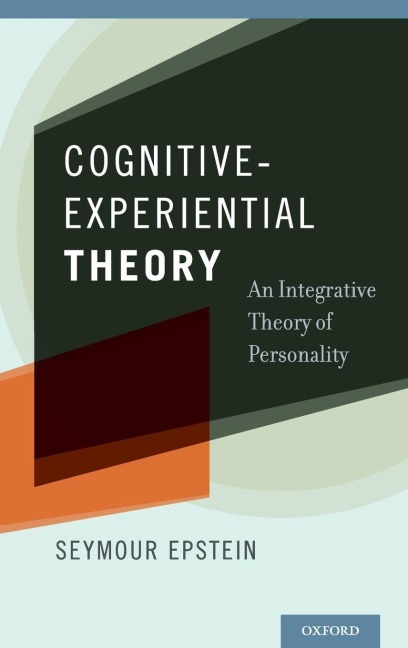
In this book, Epstein presents a new theory of personality, referred to as cognitive-experiential theory (CET), that is integrative of all other major personality theories.
Seymour Epstein is Professor Emeritus at the University of Massachusetts, where he has held a position since obtaining his Ph.D. degree in clinical psychology from the University of Wisconsin in 1953. His major interest has been in developing an integrative theory of personality, which he has set forth in the present book. Over the past several decades he has conducted an active research program on his theory that has received continuous support from the National Institute of Mental Health and extended support from a Research Scientist Award.
Acknowledgments
Introduction
Part I. The Theory
Chapter 1. The Basic Theory: Two Systems
Chapter 2. Evidence in Real Life of Two Modes of Information Processing
Chapter 3. The Content and Organization of the Experiential System
with an Emphasis on Basic Needs and Beliefs
Chapter 4. Motivation Further Considered and Emotions
Chapter 5. Interactions Between and Within the Two Systems: Conflict,
Compromises, Synergy, Repression, and Dissociation
Part 2. Development and Adjustment
Chapter 6. Development
Chapter 7. Coping and Defense Mechanisms
Chapter 8. The Maladaptive Behavior of Everyday Life
Chapter 9. Neurosis, Post-traumatic Stress Disorder, Psychosis, and Autism
Chapter 10. Depression
Part 3. Clinical Applications
Chapter 11. Psychotherapy 1: Constructive Thinking, Cognitive Therapy,
Behavior Therapy, Cognitive Behavior Therapy
Chapter 12. Psychotherapy 2: Psychoanalytic Therapy, Client-centered
Therapy, Gestalt Therapy, Psychosynthesis, Cognitive-
experiential Therapy, Relapse
Chapter 13. Psychotherapy 3: Communicating with the Experiential System
Communicating with the Experiential System Through the Use
of Fantasy
Part 4. Implications