Und dann auf "Zum Home-Bildschirm [+]".

Stöbern
genialokal zum Startbildschirm hinzufügen
Installieren Sie die genialokal App auf Ihrem Startbildschirm für einen schnellen Zugriff und eine komfortable Nutzung.
Installieren Sie die genialokal App auf Ihrem Startbildschirm für einen schnellen Zugriff und eine komfortable Nutzung.
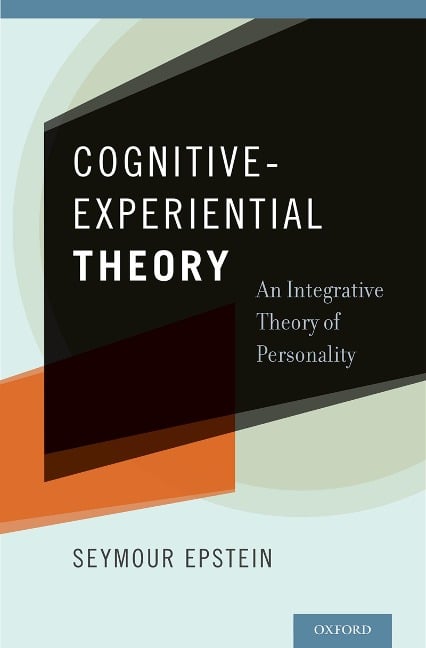
The book presents a new theory of personality, referred to as cognitive-experiential theory (CET). Currently there are a variety of personality theories that seem irreconcilable with each other. CET is integrative of all other major personality theories. This integration is accomplished by expanding upon current basic assumptions, including the assumption that all higher-order animals automatically construct an implicit theory of reality that is necessary for adapting to their environments and that is therefore inherently reinforcing. The system that accomplishes this is referred to as the experiential system, as it is an empirical system that adapts by automatically learning from experience. Because it operates without requiring conscious awareness it can be regarded as an adaptive unconscious system, however, this book reveals that the experiential system is not identical with an unconscious adaptive system, and is superior to that construct in several important respects.
Humans, of course, also uniquely operate with a conscious, reasoning system, referred to in CET as a rational system. This book demonstrates how these two systems operate in parallel and influence each other in important ways. For example, the influence of the experiential on the rational system can account for why the human species, despite its outstanding intelligence in solving impersonal problems, which are mainly in the domain of the rational system, often think and behave unintelligently and destructively in solving interpersonal problems, which are primarily in the domain of the experiential system. Yet, neither system is generally superior to the other, and the book discusses how each system is superior in uniquely important ways.
Seymour Epstein is Professor Emeritus at the University of Massachusetts, where he has held a position since obtaining his Ph.D. degree in clinical psychology from the University of Wisconsin in 1953. His major interest has been in developing an integrative theory of personality, which he has set forth in the present book. Over the past several decades he has conducted an active research program on his theory that has received continuous support from the National Institute of Mental Health and extended support from a Research Scientist Award.
Acknowledgments
Introduction
Part I. The Theory
Chapter 1. The Basic Theory: Two Systems
Chapter 2. Evidence in Real Life of Two Modes of Information Processing
Chapter 3. The Content and Organization of the Experiential System with an Emphasis on Basic Needs and Beliefs
Chapter 4. Motivation Further Considered and Emotions
Chapter 5. Interactions Between and Within the Two Systems: Conflict, Compromises, Synergy, Repression, and Dissociation
Part 2. Development and Adjustment
Chapter 6. Development
Chapter 7. Coping and Defense Mechanisms
Chapter 8. The Maladaptive Behavior of Everyday Life
Chapter 9. Neurosis, Post-traumatic Stress Disorder, Psychosis, and Autism
Chapter 10. Depression
Part 3. Clinical Applications
Chapter 11. Psychotherapy 1: Constructive Thinking, Cognitive Therapy, Behavior Therapy, Cognitive Behavior Therapy
Chapter 12. Psychotherapy 2: Psychoanalytic Therapy, Client-centered Therapy, Gestalt Therapy, Psychosynthesis, Cognitive- experiential Therapy, Relapse
Chapter 13. Psychotherapy 3: Communicating with the Experiential System Communicating with the Experiential System Through the Use of Fantasy
Part 4. Implications
Dieses eBook wird im PDF-Format geliefert und ist mit einem Adobe Kopierschutz (DRM) versehen. Sie können dieses eBook mit allen Geräten lesen, die das PDF-Format und den Adobe Kopierschutz (DRM) unterstützen.
Zum Beispiel mit den folgenden Geräten:
• tolino Reader
Laden Sie das eBook direkt über den Reader-Shop auf dem tolino herunter oder übertragen Sie das eBook auf Ihren tolino mit einer kostenlosen Software wie beispielsweise Adobe Digital Editions.
• Sony Reader & andere eBook Reader
Laden Sie das eBook direkt über den Reader-Shop herunter oder übertragen Sie das eBook mit der kostenlosen Software Sony READER FOR PC/Mac oder Adobe Digital Editions auf ein Standard-Lesegeräte mit epub- und Adobe DRM-Unterstützung.
• Tablets & Smartphones
Möchten Sie dieses eBook auf Ihrem Smartphone oder Tablet lesen, finden Sie hier unsere kostenlose Lese-App für iPhone/iPad und Android Smartphone/Tablets.
• PC & Mac
Lesen Sie das eBook direkt nach dem Herunterladen mit einer kostenlosen Lesesoftware, beispielsweise Adobe Digital Editions, Sony READER FOR PC/Mac oder direkt über Ihre eBook-Bibliothek in Ihrem Konto unter „Meine eBooks“ - „online lesen“.
Schalten Sie das eBook mit Ihrer persönlichen Adobe ID auf bis zu sechs Geräten gleichzeitig frei.
Bitte beachten Sie, dass die Kindle-Geräte das Format nicht unterstützen und dieses eBook somit nicht auf Kindle-Geräten lesbar ist.