Und dann auf "Zum Home-Bildschirm [+]".

Stöbern
genialokal zum Startbildschirm hinzufügen
Installieren Sie die genialokal App auf Ihrem Startbildschirm für einen schnellen Zugriff und eine komfortable Nutzung.
Installieren Sie die genialokal App auf Ihrem Startbildschirm für einen schnellen Zugriff und eine komfortable Nutzung.


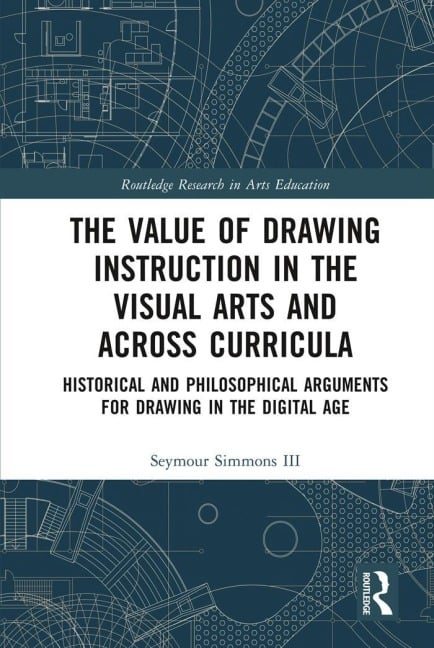
By applying philosophical and historical perspectives to drawing instruction, this volume demonstrates how diverse teaching methods contribute to cognitive and holistic development applicable within and beyond the visual arts. Offering a new perspective on the art and science of drawing, this text reveals the often-unrecognized benefits that drawing can have on the human mind, and thus argues for the importance of drawing instruction despite, and even due to contemporary digitalization. Given the predominance of visual information and digital media, visual thinking in and through drawing may be an essential skill for the future. As such, the book counters recent declines in drawing instruction to propose five Paradigms for teaching drawing - as design, as seeing, as experience and experiment, as expression, and as a visual language - with exemplary curricula for pre-K12 art and general education, pre-professional programs across the visual arts, and continuing education. With the aid of instructional examples, this volume dispels the misconception of drawing as a talent reserved for the artistically gifted and posits it as a teachable skill that can be learned by all. This text will be of primary interest to researchers, scholars, and doctoral students with interests in drawing theory and practice, cognition in the arts, positive psychology, creativity theory, as well as the philosophy and history of arts education. Aligning with contemporary trends such as Design Thinking, STEAM, and Graphicacy, the text will also have appeal to visual arts educators at all levels, and other educators involved in arts integration.
Seymour Simmons III is a Professor of Fine Arts Emeritus at Winthrop University, USA.
List of Figures Acknowledgments Preface: Toward a Renaissance in Drawing Education Chapter 1: Introduction: Making the Case for Learning to Draw in Changing Times Chapter 2: Beginnings: Drawing as an Innate Human Capacity and a Matter of the Mind Chapter 3: What's in a Name? The Uses of Philosophy in Drawing Education Chapter 4: Drawing by Design: Connecting Drawing and Design through Mathematics Chapter 5: Drawing as Seeing: Observational Drawing in Art, Science, and Medicine Chapter 6: Drawing as Experience and Experiment: Creativity in Art and Experimental Science Chapter 7: Drawing as Expression: Self-Knowledge, Healing, and Societal Concerns Chapter 8: Languages of Drawing: Semiotics and the Search for Fundamentals Chapter 9: Toward a Comprehensive 21st Century Philosophy of Drawing Education References Index
Dieser Titel wird im Fixed Layout-Format angeboten. Diese optimierte Darstellung für Bilder und Grafiken wie in Comics und Manga wird aktuell vom tolino webreader und der tolino app (Android) unterstützt. Bitte beachten Sie, dass Fixed Layout-eBooks keine Änderung der Texteinstellungen (wie z. B. Schriftart oder Schriftgröße) erlauben.