Und dann auf "Zum Home-Bildschirm [+]".

Stöbern
genialokal zum Startbildschirm hinzufügen
Installieren Sie die genialokal App auf Ihrem Startbildschirm für einen schnellen Zugriff und eine komfortable Nutzung.
Installieren Sie die genialokal App auf Ihrem Startbildschirm für einen schnellen Zugriff und eine komfortable Nutzung.
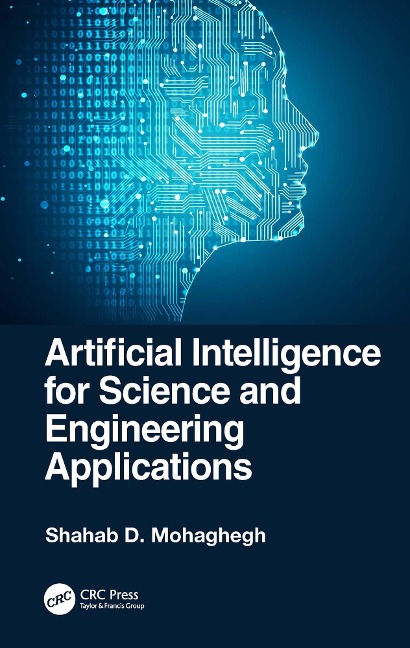
Artificial Intelligence (AI) is defined as the simulation of human intelligence through the mimicking of the human brain for analysis, modeling, and decision-making. Science and engineering problem solving requires modeling of physical phenomena, and humans approach the solution of scientific and engineering problems differently from other problems. Artificial Intelligence for Science and Engineering Applications addresses the unique differences in how AI should be developed and used in science and engineering. Through the inclusion of definitions and detailed examples, this book describes the actual and realistic requirements as well as what characteristics must be avoided for correct and successful science and engineering applications of AI. This book: - Offers a brief history of AI and covers science and engineering applications - Explores the modeling of physical phenomena using AI - Discusses explainable AI (XAI) applications - Covers the ethics of AI in science and engineering - Features real-world case studies Offering a probing view into the unique nature of scientific and engineering exploration, this book will be of interest to generalists and experts looking to expand their understanding of how AI can better tackle and advance technology and developments in scientific and engineering disciplines.
Shahab D. Mohaghegh, a pioneer in the application of Artificial Intelligence and Machine Learning in the Exploration and Production industry, is a Professor of Petroleum and Natural Gas Engineering at West Virginia University, USA, and the president and CEO of Intelligent Solutions, Inc. (ISI). He is the director of WVU-LEADS (Laboratory for Engineering Application of Data Science).
1. Definition of Artificial Intelligence and Machine Learning, 2. Brief History of Artificial Intelligence, 3. Science and Engineering Application of Artificial Intelligence, 4. Modeling Physics Using Artificial Intelligence, 5. Artificial Intelligence versus Traditional Statistics, 6. Ethics of Artificial Intelligence (AI-Ethics) in Science and Engineering, 7. Explainable Artificial Intelligence (XAI)
Dieses eBook wird im PDF-Format geliefert und ist mit einem Adobe Kopierschutz (DRM) versehen. Sie können dieses eBook mit allen Geräten lesen, die das PDF-Format und den Adobe Kopierschutz (DRM) unterstützen.
Zum Beispiel mit den folgenden Geräten:
• tolino Reader
Laden Sie das eBook direkt über den Reader-Shop auf dem tolino herunter oder übertragen Sie das eBook auf Ihren tolino mit einer kostenlosen Software wie beispielsweise Adobe Digital Editions.
• Sony Reader & andere eBook Reader
Laden Sie das eBook direkt über den Reader-Shop herunter oder übertragen Sie das eBook mit der kostenlosen Software Sony READER FOR PC/Mac oder Adobe Digital Editions auf ein Standard-Lesegeräte mit epub- und Adobe DRM-Unterstützung.
• Tablets & Smartphones
Möchten Sie dieses eBook auf Ihrem Smartphone oder Tablet lesen, finden Sie hier unsere kostenlose Lese-App für iPhone/iPad und Android Smartphone/Tablets.
• PC & Mac
Lesen Sie das eBook direkt nach dem Herunterladen mit einer kostenlosen Lesesoftware, beispielsweise Adobe Digital Editions, Sony READER FOR PC/Mac oder direkt über Ihre eBook-Bibliothek in Ihrem Konto unter „Meine eBooks“ - „online lesen“.
Schalten Sie das eBook mit Ihrer persönlichen Adobe ID auf bis zu sechs Geräten gleichzeitig frei.
Bitte beachten Sie, dass die Kindle-Geräte das Format nicht unterstützen und dieses eBook somit nicht auf Kindle-Geräten lesbar ist.