Und dann auf "Zum Home-Bildschirm [+]".

Stöbern
genialokal zum Startbildschirm hinzufügen
Installieren Sie die genialokal App auf Ihrem Startbildschirm für einen schnellen Zugriff und eine komfortable Nutzung.
Installieren Sie die genialokal App auf Ihrem Startbildschirm für einen schnellen Zugriff und eine komfortable Nutzung.


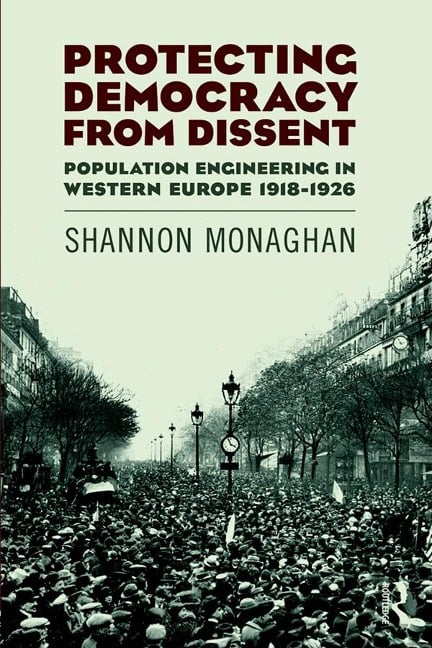
In the aftermath of the First World War, the victorious powers - more or less liberal democracies - argued that democracy would bring peace to Europe because this was the only effective way for legitimate states, with governments based on the consent of the governed, to be organized. What the victorious statesmen failed to foresee was how much conflict this postwar settlement would provoke, since it was far from clear exactly which people should qualify for the privilege of self-governance. It is well known that these conflicts played out dramatically and violently in eastern and southeastern Europe in the immediate postwar years. What is less well known is that the contest extended into the western European heartland of the victorious powers as well. There, the quest for a new conception of democracy - based on both liberalism and nationalism - led the victors to pursue liberal policies of population engineering with, paradoxically, the best of intentions: the preservation and stability of democracy itself. In an era in which people were becoming more involved in choosing their governments, governments were becoming more involved in choosing their people. While the victors sought to craft a more ethical - or at least more legalistic - form of population engineering than the often violent and ad hoc versions employed further east, the result nevertheless remained at odds with the ethical foundations of liberal democracy.
Shannon Monaghan is Preceptor in Expository Writing in the Harvard College Writing Program, Harvard University, USA.
Introduction Prologue: The New Europe Part I: The First World War and peoples as problems 1. Before the war 2. During the war 3. Working on peace Part II: Population engineering in the New Europe 4. Minority representation 5. The law and its limits 6. Belonging and the question of violence Conclusion Bibliography
Dieses eBook wird im PDF-Format geliefert und ist mit einem Adobe Kopierschutz (DRM) versehen. Sie können dieses eBook mit allen Geräten lesen, die das PDF-Format und den Adobe Kopierschutz (DRM) unterstützen.
Zum Beispiel mit den folgenden Geräten:
• tolino Reader
Laden Sie das eBook direkt über den Reader-Shop auf dem tolino herunter oder übertragen Sie das eBook auf Ihren tolino mit einer kostenlosen Software wie beispielsweise Adobe Digital Editions.
• Sony Reader & andere eBook Reader
Laden Sie das eBook direkt über den Reader-Shop herunter oder übertragen Sie das eBook mit der kostenlosen Software Sony READER FOR PC/Mac oder Adobe Digital Editions auf ein Standard-Lesegeräte mit epub- und Adobe DRM-Unterstützung.
• Tablets & Smartphones
Möchten Sie dieses eBook auf Ihrem Smartphone oder Tablet lesen, finden Sie hier unsere kostenlose Lese-App für iPhone/iPad und Android Smartphone/Tablets.
• PC & Mac
Lesen Sie das eBook direkt nach dem Herunterladen mit einer kostenlosen Lesesoftware, beispielsweise Adobe Digital Editions, Sony READER FOR PC/Mac oder direkt über Ihre eBook-Bibliothek in Ihrem Konto unter „Meine eBooks“ - „online lesen“.
Schalten Sie das eBook mit Ihrer persönlichen Adobe ID auf bis zu sechs Geräten gleichzeitig frei.
Bitte beachten Sie, dass die Kindle-Geräte das Format nicht unterstützen und dieses eBook somit nicht auf Kindle-Geräten lesbar ist.