Und dann auf "Zum Home-Bildschirm [+]".

Stöbern
genialokal zum Startbildschirm hinzufügen
Installieren Sie die genialokal App auf Ihrem Startbildschirm für einen schnellen Zugriff und eine komfortable Nutzung.
Installieren Sie die genialokal App auf Ihrem Startbildschirm für einen schnellen Zugriff und eine komfortable Nutzung.
How do conscious experience, subjectivity, and free will arise from the brain and the body? Even in the late 20th century, consciousness was considered to be beyond the reach of science. Now, understanding the neural mechanisms underlying consciousness is recognized as a key objective for 21st century science. The cognitive neuroscience of consciousness is a fundamentally multidisciplinary enterprise, involving powerful new combinations of functional brain imaging, computational modelling, theoretical innovation, and basic neurobiology. Its progress will be marked by new insights not only into the complex brain mechanisms underlying consciousness, but also by novel clinical approaches to a wide range of neurological and psychiatric disorders. These innovations are well represented by the contents of the present volume. A target article by Victor Lamme puts forward the contentious position that neural evidence should trump evidence from behaviour and introspection, in any theory of consciousness. This article and its several commentaries advance one of the fundamental debates in consciousness science, namely whether there exists non-reportable phenomenal consciousness, perhaps dependent on local rather than global neural processes. Other articles explore the wider terrain of the new science of consciousness. For example, Maniscalco and colleagues use theta-burst transcranial magnetic stimulation to selectively impair metacognitive awareness; Massimini and coworkers examine changes in functional connectivity during anesthesi, and Vanhaudenhuyse et al describe innovations in detecting residual awareness following traumatic brain injury. Together, then contents of this volume exemplify the `grand challenge of consciousness' in combining transformative questions about the human condition with a tractable programme of experimental and theoretical research.
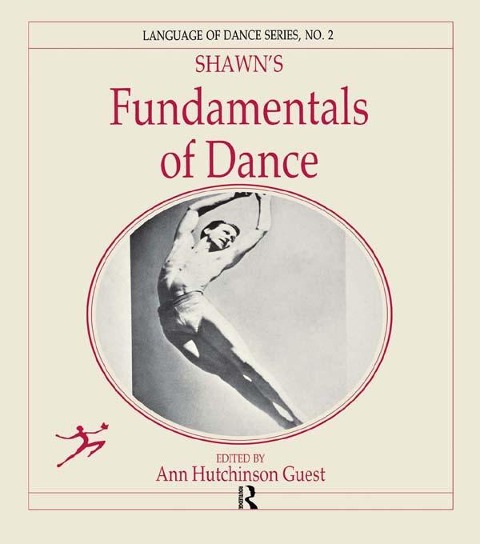
Edited by Guest, Anne Hutchinson
Study and Performance Notes; Chapter I General Stretching Set; Chapter II Figure Eight Swings; Chapter III Tension - Relaxation - Set One; Chapter IV Tension and Relaxation - Set Two; Chapter V Floor Set; chapter VI Three Jumps; chapter VII Walking, Running, Leaping; chapter VIII Long Adagio (Balance Exercise); Chapter IX Single Arm Swing and Development; Chapter X Three Delsarte Falls, Rising and Falling; Chapter XI Series of Successions;
Dieses eBook wird im PDF-Format geliefert und ist mit einem Adobe Kopierschutz (DRM) versehen. Sie können dieses eBook mit allen Geräten lesen, die das PDF-Format und den Adobe Kopierschutz (DRM) unterstützen.
Zum Beispiel mit den folgenden Geräten:
• tolino Reader
Laden Sie das eBook direkt über den Reader-Shop auf dem tolino herunter oder übertragen Sie das eBook auf Ihren tolino mit einer kostenlosen Software wie beispielsweise Adobe Digital Editions.
• Sony Reader & andere eBook Reader
Laden Sie das eBook direkt über den Reader-Shop herunter oder übertragen Sie das eBook mit der kostenlosen Software Sony READER FOR PC/Mac oder Adobe Digital Editions auf ein Standard-Lesegeräte mit epub- und Adobe DRM-Unterstützung.
• Tablets & Smartphones
Möchten Sie dieses eBook auf Ihrem Smartphone oder Tablet lesen, finden Sie hier unsere kostenlose Lese-App für iPhone/iPad und Android Smartphone/Tablets.
• PC & Mac
Lesen Sie das eBook direkt nach dem Herunterladen mit einer kostenlosen Lesesoftware, beispielsweise Adobe Digital Editions, Sony READER FOR PC/Mac oder direkt über Ihre eBook-Bibliothek in Ihrem Konto unter „Meine eBooks“ - „online lesen“.
Schalten Sie das eBook mit Ihrer persönlichen Adobe ID auf bis zu sechs Geräten gleichzeitig frei.
Bitte beachten Sie, dass die Kindle-Geräte das Format nicht unterstützen und dieses eBook somit nicht auf Kindle-Geräten lesbar ist.