Und dann auf "Zum Home-Bildschirm [+]".

Stöbern
genialokal zum Startbildschirm hinzufügen
Installieren Sie die genialokal App auf Ihrem Startbildschirm für einen schnellen Zugriff und eine komfortable Nutzung.
Installieren Sie die genialokal App auf Ihrem Startbildschirm für einen schnellen Zugriff und eine komfortable Nutzung.
Ihr gewünschter Artikel ist in 0 Buchhandlungen vorrätig - wählen Sie hier eine Buchhandlung in Ihrer Nähe aus:

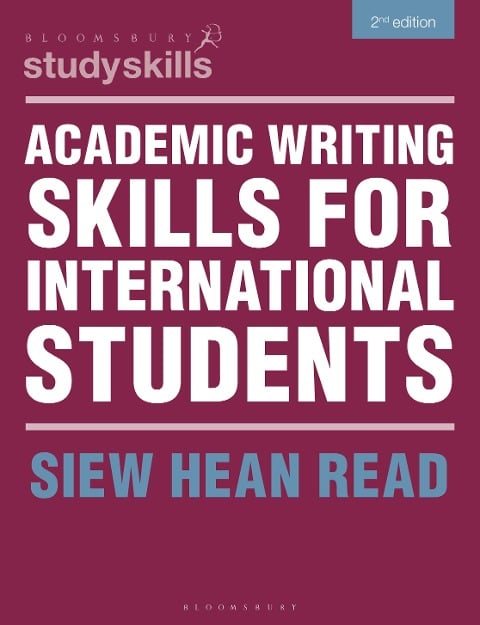
Are you a non-native English speaker studying or preparing to study at an English-language university? If so, this book is for you. This engaging guide equips students with the tools and confidence to respond effectively and appropriately to written assignments at university. It will help you to develop essential writing skills, such as structuring paragraphs and building an argument, and provides practical guidance on adhering to the conventions of academic writing. It guides the reader systematically through a series of text analyses which bring out key linguistic and rhetorical features, making complex textual issues manageable and understandable for learners of all abilities. Reorganised to allow for easier navigability and revised for greater accessibility, the new edition now includes: - An expanded introduction to show students how to use the book successfully - A writing checklist to review the key principles of skills covered in the book - A broader range of examples - More practical activities - More on plagiarism This is an ideal self-study aid for non-native English speakers, both on pre-sessional language courses and on degree programmes, who need to get to grips with the conventions of academic writing.
Siew Hean Read worked at the University of Auckland as an English language consultant and learning adviser, prior to her retirement.
Introduction PART I: ESSENTIAL FEATURES OF ACADEMIC WRITING Unit 1 Appropriate writing style Unit 2 Correct conventions for using sources Unit 3 Formal structure, organisation and layout Unit 4 Coherent flow of ideas Unit 5 Accurate use of language PART II: TYPES OF UNIVERSITY WRITTEN ASSIGNMENTS Unit 1: Essays Unit 2: Case studies Unit 3: Literature reviews Unit 4: Reports Unit 5: Research proposals PART III: THE WRITING PROCESS Unit 1: Planning your essay Unit 2: Organising your ideas Unit 3: Developing your essay PART IV: TECHNIQUES FOR DEVELOPING IDEAS Unit 1: Using examples Unit 2: Giving evidence Unit 3: Writing extended definitions Unit 4: Providing explanation PART V: PUTTING IT ALL TOGETHER Essay 1: Analysis Essay 2: Argument (thesis-led) Essay 3: Argument (discussion-led) Essay 4: Discussion Essay 5: Comparison and contrast (analysis) Essay 6: Comparison and contrast Appendix A: Answers to practice activities Appendix B: Language charts Appendix C: A glossary of grammatical terms and other words used in the book Index