Und dann auf "Zum Home-Bildschirm [+]".

Stöbern
genialokal zum Startbildschirm hinzufügen
Installieren Sie die genialokal App auf Ihrem Startbildschirm für einen schnellen Zugriff und eine komfortable Nutzung.
Installieren Sie die genialokal App auf Ihrem Startbildschirm für einen schnellen Zugriff und eine komfortable Nutzung.
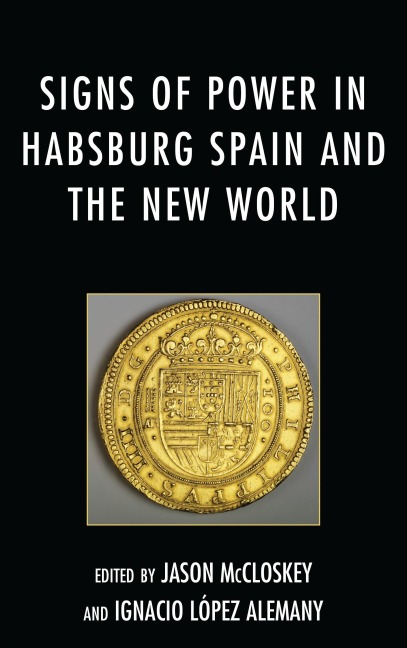
Signs of Power in Habsburg Spain and the New World explores the representation of political, economic, military, religious, and juridical power in texts and artifacts from early modern Spain and her American viceroyalties. In addition to analyzing the dynamics of power in written texts, chapters also examine pieces of material culture including coats of arms, coins, paintings and engravings. As the essays demonstrate, many of these objects work to transform the amorphous concept of power into a material reality with considerable symbolic dimensions subject to, and dependent on, interpretation. With its broad approach to the discourses of power, Signs of Power brings together studies of both canonical literary works as well as more obscure texts and objects. The position of the works studied with respect to the official center of power also varies. Whereas certain essays focus on the ways in which portrayals of power champion the aspirations of the Spanish Crown, other essays attend to voices of dissent that effectively call into question that authority.
Jason McCloskey is assistant professor of Spanish at Bucknell University. His research focuses on Renaissance artwork, classical mythology and the portrayal of exploration and piracy in early modern Hispanic poetry.
Ignacio López Alemany is assistant professor of Spanish at the University of North Carolina at Greensboro and editor of Calíope, Journal of the Society for the Renaissance and Baroque Hispanic Poetry.
Illustrations
Preface
Acknowledgments
Part I.Myths of Power
One - Titian, Philip II, and Pagan Iconography
Anne J. Cruz
Two - Visual Eroticism, Poetic Voyeurism: Ekphrasis and the Complexities of Patronage in Góngora's Fabula de Polifemo y Galatea
Lucia Binotti
Three - Hercules and the Statue Garden: Sansón Carrasco's Ekphrastic and Imperial Contests in Don Quijote II.14
Frederick A. de Armas
Four - The Legend of Marus Curtius Romanus as a Sign of auctoritas in Early Modern Spain
Ignacio López Alemany
Part II.Challenges for Power
Five - Coins, Value and Trust: The Problematic of Vellón in Seventeenth-Century Spanish Culture
Elvira Vilches
Six - Tampering with Signs of Power: Juan de Palafox, Historiography, and the Limits of Heraldry
John Slater
Seven - Antonio Pérez and the Power of Treason
Ana María G. Laguna
Eight - Ius gentium and Just War: The Problem of Representation in Inca Garcilaso's Royal Commentaries
José A. Cárdenas Bunsen
Nine - The Politics of Salvation in El Greco's Escorial Paintings and Cervantes's LaNumancia
E. C. Graf
Ten - Spain Succored by Religion: Titian and Lope de Vega's La Dragontea
Jason McCloskey
Bibliography
Index
About the Contributors
Dieses eBook wird im PDF-Format geliefert und ist mit einem Adobe Kopierschutz (DRM) versehen. Sie können dieses eBook mit allen Geräten lesen, die das PDF-Format und den Adobe Kopierschutz (DRM) unterstützen.
Zum Beispiel mit den folgenden Geräten:
• tolino Reader
Laden Sie das eBook direkt über den Reader-Shop auf dem tolino herunter oder übertragen Sie das eBook auf Ihren tolino mit einer kostenlosen Software wie beispielsweise Adobe Digital Editions.
• Sony Reader & andere eBook Reader
Laden Sie das eBook direkt über den Reader-Shop herunter oder übertragen Sie das eBook mit der kostenlosen Software Sony READER FOR PC/Mac oder Adobe Digital Editions auf ein Standard-Lesegeräte mit epub- und Adobe DRM-Unterstützung.
• Tablets & Smartphones
Möchten Sie dieses eBook auf Ihrem Smartphone oder Tablet lesen, finden Sie hier unsere kostenlose Lese-App für iPhone/iPad und Android Smartphone/Tablets.
• PC & Mac
Lesen Sie das eBook direkt nach dem Herunterladen mit einer kostenlosen Lesesoftware, beispielsweise Adobe Digital Editions, Sony READER FOR PC/Mac oder direkt über Ihre eBook-Bibliothek in Ihrem Konto unter „Meine eBooks“ - „online lesen“.
Schalten Sie das eBook mit Ihrer persönlichen Adobe ID auf bis zu sechs Geräten gleichzeitig frei.
Bitte beachten Sie, dass die Kindle-Geräte das Format nicht unterstützen und dieses eBook somit nicht auf Kindle-Geräten lesbar ist.