Und dann auf "Zum Home-Bildschirm [+]".

Stöbern
genialokal zum Startbildschirm hinzufügen
Installieren Sie die genialokal App auf Ihrem Startbildschirm für einen schnellen Zugriff und eine komfortable Nutzung.
Installieren Sie die genialokal App auf Ihrem Startbildschirm für einen schnellen Zugriff und eine komfortable Nutzung.
Ihr gewünschter Artikel ist in 0 Buchhandlungen vorrätig - wählen Sie hier eine Buchhandlung in Ihrer Nähe aus:

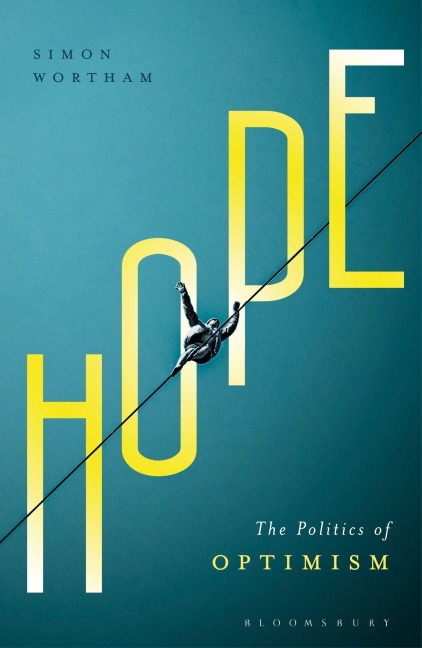
A colourful map of the current conflict between pessimism and optimism in Western politics and theory, Hope attempts to reveal both the deep history and contemporary necessity of political hopefulness.
Starting in the 17th century with Spinoza, Wortham tells the story of the various fallacies and insights of pessimism and optimism through the 18th century with the help of Kant and Voltaire through to the famously nihilistic writings of Nietzsche and the 20th century works of thinkers such as Benjamin, Arendt, Kristeva and Fanon (to name but a few). He explores the contemporary significance of ideas such as affirmation, sovereignty, violence, therapy, existentialism and, of course, the oft maligned notion of 'hopefulness' to create a politics of optimism which avoids the pitfalls of uncritical acceptance of the status quo or the newest political idea.
Short chapters written in an engaging narrative manner enable the reader to follow the story of political optimism over the last 4 centuries inspiring a new way of thinking about the transformative uses of hopefulness.
Simon Wortham is Professor of English and co-director of the London Graduate School at Kingston University London, UK.
Acknowledgements Hope against hope Twenty-two short essays on the politics of optimism Immanuel Kant, Choosing what is best Voltaire, Bien (tout est) Arthur Schopenhauer, Eating the other Benedict de Spinoza, Hope, faith and judgement Friedrich Nietzsche, Imperfect nihilism Maurice Blanchot, Hope and poetry Jacques Derrida, Yes, yes Emmanuel Levinas, Sociality and solitude Sigmund Freud, 'A time-consuming business' Melanie Klein, 'Therapeutic pessimism' in Kristeva's view Julia Kristeva, 'Psychoanalysis-a Counterdepressant' Walter Benjamin, 'Pessimism all along the line' Theodor Adorno, 'Hurrah-optimism' Hannah Arendt, 'The right to expect miracles' Slavoj Zizek, Hopeless courage (with Hegel and Badiou) Franz Kafka, 'Plenty of hope, an infinite amount of hope-but not for us' (re-reading Walter Benjamin) Jacques Derrida, Hegel, Bataille, negativity and affirmation Frantz Fanon, Recognition and conflict Hannah Arendt, Violence and power Étienne Balibar, Politics and psychoanalysis Hans Kelsen, Politics and the 'impolitical' Sigmund Freud, Super-ego politics index