Und dann auf "Zum Home-Bildschirm [+]".

Stöbern
genialokal zum Startbildschirm hinzufügen
Installieren Sie die genialokal App auf Ihrem Startbildschirm für einen schnellen Zugriff und eine komfortable Nutzung.
Installieren Sie die genialokal App auf Ihrem Startbildschirm für einen schnellen Zugriff und eine komfortable Nutzung.
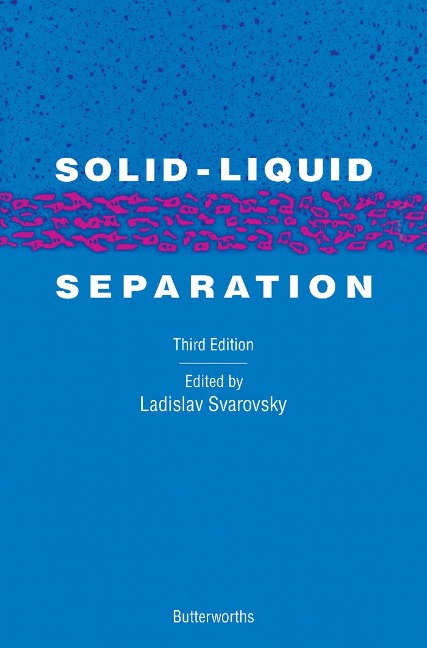
Solid-Liquid Separation, Third Edition reviews the equipment and principles involved in the separation of solids and liquids from a suspension. Some important aspects of solid-liquid separation such as washing, flotation, membrane separation, and magnetic separation are discussed. This book is comprised of 23 chapters and begins with an overview of solid-liquid separation processes and the principles involved, including flotation, gravity sedimentation, cake filtration, and deep bed filtration. The following chapters focus on the characterization of particles suspended in liquids; the efficiency of separation of particles from fluids; coagulation and flocculation; gravity thickening; and the operating characteristics, optimum design criteria, and applications of hydrocyclones. The reader is also introduced to various solid-liquid separation processes such as centrifugal sedimentation, screening, and filtration, along with the use of filter aids. Countercurrent washing of solids and problems associated with fine particle recycling are also considered. The final chapter is devoted to the thermodynamics of particle-fluid interaction. This monograph will be useful to chemical engineers and process engineers, particularly those in plant operation, plant design, or equipment testing and commissioning. It can also be used as a textbook for both undergraduate and postgraduate students.
1. Introduction to Solid-Liquid Separation 1.1. Solid-liquid Separation Processes 1.2. The Spectrum of Particle Size2. Characterization of Particles Suspended in Liquids 2.1. Introduction, the Reasons for Particle Characterization 2.2. Definitions of Particle Size 2.3. Types of Particle Size Distribution 2.4. Measures of Central Tendency 2.5. Presentation of Data 2.6. Sampling 2.7. Laboratory Measurement of Particle Size 2.8. On-line Measurement Techniques 2.9. Statistical Measurement Control Appendix 2.1 Appendix 2.2 References3. Efficiency of Separation of Particles from Fluids 3.1. Introduction 3.2. Basic Definitions and Mass Balance Equations 3.3. Basic Relationships between ET, G(x) and the Particle Size Distributions of the Products 3.4. Modifications of Efficiency Definitions for Applications with an Appreciable Underflow-to-throughput Ratio 3.5. The Use of Separators in Series and in Multiple Pass Systems References4. Coagulation and Flocculation Part I 4.1. Introduction 4.2. The Colloidal Model 4.3. Electro-kinetic Phenomena and the Zeta Potential 4.4. Practical Applications of the Zeta Potential 4.5. Flocculation by Polyelectrolytes 4.6. Other Considerations References Bibliography Orthokinetic Flocculation Part II Nomenclature 4.7. Introduction 4.8. Theory 4.9. Laboratory Testing 4.10. Practical Flocculators 4.11. Current Developments References5. Gravity Thickening Nomenclature 5.1. Introduction 5.2. The Sedimentation Concept 5.3. Factors Affecting Sedimentation 5.4. Thickener Design 5.5. Thickener Types 5.6. High Capacity Thickening Systems 5.7. Clarifier Types 5.8. Flocculation Feed Systems for Thickeners and Cones 5.9. Control Systems 5.10. Process Modeling References6. Hydrocyclones Nomenclature 6.1. Introduction and Description 6.2. Liquid Flow Patterns 6.3. Motion of Suspended Particles 6.4. Pressure Distribution within the Flow, Static Pressure Drop 6.5. Hydrocyclone Function, Design and Merits 6.6. Theories of Separation 6.7. Hydrocyclone Selection and Scale-up 6.8. Design Variations, other Design Features 6.9. Applications 6.10. Conclusions References7. Separation by Centrifugal Sedimentation Nomenclature 7.1. Introduction 7.2. Theoretical Performance Predictions 7.3. Equipment 7.4. Factors Affecting the Choice of Centrifugal Equipment 7.5. Recent Developments References8. Screening Nomenclature 8.1. Introduction 8.2. Screen Design Considerations 8.3. Screen Types 8.4. Screen Deck Materials 8.5. Screen Performance 8.6. Cost of Screening Equipment References9. Filtration Fundamentals Nomenclature 9.1. Introduction 9.2. Flow Rate-Pressure Drop Relationships 9.3. Filtration Operations-Basic Equations, Incompressible Cakes 9.4. Filtration Operations-Basic Equations, Compressible Cakes 9.5. Relationship between Specific Cake Resistance, Porosity and Specific Surface 9.6. Cake Moisture Correction-Mass Balance 9.7. Further Development of Filtration Theory 9.8. The Benefits of Pre-thickening References10. Filter Aids 10.1. Introduction 10.2. Areas of Use 10.3. Filter Aid Characteristics 10.4. Types of Filter Aid 10.5. Filter Aid Filtration 10.6. The Pre-coat Body-Feed (Pressure) Filtration System 10.7. Rotary Drum Pre-coat Filter References Bibliography11. Deep Bed Filtration 11.1. Introduction 11.2. Theory 11.3. Problems of Design and Operation 11.4. Current Developments References12. Pressure Filtration Part I-Batch Pressure Filtration 12.1. Introduction 12.2. Batch Pressure Filtration Part II-Continuous Pressure Filtration 12.3. Continuous Pressure Filtration References13.