Und dann auf "Zum Home-Bildschirm [+]".

Stöbern
genialokal zum Startbildschirm hinzufügen
Installieren Sie die genialokal App auf Ihrem Startbildschirm für einen schnellen Zugriff und eine komfortable Nutzung.
Installieren Sie die genialokal App auf Ihrem Startbildschirm für einen schnellen Zugriff und eine komfortable Nutzung.



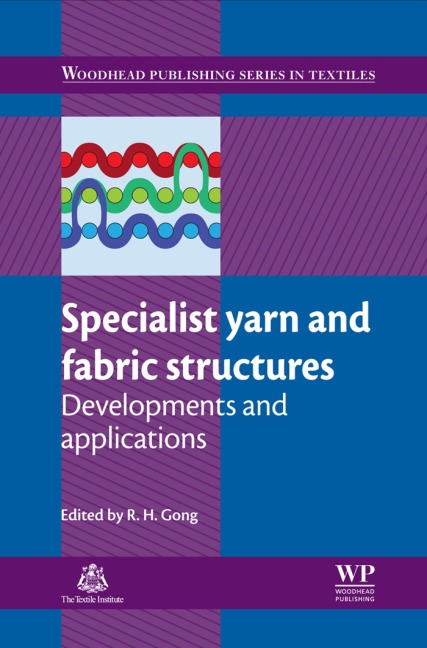
Specialist yarn, woven and fabric structures are key elements in the manufacturing process of many different types of textiles with a variety of applications. This book explores a number of different specialist structures, discussing the developments in technology and manufacturing processes that have taken place in recent years.With its distinguished editor and international team of contributors, Specialist yarn, woven and fabric structures is essential reading for all textile researchers, technicians, engineers and technologies, and will also be suitable for academic purposes. - Looks at developments that have occurred in the manufacturing of specialist yarn, weave and fabric structures - Discusses different types of specialist yarn structures, such as hybrid, fancy and compound yarns - Offers insight into multicomponent fabric structures such as 3D nonwovens, flocked, knotted and jacquard woven fabrics
Contributor contact details Woodhead Publishing Series in Textiles Chapter 1: Compound yarns Abstract: 1.1 Introduction 1.2 Types of compound yarns 1.3 Production methods for compound yarns 1.4 Applications of compound yarns 1.5 Future trends in compound yarns Chapter 2: Developments in hybrid yarns Abstract: 2.1 Introduction 2.2 Types of hybrid yarns and their development 2.3 Basic structures and properties of hybrid yarns 2.4 Production methods for hybrid yarns 2.5 Applications of hybrid yarns 2.6 Future trends in hybrid yarns 2.7 Acknowledgements Chapter 3: Developments in rope structures and technology Abstract: 3.1 Introduction 3.2 New fibres 3.3 Laid ropes 3.4 Braided ropes 3.5 Low-twist ropes 3.6 Manufacturing technology 3.7 Terminations 3.8 Uses of ropes 3.9 Conclusions Chapter 4: Developments in fancy yarns Abstract: 4.1 Introduction to fancy yarns 4.2 Historical development 4.3 Types of fancy yarns and their development 4.4 Production methods for fancy yarns 4.5 Applications for fancy yarns 4.6 Future trends in fancy yarns 4.7 Sources of further information and advice Chapter 5: Developments in 3D knitted structures Abstract: 5.1 Introduction to 3D knitted structures 5.2 Multiaxial warp-knitted fabrics 5.3 Space fabrics (or sandwich fabrics) 5.4 Fully-fashioned 3D knitted fabrics (or near-net-shaped knitted fabrics) Chapter 6: Developments in leno-weave fabrics Abstract: 6.1 Introduction to leno-weave fabrics 6.2 The structure of leno-weave fabrics 6.3 Fabrics with leno-weave 6.4 The production of leno-weave fabric 6.5 Properties of leno-weave fabrics 6.6 Applications of leno-weave fabrics 6.7 Future trends in leno-weave fabrics Chapter 7: Developments in triaxial woven fabrics Abstract: 7.1 Introduction 7.2 Basic patterns 7.3 A history of triaxial woven fabrics 7.4 Classification 7.5 Variations 7.6 Properties 7.7 Advantages 7.8 Applications 7.9 Aesthetics 7.10 Manufacturing 7.11 Future trends 7.12 Sources of further information and advice Chapter 8: Interwoven fabrics and their applications Abstract: 8.1 Introduction 8.2 Structure and design 8.3 Properties and applications 8.4 Future trends Chapter 9: Pile carpets Abstract: 9.1 Market background 9.2 Environmental considerations 9.3 Pile fibres 9.4 Pile yarns 9.5 Tufting 9.6 Backing materials, back-coating and laminating 9.7 Wireloom weaving 9.8 Face-to-face weaving 9.9 Axminster weaving 9.10 Needling 9.11 Other methods of manufacture 9.12 Coloration 9.13 Chemical and other treatments 9.14 Textile sports surfaces 9.15 Sources of further information and advice Chapter 10: Developments in Jacquard woven fabrics Abstract: 10.1 Introduction to Jacquard woven fabrics 10.2 Jacquard construction 10.3 Converting artwork to woven Jacquard patterns 10.4 Recent developments in Jacquard systems 10.5 Patterns in Jacquard woven fabrics 10.6 Applications of Jacquard woven fabrics 10.7 Relationship between structures and properties of Jacquard woven fabrics 10.8 Future trends in Jacquard woven fabrics 10.9 Sources of further information and advice Chapter 11: Developments in 3D nonwovens Abstract: 11.1 Introduction 11.2 High-bulk flat nonwovens 11.3 Shaped 3D nonwovens 11.4 Future trends Chapter 12: Flocked fabrics and structures Abstract: 12.1 Introduction 12.2 The theory of fiber coating 12.3 Flock fibers and preparation 12.4 Flocking substrates 12.5 Adhesives for flocking 12.6 Flocking processes 12.7 Testing and quality assurance 12.8 New developments in the application of flocked fabrics and structures 12.9 Conclusions and future trends 12.10 Sources of further information and advice 12.11 Acknowledgements Chapter 13: Knotted fabrics Abstract: 13.1 Introduction 13.2 Types of knotted fabrics 13.3 Production methods for knotted fabrics 13.4 Applications for knotted fabrics 13.5 Future trends for knotted fabrics Chapter 14: Developments in braided fabrics Abstract: 14.1 Introduction 14.2 Braiding 14.3 Classifying braids 14.4 The geometry of the braided structure 14.