Und dann auf "Zum Home-Bildschirm [+]".

Stöbern
genialokal zum Startbildschirm hinzufügen
Installieren Sie die genialokal App auf Ihrem Startbildschirm für einen schnellen Zugriff und eine komfortable Nutzung.
Installieren Sie die genialokal App auf Ihrem Startbildschirm für einen schnellen Zugriff und eine komfortable Nutzung.
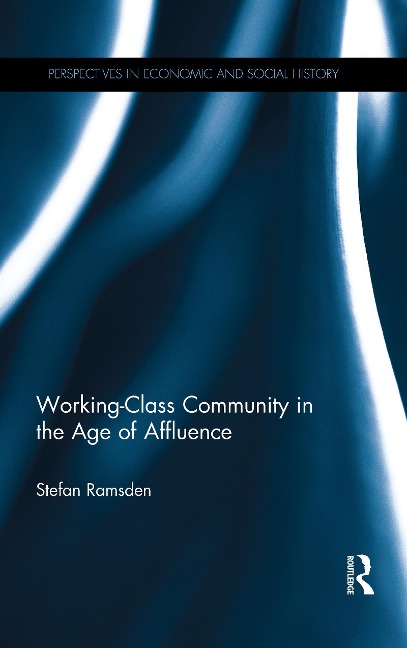
It has appeared to many commentators that the most fundamental change in what it is meant to be working-class in twentieth-century Britain came not as a result of war or of want, but of prosperity. Social investigators documented how the relative affluence of the 1950s and 1960s improved the material conditions of life for working-class Britons whilst eroding their commitment to the shared life of 'traditional' communities. Utilising an oral history case study of sociability and identity in the Yorkshire town of Beverley between the end of the Second World War and the election of Margaret Thatcher's government, Working-Class Community in the Age of Affluence challenges this influential narrative. An introductory essay outlines how sociologists and historians understood the complex social, cultural and economic changes of the post-war decades through the prism of affluence, and traces how these changes came to be seen as deleterious to the 'traditional' working-class community. The book then proceeds thematically, exploring change across areas of social life including family, neighbourhood, workplace and associational life. This book represents the first sustained historical analysis of change and continuity in working-class community living during the age of affluence. It suggests not only that older social practices persisted, but also that new patterns of sociability could strengthen as much as undermine community. Ultimately, Working-Class Community in the Age of Affluence asks us to rethink assumptions about the decline of local solidarities in this pivotal period, and to recognise community as a key feature of working-class life across the twentieth century.
Stefan Ramsden is post-doctoral researcher at University of Hull, UK. After a decade working in the museums sector, he decided to pursue his interest in working-class history through returning to full-time study, and completed a PhD in 2013. Since then he has worked as a history teacher, lecturer and researcher in the University of Hull.
Chapter 1. Introduction Chapter 2. Families Chapter 3. Neighbours Chapter 4. Friends Chapter 5. Workplaces Chapter 6. Civil Society and Associational Life Chapter 7. Identity and Place Chapter 8. Conclusion Appendix. Brief biographical details of research participants
Dieses eBook wird im PDF-Format geliefert und ist mit einem Adobe Kopierschutz (DRM) versehen. Sie können dieses eBook mit allen Geräten lesen, die das PDF-Format und den Adobe Kopierschutz (DRM) unterstützen.
Zum Beispiel mit den folgenden Geräten:
• tolino Reader
Laden Sie das eBook direkt über den Reader-Shop auf dem tolino herunter oder übertragen Sie das eBook auf Ihren tolino mit einer kostenlosen Software wie beispielsweise Adobe Digital Editions.
• Sony Reader & andere eBook Reader
Laden Sie das eBook direkt über den Reader-Shop herunter oder übertragen Sie das eBook mit der kostenlosen Software Sony READER FOR PC/Mac oder Adobe Digital Editions auf ein Standard-Lesegeräte mit epub- und Adobe DRM-Unterstützung.
• Tablets & Smartphones
Möchten Sie dieses eBook auf Ihrem Smartphone oder Tablet lesen, finden Sie hier unsere kostenlose Lese-App für iPhone/iPad und Android Smartphone/Tablets.
• PC & Mac
Lesen Sie das eBook direkt nach dem Herunterladen mit einer kostenlosen Lesesoftware, beispielsweise Adobe Digital Editions, Sony READER FOR PC/Mac oder direkt über Ihre eBook-Bibliothek in Ihrem Konto unter „Meine eBooks“ - „online lesen“.
Schalten Sie das eBook mit Ihrer persönlichen Adobe ID auf bis zu sechs Geräten gleichzeitig frei.
Bitte beachten Sie, dass die Kindle-Geräte das Format nicht unterstützen und dieses eBook somit nicht auf Kindle-Geräten lesbar ist.