Und dann auf "Zum Home-Bildschirm [+]".

Stöbern
genialokal zum Startbildschirm hinzufügen
Installieren Sie die genialokal App auf Ihrem Startbildschirm für einen schnellen Zugriff und eine komfortable Nutzung.
Installieren Sie die genialokal App auf Ihrem Startbildschirm für einen schnellen Zugriff und eine komfortable Nutzung.
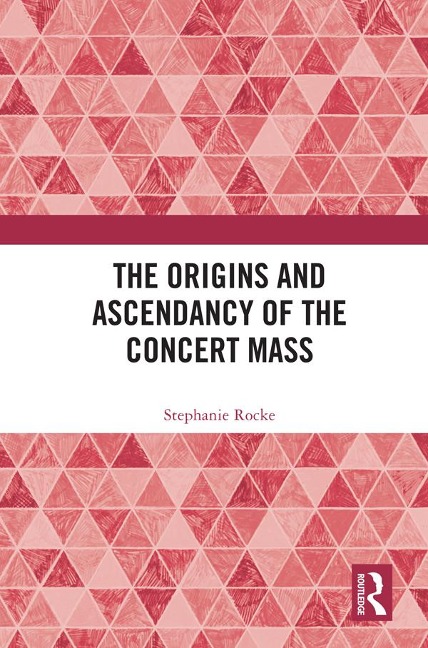
The mass is an extraordinary musical form. Whereas other Western art music genres from medieval times have fallen out of favour, the mass has not merely survived but flourished. A variety of historical forces within religious, secular, and musical arenas saw the mass expand well beyond its origins as a cycle of medieval chants, become concertised and ultimately bifurcate. Even as Western societies moved away from their Christian origins to become the religiously plural and politically secular societies of today, and the Church itself moved in favour of congregational singing, composers continued to compose masses. By the early twentieth century two forms of mass existed: the liturgical mass composed for church services, and the concert mass composed for secular venues. Spanning two millennia, The Origins and Ascendancy of the Concert Mass outlines the origins and meanings of the liturgical texts, defines the concert mass, explains how and why the split occurred, and provides examples that demonstrate composers' gradual appropriation of the genre as a vehicle for personal expression on serious issues. By the end of the twentieth century the concert mass had become a repository for an eclectic range of theological and political ideas.
Stephanie Rocke is a Research Associate at the University of Melbourne with an ongoing interest in religious and cultural diversity as it is manifested in musical forms and musical activities across time.
Introduction Part I: Origins Chapter 1 Exploring the Ordinary of the Roman Rite Chapter 2 Differing Opinions about Music within the Church Chapter 3 Musical Formulations: From Plainchant to Concert Mass Chapter 4 Haydn's Harmoniemesse (1802): An Early Concert Mass Part II: Becoming Chapter 5 The Concertisation of the Mass Chapter 6 Secularisation and Cultural Change: From Court and Church to Choral Societies and Choice Chapter 7 Nineteenth-century Concert Masses Part III: Division Chapter 8 Banished from the Eucharist: Cecilians, Plainsong Restoration, the Motu Propio, and Vatican II Chapter 9 Daniel Lentz's Missa Umbrarum (1973) Part IV: Divided Chapter 10 Masses for concert halls 1903-1963 Chapter 11 Missa Carminum (Folk Song Mass) Part V: Ascendance Chapter 12 Conclusions and Future Directions
Dieses eBook wird im PDF-Format geliefert und ist mit einem Adobe Kopierschutz (DRM) versehen. Sie können dieses eBook mit allen Geräten lesen, die das PDF-Format und den Adobe Kopierschutz (DRM) unterstützen.
Zum Beispiel mit den folgenden Geräten:
• tolino Reader
Laden Sie das eBook direkt über den Reader-Shop auf dem tolino herunter oder übertragen Sie das eBook auf Ihren tolino mit einer kostenlosen Software wie beispielsweise Adobe Digital Editions.
• Sony Reader & andere eBook Reader
Laden Sie das eBook direkt über den Reader-Shop herunter oder übertragen Sie das eBook mit der kostenlosen Software Sony READER FOR PC/Mac oder Adobe Digital Editions auf ein Standard-Lesegeräte mit epub- und Adobe DRM-Unterstützung.
• Tablets & Smartphones
Möchten Sie dieses eBook auf Ihrem Smartphone oder Tablet lesen, finden Sie hier unsere kostenlose Lese-App für iPhone/iPad und Android Smartphone/Tablets.
• PC & Mac
Lesen Sie das eBook direkt nach dem Herunterladen mit einer kostenlosen Lesesoftware, beispielsweise Adobe Digital Editions, Sony READER FOR PC/Mac oder direkt über Ihre eBook-Bibliothek in Ihrem Konto unter „Meine eBooks“ - „online lesen“.
Schalten Sie das eBook mit Ihrer persönlichen Adobe ID auf bis zu sechs Geräten gleichzeitig frei.
Bitte beachten Sie, dass die Kindle-Geräte das Format nicht unterstützen und dieses eBook somit nicht auf Kindle-Geräten lesbar ist.