Und dann auf "Zum Home-Bildschirm [+]".

Stöbern
genialokal zum Startbildschirm hinzufügen
Installieren Sie die genialokal App auf Ihrem Startbildschirm für einen schnellen Zugriff und eine komfortable Nutzung.
Installieren Sie die genialokal App auf Ihrem Startbildschirm für einen schnellen Zugriff und eine komfortable Nutzung.
Ihr gewünschter Artikel ist in 0 Buchhandlungen vorrätig - wählen Sie hier eine Buchhandlung in Ihrer Nähe aus:

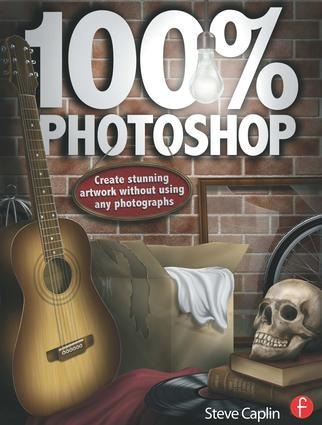
The digital art world is becoming a highly saturated and competitive place, filled with artists who have grown up on Photoshop and know the ins and outs of the program extremely well. In order to stand out among the crowd, these artists need to take their Photoshop skills to another level, and this book will help them do that. Many books on the market discuss ways of incorporating external elements into Photoshop to create the final image. This book takes a different approach and shows the reader how to create everything, from start to finish, directly within Photoshop. Each technique is discussed in careful step-by-step sections, and two supplemental chapters provide a quick overview of Photoshop basics in case the reader needs a refresher on a particular feature. Not only will this approach enhance the artists design, drawing, and painting skills, but it will also save tons of time and resources, otherwise spent on searching for just the right element to complete a project. With these new skills, artists will be able to more carefully and accurately realize their artistic vision, resulting in a more authentic, hand drawn final image that will stand out amongst the plethora of imitators. A supplemental website [url to come] will provide the reader with additional training tools and a forum where Steve and other readers can chime in with advice and feedback on images and any other troubleshooting areas.
Steve Caplin is a freelance artist and author working in London, England. His satirical photomontage work is commissioned by newspapers and magazines around the world, including The Guardian, The Independent, The Sunday Telegraph, The Sunday Times Magazine, Radio Times, Readers Digest and L'Internazionale. Steve has worked for advertising agencies including Saatchi & Saatchi, Bartle Bogle Hegarty and Lowe Howard Spink, and his work has won two Campaign Poster Awards and a D&AD Pencil award. He has lectured widely in England, Norway, France and Holland, and has taught digital design at the University of Westminster and the University of the Arts London. Steve is the author of ten books: How to Cheat in Photoshop (five editions), How to Cheat in Photoshop Elements (co-authored, three editions), Icon Design, Max Pixel's Adventures in Adobe Photoshop Elements, The Complete Guide to Digital Illustration (co-authored) and Art & Design in Photoshop. He has also co-authored three mainstream books: Dad Stuff, More Dad Stuff, Stuff the Turkey and Complete and Utter Zebu. When he's not at his computer Steve plays the piano well, the accordion moderately and the guitar badly. He spends his spare time making improbable constructions out of wood and other materials. His first commissioned sculpture was for the Bethlem hospital - the original 'bedlam' - in 2010.
Chapter 1: Textures: Using Clouds, Noise, Blur, Fibers to create basic texture; Texture creation: paper, wood, stone, and metal; Chapter 2: Setting the Scene: Hallway - door, light, glass, gold text, shadows, metal handle, layer masks; Chapter 3: The Great Outdoors: trees, grass, leaves (custom brush design), water and reflections, clouds, sky, mountains; Chapter 4: In the Attic:LPs, cardboard boxes, guitar, cork boards, beams, brick walls, assorted items; Chapter 5: To Boldly Go: Space scene with stars, planets, aurora, spaceship, alien; Chapter 6: Treasured Possessions: Desk drawer with jewelry, letters, sealing wax, pens, magnifying glass, pencils, rubber stamp, folder with coffee stains; Chapter 7: In the Lab: Mad scientist's laboratory with Bunsen burner, lab bottles, stone wall, lightning through window; Chapter 8: The Operation: Operating theatre scene with close-up of opened body featuring internal organs, bone, skin texture, scalpels and clamps; Chapter 9: Fantasy Scene: Organic-looking synthetic scene with intertwining tentacles, texture generated background, H R Giger-style anatomical elements; Chapter 10: Photoshop Reference: Quick start guide