Und dann auf "Zum Home-Bildschirm [+]".

Stöbern
genialokal zum Startbildschirm hinzufügen
Installieren Sie die genialokal App auf Ihrem Startbildschirm für einen schnellen Zugriff und eine komfortable Nutzung.
Installieren Sie die genialokal App auf Ihrem Startbildschirm für einen schnellen Zugriff und eine komfortable Nutzung.
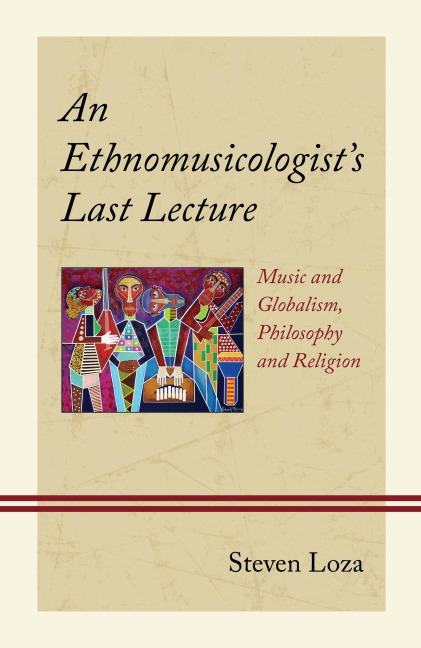
An Ethnomusicologist's Last Lecture: Music and Globalism, Philosophy and Religion explores the frustration of many scholars and artists with the content and directions of studies on music, which continue to be mostly based on Western thought, methods, theories, and even the modes of communicating ideas, and mostly through written, published works. Steven Loza argues that this pattern has pervaded both philosophy and ethnomusicology, fields which should be much more globally based in terms of intellectual analysis, culturally diverse points of view, and the recognition of multiple ways of thinking and doing. He criticizes what he perceives as an intellectual hegemony and biased approach to studying music, including the standards to which academics are held responsible, the manner in which we and our students have had to study music, and the forms by which we are pressured to present our findings, many times adapting theories and ideas that have nothing to do with the cultures we are examining through a one way microscope - and often a distorted lens. Loza takes the reader through an assortment of historical and contemporary global examples of musical expression, creative artists, and thinkers, looking for ways that we can assess how music both reflects and enacts culturally diverse peoples' beliefs, thoughts, and world views.
Steven Loza is professor of ethnomusicology and chair of Global Jazz Studies at The UCLA Herb Alpert School of Music.
Table of Contents
List of Figures
Acknowledgments
Introduction
Chapter 1: Thinking Globally: Thoughts and the Ideas of Others on Philosophy, Religion, and Music
Chapter 2: Composers and Ideologies through a World Prism
Chapter 3: The Spirituality of the Blues and Related Sacred Music
Chapter 4: Polarities, Windmills, and the Transcendence of the Universe
Chapter 5: James Newton, Composer of Faith
Chapter 6: Masked Phantoms: Thoughts on Our Research and Scholarship in Ethnomusicology
Chapter 7: Challenges to the Euro-Americentric Ethnomusicological Canon: Alternatives for Graduate Readings,
Theory, and Method
Chapter 8: Toward a Theory for Religion as Art: From Merriam to Guadalupe
Chapter 9: Social Justice and My Work as a Music Scholar, Teacher, and Artist
Chapter 10: Free Thoughts
Bibliography
Dieses eBook wird im PDF-Format geliefert und ist mit einem Adobe Kopierschutz (DRM) versehen. Sie können dieses eBook mit allen Geräten lesen, die das PDF-Format und den Adobe Kopierschutz (DRM) unterstützen.
Zum Beispiel mit den folgenden Geräten:
• tolino Reader
Laden Sie das eBook direkt über den Reader-Shop auf dem tolino herunter oder übertragen Sie das eBook auf Ihren tolino mit einer kostenlosen Software wie beispielsweise Adobe Digital Editions.
• Sony Reader & andere eBook Reader
Laden Sie das eBook direkt über den Reader-Shop herunter oder übertragen Sie das eBook mit der kostenlosen Software Sony READER FOR PC/Mac oder Adobe Digital Editions auf ein Standard-Lesegeräte mit epub- und Adobe DRM-Unterstützung.
• Tablets & Smartphones
Möchten Sie dieses eBook auf Ihrem Smartphone oder Tablet lesen, finden Sie hier unsere kostenlose Lese-App für iPhone/iPad und Android Smartphone/Tablets.
• PC & Mac
Lesen Sie das eBook direkt nach dem Herunterladen mit einer kostenlosen Lesesoftware, beispielsweise Adobe Digital Editions, Sony READER FOR PC/Mac oder direkt über Ihre eBook-Bibliothek in Ihrem Konto unter „Meine eBooks“ - „online lesen“.
Schalten Sie das eBook mit Ihrer persönlichen Adobe ID auf bis zu sechs Geräten gleichzeitig frei.
Bitte beachten Sie, dass die Kindle-Geräte das Format nicht unterstützen und dieses eBook somit nicht auf Kindle-Geräten lesbar ist.