Und dann auf "Zum Home-Bildschirm [+]".

Stöbern
genialokal zum Startbildschirm hinzufügen
Installieren Sie die genialokal App auf Ihrem Startbildschirm für einen schnellen Zugriff und eine komfortable Nutzung.
Installieren Sie die genialokal App auf Ihrem Startbildschirm für einen schnellen Zugriff und eine komfortable Nutzung.
Ihr gewünschter Artikel ist in 0 Buchhandlungen vorrätig - wählen Sie hier eine Buchhandlung in Ihrer Nähe aus:

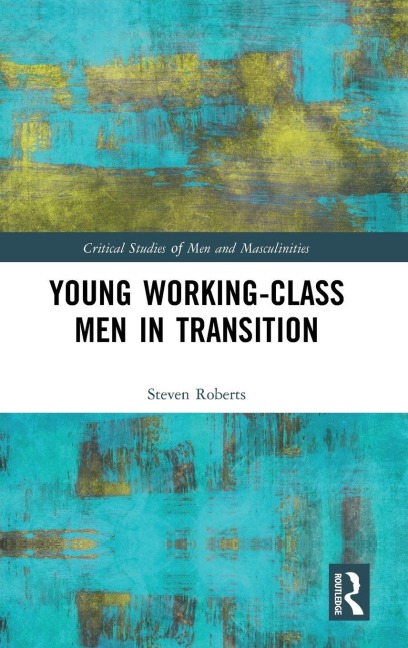

Young Working Class Men in Transition uses a unique blend of concepts from the sociologies of youth and masculinity combined with Bourdieusian social theory to investigate British young working-class men's transition to adulthood.
Steven Roberts is an Associate Professor in Sociology, School of Social Sciences, Faculty of Arts, Monash University, Australia
Acknowledgements Preface Chapter 1 Youth Transitions, Young Men and Social Change Introduction Youth transitions and social change Outline of the book Chapter 2 Dominant representations of working-class masculinity: the so-called 'crisis of masculinity' and the academic response Introduction The so-called 'crisis of masculinity': A prominent, problematic, durable discourse Not exactly a 'crisis': Sociology's reflections on changes, challenges and continuities to masculinity in new times Changing circumstances, changing working-class masculinity? A relatively singular account of masculinity across variations in place and space Conclusion Chapter 3 Making sense of men: outlining a framework for the study of contemporary masculinities Introduction Social Constructionism vs Post-Structuralism: a genuinely entrenched binary? Connell's theory of Hegemonic Masculinity Critiques of Hegemonic Masculinity Theory The constraints of HMT's deterministic outlook Theorising change: Anderson's Inclusive Masculinity Theory Anderson's concept of homohysteria Critiques of IMT Making the most of Mannheim's legacy: masculinities and the sociology of generations Bringing in Bourdieu: a fuller account of the social actor Conclusion Chapter 4 The study context and methods Introduction The research sites Accessing the sample The research process Chapter 5 Looking back and looking forward at age 18-24: educational histories and aspirations Introduction Underachieving and disengaged boys? School days: Just an 'in-betweener' 'Ordinariness' and alienated instrumentalism Post-16 'choices' Critical moments in post-16 education engagement and drop out Higher education: Awareness, aspirations, ambitions Conclusion Chapter 6 Young working class men navigating the precarious world of work: identity in and out of the labour market Introduction Embracing service work: the new normal for young working-class men Working-class young men's working lives Sources of identity beyond the sphere of employment Conclusion Chapter 7 Contemporary Working-class Masculinities and the Domestic Sphere: the diminishing significance of 'the man of the house' Introduction Domesticity, Gender Roles and Social Class Attitudes and imagined futures at age 18-24 Walking the walk, not just talking the talk: Gender dynamics in the home, seven years later Conclusion Chapter 8 Emotional disclosure online and offline: changes and continuities in forms of intimate expression among working-class men Introduction Emotion in abundance: an unexpected observation? Sharing emotional content in research interviews Emotion-laden activity on Facebook 'It's just between mates': Making sense of misogyny and homosexually themed language Conclusion Chapter 9 Conclusion: Changing the tune, but not changing the record: Working-class masculinity in transition Introduction Myth busting: the key findings The transformed working class habitus Practical implications