Und dann auf "Zum Home-Bildschirm [+]".

Stöbern
genialokal zum Startbildschirm hinzufügen
Installieren Sie die genialokal App auf Ihrem Startbildschirm für einen schnellen Zugriff und eine komfortable Nutzung.
Installieren Sie die genialokal App auf Ihrem Startbildschirm für einen schnellen Zugriff und eine komfortable Nutzung.
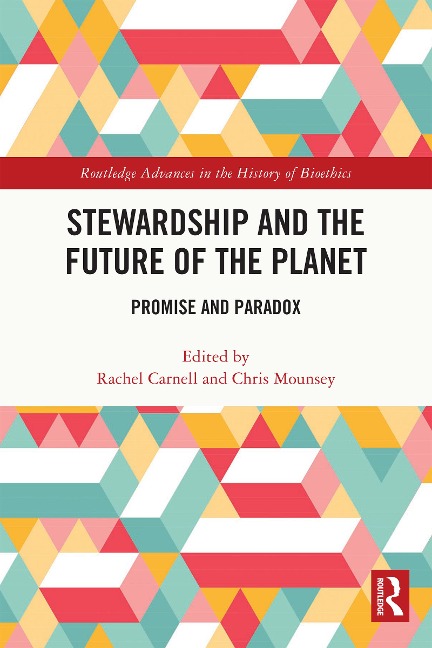
This volume examines historical views of stewardship that have sometimes allowed humans to ravage the earth as well as contemporary and futuristic visions of stewardship that will be necessary to achieve pragmatic progress to save life on earth as we know it. The idea of stewardship - human responsibility to tend the Earth - has been central to human cultures throughout history, as evident in the Judeo-Christian Genesis story of the Garden of Eden and in a diverse range of parallel tales from other traditions around the world. Despite such foundational hortatory stories about preserving the earth on which we live, humanity in the Anthropocene is nevertheless currently destroying the planet with breathtaking speed. Much research on stewardship today - in the disciplines of geography, urban studies, oceans research, and green business practice - offers insights that should help address the ecological challenges facing the planet. Simultaneous scholarship in the humanities and other fields reminds us that the damage done to the planet has often been carried out in the name of tending the land. In order to make progress in environmental stewardship, scholars must speak to each other across the disciplinary boundaries, as they do in this volume.
Rachel Carnell is Professor of English at Cleveland State University. Having published extensively on eighteenth-century literature and politics, she began working on environmental stewardship after unearthing archival references to eighteenth-century lawsuits that described landed estates in terms of expected monetary output. Chris Mounsey is Professor of eighteenth-century cultural studies at the University of Winchester. He has published widely on a range of issues including sexuality, disability, and bioethics. He is series editor of the Routledge Advances in the History of Bioethics.
Introduction: The Contradictory Inflections of Stewardship Part I: Human Self-Perception and Misperception 1. Stewardship and Sense of Place: Assumptions and Ideals 2. "I Was Under No Necessity of Seeking My Bread": Robinson Crusoe and the Stewardship of Resources in Eighteenth-Century England 3. Stewardship in American Literature: Promise and Paradox in the New World Part II: Dystopic Visions of Past, Present, and Future 4. Monstrous Stewardship and the Plantation in Charles Chesnutt's "The Goophered Grapevine" 5. Human Stewardship and "Reproductive Futurism" in Dystopian Fiction 6 Climate Change and Apocalyptic Literature: Post-Human Stewardship in Paolo Bacigalupi's Drowned Cities Trilogy Part III: Approaches to Contemporary Challenges 7. Political Aspects of Stewardship for Wildlife in the U.S. 8. The Future of the Seascape and the Humanity of Islanders: Focusing on the Korean Archipelago 9. Stewardship of Rangelands in the 21st Century: Managing Complexity from the Margins Part IV: Envisioning the Future 10. Product Stewardship: Ethics and Effectiveness in a Circular Economy 11. An Evolutionary Systems Theoretic Perspective on Global Stewardship 12. Stewardship in the Anthropocene: Meanings, Tensions, Futures
Dieses eBook wird im PDF-Format geliefert und ist mit einem Adobe Kopierschutz (DRM) versehen. Sie können dieses eBook mit allen Geräten lesen, die das PDF-Format und den Adobe Kopierschutz (DRM) unterstützen.
Zum Beispiel mit den folgenden Geräten:
• tolino Reader
Laden Sie das eBook direkt über den Reader-Shop auf dem tolino herunter oder übertragen Sie das eBook auf Ihren tolino mit einer kostenlosen Software wie beispielsweise Adobe Digital Editions.
• Sony Reader & andere eBook Reader
Laden Sie das eBook direkt über den Reader-Shop herunter oder übertragen Sie das eBook mit der kostenlosen Software Sony READER FOR PC/Mac oder Adobe Digital Editions auf ein Standard-Lesegeräte mit epub- und Adobe DRM-Unterstützung.
• Tablets & Smartphones
Möchten Sie dieses eBook auf Ihrem Smartphone oder Tablet lesen, finden Sie hier unsere kostenlose Lese-App für iPhone/iPad und Android Smartphone/Tablets.
• PC & Mac
Lesen Sie das eBook direkt nach dem Herunterladen mit einer kostenlosen Lesesoftware, beispielsweise Adobe Digital Editions, Sony READER FOR PC/Mac oder direkt über Ihre eBook-Bibliothek in Ihrem Konto unter „Meine eBooks“ - „online lesen“.
Schalten Sie das eBook mit Ihrer persönlichen Adobe ID auf bis zu sechs Geräten gleichzeitig frei.
Bitte beachten Sie, dass die Kindle-Geräte das Format nicht unterstützen und dieses eBook somit nicht auf Kindle-Geräten lesbar ist.