Und dann auf "Zum Home-Bildschirm [+]".

Stöbern
genialokal zum Startbildschirm hinzufügen
Installieren Sie die genialokal App auf Ihrem Startbildschirm für einen schnellen Zugriff und eine komfortable Nutzung.
Installieren Sie die genialokal App auf Ihrem Startbildschirm für einen schnellen Zugriff und eine komfortable Nutzung.
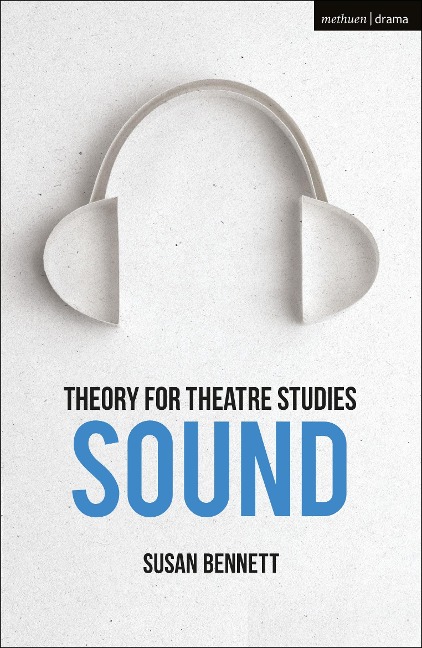
Sound provides a lively and engaging overview of relevant critical theory for students and researchers in theatre and performance studies. Addressing sound across history and through progressive developments in relevant technologies, the volume opens up the study of theatrical production and live performance to understand conceptual and pragmatic concerns about the sonic. By way of developed case studies (including Aristophanes's The Frogs, Shakespeare's The Tempest, Cocteau's The Human Voice, and Rimini Protokoll's Situation Rooms), readers can explore new methodologies and approaches for their own work on sound as a performance component. In an engagement with the burgeoning interdisciplinary field of sound studies, this book samples exciting new thinking relevant to theatre and performance studies.
Part of the Theory for Theatre Studies series which introduces core theoretical concepts that underpin the discipline, Sound provides a balance of essential background information and new scholarship, and is grounded in detailed examples that illuminate and equip readers for their own sonic explorations. Volumes follow a consistent three-part structure: a historical overview of how the term has been understood within the discipline; more recent developments illustrated by substantive case studies; and emergent trends and interdisciplinary connections. Volumes are supported by further online resources including chapter overviews, illustrative material and guiding questions.
Online resources to accompany this book are available at:
https://bloomsbury.com/uk/theory-for-theatre-studies-sound-9781474246460/
Susan Bennett is University Professor in the Department of English at the University of Calgary, Canada.
Acknowledgements
Series Preface
SOUND: An Introduction
SECTION ONE: Classical Sound
Theatres in Ancient Greece and Aristotle's Poetics
The vocal map of ancient Greek drama
Case study: Aristophanes's The Frogs
Vitruvius on acoustics: De Architectura
Shakespeare's Globe and Francis Bacon's Sylva Sylvarum
Acoustic world-making on the early modern stage
Case study: Shakespeare's The Tempest
A sonic imagination of early modern London
SECTION TWO: Avant-garde Sound
New technologies for sound performance
Case study: Luigi Russolo's intonamuri and 'The Art of Noise'
Hanging on the telephone: Sigmund Freud and Roland Barthes
Case study: Jean Cocteau's The Human Voice
The sounds of silence: John Cage's future of music
Acousmatics and radiophonics: Pierre Schaffer and the BBC
Aura and archive: making sound memories
Case study: Samuel Beckett's Krapp's Last Tape
SECTION THREE: Experiential Sound
Prosthetic performance and deterritorialised listening
Case study: Janet Cardiff's sound walks
Listening to women: Andrea Hornick and Luce Irigaray
Affective theatres of embodied sound
Case study: Shannon Yee's Reassembled, Slightly Askew
Case study: Rimini Protokoll's Situation Rooms
Coda: sound across the world
References
Further Reading
Index
Dieses eBook wird im PDF-Format geliefert und ist mit einem Adobe Kopierschutz (DRM) versehen. Sie können dieses eBook mit allen Geräten lesen, die das PDF-Format und den Adobe Kopierschutz (DRM) unterstützen.
Zum Beispiel mit den folgenden Geräten:
• tolino Reader
Laden Sie das eBook direkt über den Reader-Shop auf dem tolino herunter oder übertragen Sie das eBook auf Ihren tolino mit einer kostenlosen Software wie beispielsweise Adobe Digital Editions.
• Sony Reader & andere eBook Reader
Laden Sie das eBook direkt über den Reader-Shop herunter oder übertragen Sie das eBook mit der kostenlosen Software Sony READER FOR PC/Mac oder Adobe Digital Editions auf ein Standard-Lesegeräte mit epub- und Adobe DRM-Unterstützung.
• Tablets & Smartphones
Möchten Sie dieses eBook auf Ihrem Smartphone oder Tablet lesen, finden Sie hier unsere kostenlose Lese-App für iPhone/iPad und Android Smartphone/Tablets.
• PC & Mac
Lesen Sie das eBook direkt nach dem Herunterladen mit einer kostenlosen Lesesoftware, beispielsweise Adobe Digital Editions, Sony READER FOR PC/Mac oder direkt über Ihre eBook-Bibliothek in Ihrem Konto unter „Meine eBooks“ - „online lesen“.
Schalten Sie das eBook mit Ihrer persönlichen Adobe ID auf bis zu sechs Geräten gleichzeitig frei.
Bitte beachten Sie, dass die Kindle-Geräte das Format nicht unterstützen und dieses eBook somit nicht auf Kindle-Geräten lesbar ist.