Und dann auf "Zum Home-Bildschirm [+]".

Stöbern
genialokal zum Startbildschirm hinzufügen
Installieren Sie die genialokal App auf Ihrem Startbildschirm für einen schnellen Zugriff und eine komfortable Nutzung.
Installieren Sie die genialokal App auf Ihrem Startbildschirm für einen schnellen Zugriff und eine komfortable Nutzung.
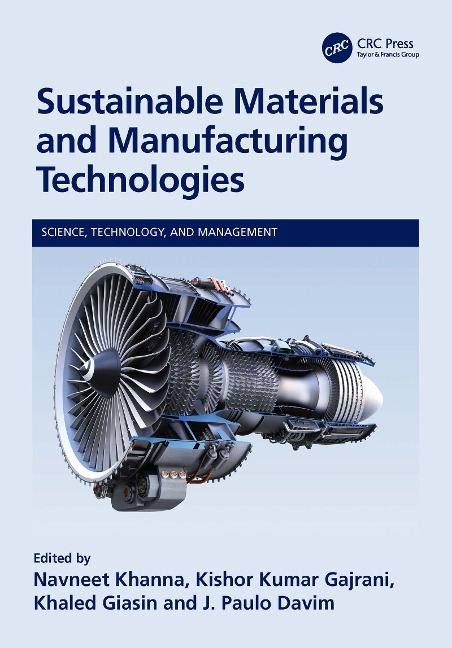
Materials and manufacturing techniques are a few of the vital processes in production industries. Most of the materials processing and manufacturing techniques currently used in industries are a major cause of environmental pollution and are hence unsustainable. This book provides in-depth knowledge about challenges faced during the processing of advanced materials and discusses possible ways to achieve sustainability in manufacturing. This book: - Covers advances in cryogenic machining, optimization, and economical and energy assessment of machining - Provides case studies and numerical design with analysis using computational fluid dynamics of minimum quantity lubrication mist droplets - Reviews metalworking fluids, laser micro-texturing, materials and manufacturing in sustainability, biofuels additives, nano-materials, and additive manufacturing of waste plastic - Explores the use of artificial intelligence and machine learning-based manufacturing techniques; and - Covers the latest challenges and future trends in sustainable manufacturing Sustainable Materials and Manufacturing Technologies is primarily written for senior undergraduate and graduate students, as well as researchers in mechanical, manufacturing, industrial, and production engineering, and material science.
Dr. Navneet Khanna is Associate Dean (Career Development and Promotion of Innovation and Industrial Research). He also acted as a Department coordinator of Mechanical Engineering (July 2017-November 2020) and Coordinator of the Siemens Centre of Excellence at IITRAM Ahmedabad. He worked at Birla Institute of Technology and Science, Pilani (BITS Pilani), from January 2007 to July 2014 and recently taught at Mechanical Engineering Department, Indian Institute of Technology (IIT) Gandhinagar, as an adjunct faculty. He is a specialist in building a strong pool of trained engineering graduates and is involved in solving manufacturing-related problems of Indian industries and government organizations. He bagged the Early Career Research Award of SERB (Government of India). He has successfully led 70+ projects defined by the Indian industries and published 40+ research papers in peer-reviewed journals. In addition, he has created several avenues of collaborative work with ISRO, DRDO, IPR, IITs, and renowned institutions in the USA, Australia, the UK, Spain, Slovenia, Russia, Brazil, Poland, etc. He has expertise in experimental, analytical, and computational analysis of machining processes. Dr. Kishor Kumar Gajrani is Assistant Professor in the Department of Mechanical Engineering at the Indian Institute of Information Technology, Design, and Manufacturing (IIITDM), Kancheepuram, Chennai, India. He obtained his M.Tech. and Ph.D. degrees from the Department of Mechanical Engineering at the Indian Institute of Technology Guwahati. Thereafter, he worked as a post-doctoral researcher at the Indian Institute of Technology Bombay. He has published 32 international journals and book chapters of repute and has attended numerous conferences. He is co-editor of two books titled Advances in Sustainable Machining and Manufacturing Processes and Biodegradable Composites for Packaging Applications. His research interests are broadly related to the advancement of sustainable manufacturing, additive manufacturing, advanced materials, micro-manufacturing, coatings, green lubricants, and biodegradable packaging. Dr. Khaled Giasin is a lecturer in the School of Mechanical and Design Engineering (SMDE) at the faculty of Technology. He joined the school back in May 2019 with teaching and research duties. He is also one of the school outreach coordinators. His main research background is in machining aerospace materials using experimental and numerical techniques, machining coolants, and characterization of composite and fiber metal laminate materials. Dr. Khaled obtained his Ph.D. degree from the University of Sheffield, M.Sc. degree from the University of Liverpool, and B.Sc. degree from Jordan University of Science and Technology. He is a chartered engineer with IMechE and an associate fellow with Advanced Higher Education-UK. Before joining the University of Portsmouth, he worked at Cardiff University as a postdoctoral research associate (project officer) in ASTUTE2020 (a European-funded project). He worked with leading academic experts in close collaboration with industry, developing impactful, state-of-the-art research-based solutions to the real-world problems facing advanced manufacturing businesses and their supply chains throughout West Wales and the Welsh Valleys. Some of the role activities included the provision of substantive, quantifiable, practical assistance to manufacturing enterprises through high-quality applied research and development projects in collaboration with industry partners, which combines industrial and academic experience. Prof. J. Paulo Davim is Full Professor at the University of Aveiro, Portugal. He is also distinguished as an honorary professor in several universities/colleges/institutes in China, India, and Spain. He received his Ph.D. degree in Mechanical Engineering in 1997, M.Sc. degree in Mechanical Engineering (materials and manufacturing processes) in 1991, Mechanical Engineering degree (5 years) in 1986 from the University of Porto (FEUP), the Aggregate title (Full Habilitation) from the University of Coimbra in 2005 and the D.Sc. (Higher Doctorate) from London Metropolitan University in 2013. He is a Senior Chartered Engineer in the Portuguese Institution of Engineers with an MBA and Specialist titles in Engineering and Industrial Management as well as in Metrology. He is also Eur Ing at FEANI-Brussels and a Fellow (FIET) of IET-London. He has more than 30 years of teaching and research experience in Manufacturing, Materials, Mechanical, and Industrial Engineering, with a special emphasis on Machining & Tribology. He also has an interest in Management, Engineering Education, and Higher Education for Sustainability. He has guided many postdoc, Ph.D., and master's students and coordinated and participated in several financed research projects. He has received several scientific awards and honors. He has worked as an evaluator of projects for the European Research Council (ERC) and other international research agencies, as well as an examiner of Ph.D. theses for many universities in different countries. He is the Editor in Chief of several international journals, Guest Editor of journals, book Editor, book Series Editor, and Scientific Advisory for many international journals and conferences. Presently, he is an Editorial Board member of 30 international journals and acts as a reviewer for more than 100 prestigious Web of Science journals. In addition, he has also published as editor (and co-editor) of more than 200 books and as the author (and co-author) of more than 15 books, 100 book chapters, and 500 articles in various journals and conferences (more than 280 articles in journals indexed in Web of Science core collection/h-index 59+/11500+ citations, SCOPUS/h-index 64+/14000+ citations, Google Scholar/h-index 82+/24000+ citations). He has been listed in World's Top 2% Scientists by a Stanford University study.
1. Cryogenic Assisted Drilling of Ti-6Al-4V: An Industry Supported Study. 2. Energy and Economical Assessment of Machining Ti-6Al-4V in Cryo-MQL Environment. 3. Optimization of Sustainable Manufacturing Processes: A Case Study During Drilling of Laminated Nanocomposites. 4. Computational Fluid Dynamics Analysis of MQL Mist Droplets Characteristics with Various Geometrical Nozzle Orifice. 5. Advancement in Metalworking Fluids for Sustainable Manufacturing. 6. Laser Micro-Texturing of Silicon for Reduced Reflectivity. 7. AI and ML-based Technique to Improve the Energy Efficiency in Legacy Machine Tool. 8. Challenges in Achieving Sustainability During Manufacturing. 9. Sustainability in Manufacturing: Future Trends. 10. Role of Materials and Manufacturing Processes in Sustainability. 11. Use of Additives and Nanomaterials for Sustainable Production of Biofuels. 12. Modification of SS316 Steel with the Assistance of High Velocity Oxy Fuel (HVOF) Process to Upsurge its Sustainability. 13. Effect of HVOF Sprayed TiC+25%CuNi-Cr Coatings on Sustainability and Cavitation Erosion Resistance of SS316 Steel. 14. Acid and Alkali Treated Hierarchical Silicoaluminophosphate Molecular Sieves for Sustainable Industrial Applications. 15. Reuse of Waste Carpet into a Sustainable Composite: A Case Study on Recycling Approach. 16. Additive Manufacturing of Waste Plastic: Current Status and Future Directions.
Dieses eBook wird im PDF-Format geliefert und ist mit einem Adobe Kopierschutz (DRM) versehen. Sie können dieses eBook mit allen Geräten lesen, die das PDF-Format und den Adobe Kopierschutz (DRM) unterstützen.
Zum Beispiel mit den folgenden Geräten:
• tolino Reader
Laden Sie das eBook direkt über den Reader-Shop auf dem tolino herunter oder übertragen Sie das eBook auf Ihren tolino mit einer kostenlosen Software wie beispielsweise Adobe Digital Editions.
• Sony Reader & andere eBook Reader
Laden Sie das eBook direkt über den Reader-Shop herunter oder übertragen Sie das eBook mit der kostenlosen Software Sony READER FOR PC/Mac oder Adobe Digital Editions auf ein Standard-Lesegeräte mit epub- und Adobe DRM-Unterstützung.
• Tablets & Smartphones
Möchten Sie dieses eBook auf Ihrem Smartphone oder Tablet lesen, finden Sie hier unsere kostenlose Lese-App für iPhone/iPad und Android Smartphone/Tablets.
• PC & Mac
Lesen Sie das eBook direkt nach dem Herunterladen mit einer kostenlosen Lesesoftware, beispielsweise Adobe Digital Editions, Sony READER FOR PC/Mac oder direkt über Ihre eBook-Bibliothek in Ihrem Konto unter „Meine eBooks“ - „online lesen“.
Schalten Sie das eBook mit Ihrer persönlichen Adobe ID auf bis zu sechs Geräten gleichzeitig frei.
Bitte beachten Sie, dass die Kindle-Geräte das Format nicht unterstützen und dieses eBook somit nicht auf Kindle-Geräten lesbar ist.