Und dann auf "Zum Home-Bildschirm [+]".

Stöbern
genialokal zum Startbildschirm hinzufügen
Installieren Sie die genialokal App auf Ihrem Startbildschirm für einen schnellen Zugriff und eine komfortable Nutzung.
Installieren Sie die genialokal App auf Ihrem Startbildschirm für einen schnellen Zugriff und eine komfortable Nutzung.

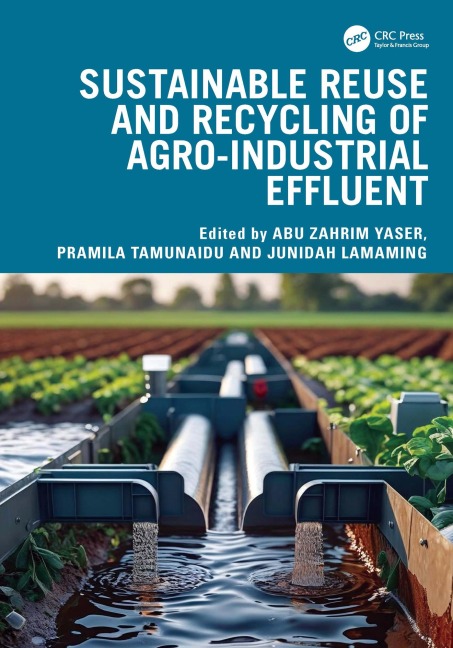
Combating climate change and securing water for future generations requires rethinking waste as opportunity. This book presents a timely and accessible roadmap for transforming agro-industrial effluent from an environmental liability into a suite of value-added, sustainable resources. At its core, the volume systematically covers the science and technology of effluent valorization: recovering inherent energy for bioenergy, extracting phosphorus for cleaner fertilizer production, and purifying water to standards suitable for irrigation or non-potable reuse. It goes further, detailing the conversion of effluent into biofertilizers, liquid nutrient formulations, and microalgae biomass, and exploring its use as a plant growth stimulant. Each pathway is framed within a circular water economy, emphasizing operational efficiency, alignment with SDG 6,7 and 12, and the integration of environmental, societal, and economic impact assessments. Practical processing methods, resource recovery strategies, and quality upgrading techniques are presented so that reuse is both technically viable and environmentally responsible. Original and actionable, this book offers an integrated framework that reframes effluent as a multipurpose resource rather than waste. It demonstrates advantages like phosphorus retrieval without relying on sewage sludge, and provides clear guidance for researchers, engineers, technologists, policymakers, and agro-industry stakeholders seeking to implement sustainable effluent management at scale. Salient Features to stress in promotion include: This book's uniqueness lies in its holistic and practical reframing of agro-industrial effluent, from environmental burden to a diversified resource portfolio. It integrates cutting-edge recovery technologies including energy, nutrients, and biomass with water purification, framed explicitly against global sustainability goals (SDG 6, 7 and 12), and evaluates outcomes across environmental, societal, and economic dimensions. Promotion should stress its interdisciplinary utility (researchers, engineers, industry, policy), its real-world applicability with actionable processing pathways, and its novel comparison of resource recovery strategies within a circular economy paradigm.
Bios Abu Zahrim Yaser is an Associate Professor and Dean at Universiti Malaysia Sabah, holding a PhD from Swansea University. He is the founder of the Kundasang Compost Living Lab and has published 18 books. He also served as a visiting scientist at the University of Hull and received the 2023 National Book Award. Pramila Tamunaidu, Malaysia-Japan trained chemical engineer turned educator and researcher at Universiti Teknologi Malaysia, champions circular bioeconomy, zero waste and zero hunger. With award-winning innovations and Malaysia-Japan collaborations in waste valorization, water treatment, and biofuels, she brings deep expertise and advocacy towards various cradle-to-cradle concepts. Junidah Lamaming, is a senior lecturer at Universiti Malaysia Sarawak specializing in nanocellulose, polymer composites, and sustainable biomaterials. An award-winning researcher and prolific author, she has published extensively and serves as a reviewer for numerous international journals.
Chapter 1: Introduction Junidah Lamaming, Pramila Tamunaidu, Abu Zahrim Yaser Chapter 2: Review on environmental impact of improper disposal of agro-industrial effluents Siti Norasyiqin Abdul Latif Chapter 3: Emerging contaminants in agro-industrial effluent: Challenges in water reuse Rinaldy Jose Nathanael and Katharina Oginawati Chapter 4: Harnessing membrane technologies for cleaner agro-industrial effluent management Dayang Norafizan binti Awang Chee, Nur Afiqah binti Kamaludin Mohamed Afizal bin Mohamed Amin, Maya Asyikin Mohamad Arif, Claudeareena Gardling Malien Chapter 5: Utilizing magnetic cellulose aerogel for oil-based spills in agro-industrial effluents Ain Nadirah Romainor, Junidah Lamaming, Saima Sohni Chapter 6: Constructed wetland for agro-industrial wastewater treatment Danar Arifka Rahman and Nurina Fitriani Chapter 7: Sustainable reuse of agro-industrial effluents: Environmental, agricultural, and socioeconomic perspectives Muhammad Abdurrahman Munir Chapter 8: Oil palm by-products as carrier materials in expanded bed process for polishing palm oil mill effluent Wai Loan Liew, Mohd Azraai Kassim, Khalida Muda, Soh Kheang Loh Chapter 9: Nutrient-rich POME as a feedstock for enhanced biogas production: exploring co-digestion techniques Zubaidah Aimi Abdul Hamid, Ahmad Faizal Abdull Razis, Sitti Fatimah Mhd Ramle, Nik Nurul Anis Nik Yusoff, Noor Fazliani Shoparwe Chapter 10: Agro-industrial effluents as a feedstock for bioenergy: A review of current technologies and future prospects S Muthukumaaran Manickam, Wan Abd Al Qadr Imad Wan-Mohtar, Zul Ilham Chapter 11: Microalgae as a sustainable solution for wastewater treatment and resource recovery in agro-industrial sectors Zubair Hashmi, Juliana Zaini, Rosnah Abdullah, Muhammad Saifullah Abu Bakar, Muhammad Roil Bilad Chapter 12: Current status of bioactive compounds from marine microalgae: A sustainable approach for feed and food production using agro-industrial effluents Siti Nur Hazwani Oslan, Hizriana Nuril Fitri Herryady, Fikri Akmal Chapter 13: Optimizing effluent reuse in aquaponics systems: innovations for sustainable agriculture Mohd Aizudin Abd Aziz, Muhammad Auni Hairunnaja1, Nur Amira Fatihah, Khairuddin Md Isa Chapter 14: Utilizing extracted chitosan as eco-friendly agricultural input for sustainable agriculture Muhammad Bukhari Rosly, Nurhamieza Md Huzir, Pramila Tamunaidu, Abd Halim Md Ali, Azlan Nur Rasyid Amin Chapter 15: Exploring in leachate processing technology for sustainable liquid fertilizer production Rizkiy Amaliyah Barakwan Chapter 16: Environmental and economical sustainability of struvite fertilizer Mohamad Darwish and Shaymaa Mustafa Chapter 17: Transforming agro-industrial effluents into biostimulants: Opportunities and applications in a circular economy Nurul Nurhamieza Md Huzir, Pramila Tamunaidu, Abd Halim Md Ali, Muhammad Bukhari Rosly, Azlan Nur Rasyid Amin Chapter 18: Enhancing soil irrigation and plant growth: The role of inorganic nutrients from agro-industrial effluents Maya Asyikin Mohamad Arif & Dayang Norafizan Awang Chee Chapter 19: Energy consumption in aerobic and anaerobic treatment wastewater plants Faranak Faghiri, Habibollah Younesi, Mehri Shabani, Ruggero Rossi Chapter 20: Sustainable prosperity: Exploring the synergy in the blue-green economic model in solving wastewater issue Jain Yassin, Wong Sing Yun, Saizal Pinjaman, Haidy Henry Dusim Chapter 21: Economic benefits of circular wastewater management Wong Sing Yun, Jain Yassin, Cheong Jia Qi, Debbra Toria Nipo, Saizal Pinjaman Chapter 22: Conclusion and Future Perspectives Pramila Tamunaidu, Junidah Lamaming and Abu Zahrim Yaser