Und dann auf "Zum Home-Bildschirm [+]".

Stöbern
genialokal zum Startbildschirm hinzufügen
Installieren Sie die genialokal App auf Ihrem Startbildschirm für einen schnellen Zugriff und eine komfortable Nutzung.
Installieren Sie die genialokal App auf Ihrem Startbildschirm für einen schnellen Zugriff und eine komfortable Nutzung.
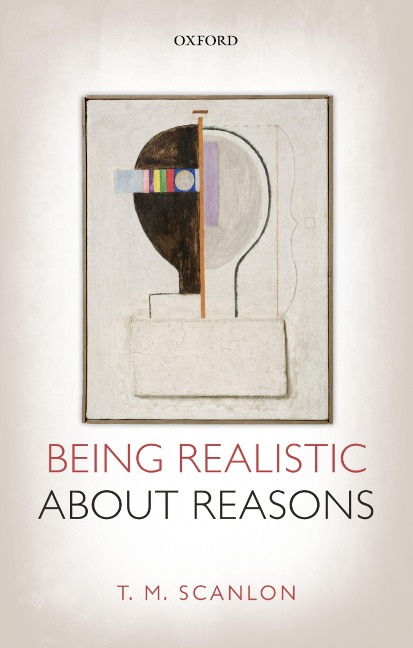
T. M. Scanlon offers a qualified defense of normative cognitivism--the view that there are irreducibly normative truths about reasons for action. He responds to three familiar objections: that such truths would have troubling metaphysical implications; that we would have no way of knowing what they are; and that the role of reasons in motivating and explaining action could not be explained if accepting a conclusion about reasons for action were a kind of belief. Scanlon answers the first of these objections within a general account of ontological commitment, applying to mathematics as well as normative judgments. He argues that the method of reflective equilibrium, properly understood, provides an adequate account of how we come to know both normative truths and mathematical truths, and that the idea of a rational agent explains the link between an agent's normative beliefs and his or her actions. Whether every statement about reasons for action has a determinate truth value is a question to be answered by an overall account of reasons for action, in normative terms. Since it seems unlikely that there is such an account, the defense of normative cognitivism offered here is qualified: statements about reasons for action can have determinate truth values, but it is not clear that all of them do. Along the way, Scanlon offers an interpretation of the distinction between normative and non-normative claims, a new account of the supervenience of the normative on the non-normative, an interpretation of the idea of the relative strength of reasons, and a defense of the method of reflective equilibrium.
T. M. Scanlon received a BA from Princeton in 1962 and a PhD from Harvard in 1968, in between studying for a year at Brasenose College, Oxford. He taught at Princeton from 1966 until 1984, and at Harvard since that time. Scanlon is the author of many articles in moral and political philosophy, and of three books: What We Owe to Each Other (Harvard University Press, 1998), The Difficulty of Tolerance: Essays in Political Philosophy (CUP, 2003), and Moral Dimensions: Permissibility, Meaning, Blame (Harvard University Press, 2008).
- 1: Introduction: Reasons Fundamentalism - 2: Metaphysical Objections - 3: Motivation and the Appeal of Expressivism - 4: Epistemology and Determinateness - 5: Reasons and their Strength - Bibliography - Index
Dieses eBook wird im PDF-Format geliefert und ist mit einem Adobe Kopierschutz (DRM) versehen. Sie können dieses eBook mit allen Geräten lesen, die das PDF-Format und den Adobe Kopierschutz (DRM) unterstützen.
Zum Beispiel mit den folgenden Geräten:
• tolino Reader
Laden Sie das eBook direkt über den Reader-Shop auf dem tolino herunter oder übertragen Sie das eBook auf Ihren tolino mit einer kostenlosen Software wie beispielsweise Adobe Digital Editions.
• Sony Reader & andere eBook Reader
Laden Sie das eBook direkt über den Reader-Shop herunter oder übertragen Sie das eBook mit der kostenlosen Software Sony READER FOR PC/Mac oder Adobe Digital Editions auf ein Standard-Lesegeräte mit epub- und Adobe DRM-Unterstützung.
• Tablets & Smartphones
Möchten Sie dieses eBook auf Ihrem Smartphone oder Tablet lesen, finden Sie hier unsere kostenlose Lese-App für iPhone/iPad und Android Smartphone/Tablets.
• PC & Mac
Lesen Sie das eBook direkt nach dem Herunterladen mit einer kostenlosen Lesesoftware, beispielsweise Adobe Digital Editions, Sony READER FOR PC/Mac oder direkt über Ihre eBook-Bibliothek in Ihrem Konto unter „Meine eBooks“ - „online lesen“.
Schalten Sie das eBook mit Ihrer persönlichen Adobe ID auf bis zu sechs Geräten gleichzeitig frei.
Bitte beachten Sie, dass die Kindle-Geräte das Format nicht unterstützen und dieses eBook somit nicht auf Kindle-Geräten lesbar ist.