Und dann auf "Zum Home-Bildschirm [+]".

Stöbern
genialokal zum Startbildschirm hinzufügen
Installieren Sie die genialokal App auf Ihrem Startbildschirm für einen schnellen Zugriff und eine komfortable Nutzung.
Installieren Sie die genialokal App auf Ihrem Startbildschirm für einen schnellen Zugriff und eine komfortable Nutzung.
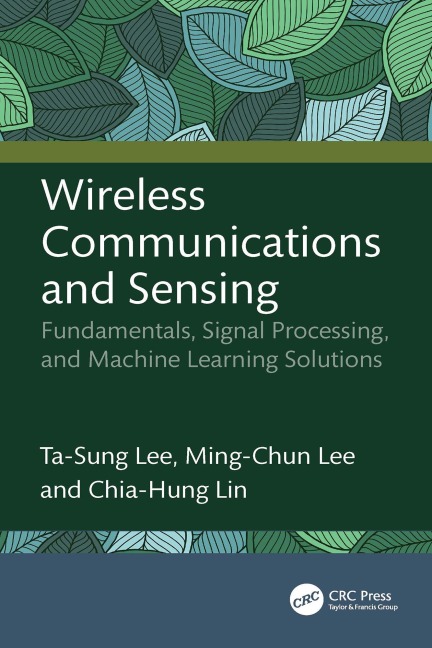
In this work from leading figures in the field, Lee, Lee, and Lin describe methods of integrated sensing and communication (ISAC) and artificial intelligence-aided radio systems to provide improved efficiency and performance to wireless users using next-generation (6G) communications systems. The authors provide the tools to master four major considerations of 6G systems: knowledge of communication systems, knowledge of radar systems, understanding of ISAC systems, and machine learning-based enhancements. Wireless Communications and Sensing: Fundamentals, Signal Processing, and Machine Learning Solutions begins by providing preliminary information regarding communication and radar systems, including descriptions of system architecture and design concepts (e.g., wireless propagation, waveforms, MIMO signal processing, and multi-user scenarios) for entry-level readers. Throughout, the authors describe novel artificial intelligence-enabled approaches to aid the design of communication and radar systems. Furthermore, this book also describes the architecture and design concepts of ISAC systems and offers an in-depth discussion of the applications of machine learning to communication, radar, and ISAC systems. Readers will be able to use their comprehensive understanding of this field to enhance ISAC system performance or aid the deployment of ISAC systems in real-world scenarios to fulfill 6G visions. This book is especially valuable for graduate and higher-level students, scholars, and engineers who want to step into the research areas of integrated sensing and communications and artificial intelligence-aided radio systems. Readers should have at least a bachelor's degree in engineering and have had some exposure to signals and systems, communication theory, and radar principles.
Ta-Sung Lee is Senior Vice President, Chair Professor of Department of Electronics and Electronical Engineering, and the Director of the IoT Intelligent Systems Research Center at National Yang Ming Chiao Tung University, Taiwan. He is a Fellow of the IEEE, and obtained his PhD from Purdue University in 1989. Ming-Chun Lee is associate professor at the Institute of Communications Engineering at National Yang Ming Chiao Tung University, Taiwan. He gained his PhD from the University of Southern California in Electrical Engineering in 2020. Chia-Hung Lin is a research assistant at North Carolina State University and is completing his PhD in Electrical and Computer Engineering at North Carolina State University, USA.
1. Introduction I Wireless Communication Basics 2. Wireless Channels and signal models 3. OFDM principles 4. MIMO signal processing in communication systems 5. Interference management and multiple access in communication systems II Radar Sensing Basics 6. Waveform designs and basic signal processing in radar systems 7. MIMO signal processing in radar systems 8. Interference mitigation in radar systems III Integrated Sensing and Communication (ISAC) Systems 9. ISAC systems and architectures 10. ISAC transceiver design principles IV Learning-Based Enhancements 11. Machine learning techniques 12. DL-based signal processing in communication systems 13. DL-based interference mitigation in communication systems 14. DL-based signal processing in radar systems 15. DL-based interference mitigation in radar systems 16. DL-based signal processing in ISAC systems
Dieses eBook wird im PDF-Format geliefert und ist mit einem Adobe Kopierschutz (DRM) versehen. Sie können dieses eBook mit allen Geräten lesen, die das PDF-Format und den Adobe Kopierschutz (DRM) unterstützen.
Zum Beispiel mit den folgenden Geräten:
• tolino Reader
Laden Sie das eBook direkt über den Reader-Shop auf dem tolino herunter oder übertragen Sie das eBook auf Ihren tolino mit einer kostenlosen Software wie beispielsweise Adobe Digital Editions.
• Sony Reader & andere eBook Reader
Laden Sie das eBook direkt über den Reader-Shop herunter oder übertragen Sie das eBook mit der kostenlosen Software Sony READER FOR PC/Mac oder Adobe Digital Editions auf ein Standard-Lesegeräte mit epub- und Adobe DRM-Unterstützung.
• Tablets & Smartphones
Möchten Sie dieses eBook auf Ihrem Smartphone oder Tablet lesen, finden Sie hier unsere kostenlose Lese-App für iPhone/iPad und Android Smartphone/Tablets.
• PC & Mac
Lesen Sie das eBook direkt nach dem Herunterladen mit einer kostenlosen Lesesoftware, beispielsweise Adobe Digital Editions, Sony READER FOR PC/Mac oder direkt über Ihre eBook-Bibliothek in Ihrem Konto unter „Meine eBooks“ - „online lesen“.
Schalten Sie das eBook mit Ihrer persönlichen Adobe ID auf bis zu sechs Geräten gleichzeitig frei.
Bitte beachten Sie, dass die Kindle-Geräte das Format nicht unterstützen und dieses eBook somit nicht auf Kindle-Geräten lesbar ist.