Und dann auf "Zum Home-Bildschirm [+]".

Stöbern
genialokal zum Startbildschirm hinzufügen
Installieren Sie die genialokal App auf Ihrem Startbildschirm für einen schnellen Zugriff und eine komfortable Nutzung.
Installieren Sie die genialokal App auf Ihrem Startbildschirm für einen schnellen Zugriff und eine komfortable Nutzung.
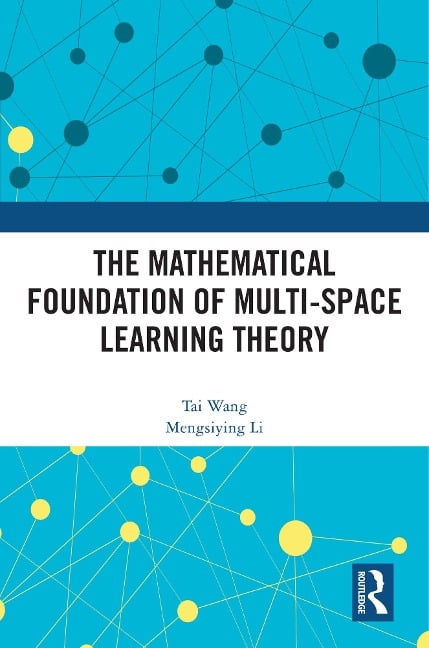
This book explores the measurement of learning effectiveness and the optimization of knowledge retention by modeling the learning process and building the mathematical foundation of multi-space learning theory. Multi-space learning is defined in this book as a micro-process of human learning that can take place in more than one space, with the goal of effective learning and knowledge retention. This book models the learning process as a temporal sequence of concept learning, drawing on established principles and empirical evidence. It also introduces the matroid to strengthen the mathematical foundation of multi-space learning theory and applies the theory to vocabulary and mathematics learning, respectively. The results show that, for vocabulary learning, the method can be used to estimate the effectiveness of a single learning strategy, to detect the mutual interference that might exist between learning strategies, and to predict the optimal combination of strategies. In mathematical learning, it was found that timing is crucial in both first learning and second learning in scheduling optimization to maximize the intersection effective interval. The title will be of interest to researchers and students in a wide range of areas, including educational technology, learning sciences, mathematical applications, and mathematical psychology.
Tai Wang is a professor affiliated with the Faculty of Artificial Intelligence in Education at the Central China Normal University, China. His research interests include educational technologies, internet psychology, and natural language processing. One major topic of his research is learning environment constructions. Mengsiying Li is a PhD candidate at the National Engineering Research Center for E-Learning, Central China Normal University, China, whose research focuses on learning spaces, strategies, and behavior.
1. Introduction on Multi-Space Learning 2. Partition Spaces to Optimize Learning Effectiveness 3. Matroid Theory 4. Current Foundations of Learning Sciences 5. Applications in Vocabulary Learning 6. Applications in Math Learning 7. Summary
Dieses eBook wird im PDF-Format geliefert und ist mit einem Adobe Kopierschutz (DRM) versehen. Sie können dieses eBook mit allen Geräten lesen, die das PDF-Format und den Adobe Kopierschutz (DRM) unterstützen.
Zum Beispiel mit den folgenden Geräten:
• tolino Reader
Laden Sie das eBook direkt über den Reader-Shop auf dem tolino herunter oder übertragen Sie das eBook auf Ihren tolino mit einer kostenlosen Software wie beispielsweise Adobe Digital Editions.
• Sony Reader & andere eBook Reader
Laden Sie das eBook direkt über den Reader-Shop herunter oder übertragen Sie das eBook mit der kostenlosen Software Sony READER FOR PC/Mac oder Adobe Digital Editions auf ein Standard-Lesegeräte mit epub- und Adobe DRM-Unterstützung.
• Tablets & Smartphones
Möchten Sie dieses eBook auf Ihrem Smartphone oder Tablet lesen, finden Sie hier unsere kostenlose Lese-App für iPhone/iPad und Android Smartphone/Tablets.
• PC & Mac
Lesen Sie das eBook direkt nach dem Herunterladen mit einer kostenlosen Lesesoftware, beispielsweise Adobe Digital Editions, Sony READER FOR PC/Mac oder direkt über Ihre eBook-Bibliothek in Ihrem Konto unter „Meine eBooks“ - „online lesen“.
Schalten Sie das eBook mit Ihrer persönlichen Adobe ID auf bis zu sechs Geräten gleichzeitig frei.
Bitte beachten Sie, dass die Kindle-Geräte das Format nicht unterstützen und dieses eBook somit nicht auf Kindle-Geräten lesbar ist.