Und dann auf "Zum Home-Bildschirm [+]".

Stöbern
genialokal zum Startbildschirm hinzufügen
Installieren Sie die genialokal App auf Ihrem Startbildschirm für einen schnellen Zugriff und eine komfortable Nutzung.
Installieren Sie die genialokal App auf Ihrem Startbildschirm für einen schnellen Zugriff und eine komfortable Nutzung.
Ihr gewünschter Artikel ist in 0 Buchhandlungen vorrätig - wählen Sie hier eine Buchhandlung in Ihrer Nähe aus:

How can we effectively apply improvisation to train an ensemble of actors?
Where is the method to create physically dynamic staging for text-based contemporary and classical plays?
And how can a trainer and a director utilise improvisation to devise new work?
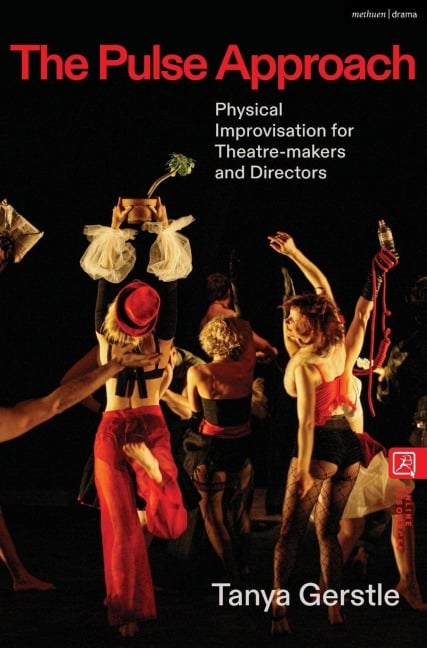
The Pulse Approach answers these questions and more, captured here for the first time in a workbook to the practice.
Pulseis an improvisational performance strategy that can be used by actors and directors to develop original text-based performance material and rehearse dramatic scripts. Director Tanya Gerstle has been developing the approach since 1989 and has used it to stage more than 25 theatre productions.
Through step-by-step instructions for the student and practitioner; troubleshooting advice; case studies of productions directed using the Pulse Approach; and interviews with practitioners involved, this book is the first practical guide to this innovative methodology, which has its roots in the Australian actor-training scene.
The Pulse Approach fuses improvisation and text-based theatre, too often disconnected, to offer up a methodology and rigorous practice for improvisation as a holistic process of development in classical and contemporary plays. It can be used to train any ensemble of actors in any context - inexperienced, professional, young, old and culturally and linguistically diverse.
A companion website will include a video documentary of practitioners using Pulse in their work with the author.
Tanya Gerstleis Honorary Senior Fellow at the University of Melbourne, Australia, where she was Head of Theatre and Acting during 15 years at its Victorian College of the Arts (VCA) and integrated Pulse training methodology into the curriculum. She is an award-winning performance maker, theatre director, actor and teaching artist, and is founder and Artistic Director of OpticNerve Performance Group. She has taught the Pulse Approach throughout Australia and internationally, including at Penn State University, USA; University of York, UK; Caen University, France and to theatre companies in New Caledonia. She has contributed a chapter to Encountering Ensemble (Methuen Drama, 2013).
List of Illustrations Preface Foreword Acknowledgements Introduction TRAINING WORKBOOK 1 The Pulse Canvas How to Use this Workbook Before you Begin 2 The Pulse Phases Phase One - Developing Kinaesthetic Awareness Phase Two - Making Connections Phase Three - Working Attitude Phase Four - Learning a Shared Language Phase Five - Expanding the Action Vocabulary Phase Six - The Pulse Sketch Phase Seven - Adding Sound to the Physical World Phase Eight - Speaking on the Canvas 3 Ensemble Practice Tasks 4 Skill Focus Tasks 5 Integrating Design Elements and Audience 6 Alternative Applications Towards an Original Performance Text - Case Study, Invisible Stains DIRECTING WORKBOOK 7 Inner Life Revealed Through Action How to Use this Workbook Rehearsal Practice Rehearsal Process Rehearsal Concepts 8 Case Studies Using Pulse as a Rehearsal Device Immersion The Mill on the Floss adapted by Helen Edmundson Pericles Punished after William Shakespeare Mapping Five Kinds of Silence by Shelagh Stephenson Stage Beauty by Jeffrey Hatcher Rendering Manbeth: Macbeth Amplified after William Shakespeare Afterword Notes List of Interviewees References Index