Und dann auf "Zum Home-Bildschirm [+]".

Stöbern
genialokal zum Startbildschirm hinzufügen
Installieren Sie die genialokal App auf Ihrem Startbildschirm für einen schnellen Zugriff und eine komfortable Nutzung.
Installieren Sie die genialokal App auf Ihrem Startbildschirm für einen schnellen Zugriff und eine komfortable Nutzung.
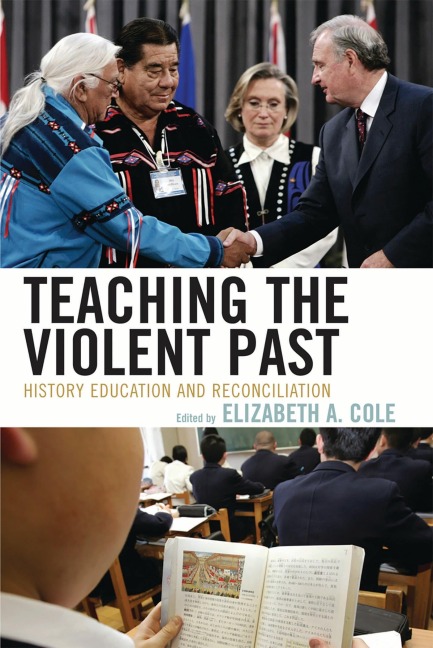
During an armed conflict or period of gross human rights violations, the first priority is a cessation of violence. For the cease-fire to be more than a lull in hostilities and atrocities, however, it must be accompanied by a plan for political transition and social reconstruction. Essential to this long-term reconciliation process is education reform that teaches future generations information repressed under dictatorial regimes and offers new representations of former enemies. In Teaching the Violent Past, Cole has gathered nine case studies exploring the use of history education to promote tolerance, inclusiveness, and critical thinking in nations around the world.
Online Book Companion is available at: http://www.cceia.org/resources/for_educators_and_students/teaching_the_violent_past/index.html
Elizabeth Cole is Assistant Director, TeachAsia, in the Education Division of Asia Society in New York City. She was Senior Program Officer at the Carnegie Council for Ethics in International Affairs from 2000-2005.
Chapter 1 Introduction: History Education and Sociopolitical Reconciliation
Part 2 Part I: As Generations Pass: The Challenges of Long-Term Reconciliation in History Textbooks
Chapter 3 Chapter One: The Trajectory of Reconciliation through History Education in Post-Unification Germany
Chapter 4 Chapter Two: Teaching the Pacific War in Japanese Secondary Schools
Chapter 5 Chapter Three: Canadian History Textbooks and the Portrayal of Canada's First Nations
Part 6 Part II: Reconciliation in Process
Chapter 7 Chapter Four: History Teaching and Reconciliation in Northern Ireland
Chapter 8 Chapter Five: The Civil War and Franco Dictatorship in Spanish Secondary School History Textbooks
Chapter 9 Chapter Six: Education and the Politics of History in Guatemala: Integrating "Memory of Silence" into the Curriculum?
Part 10 Part III: Reconciliation Jeopardized, Undone or Not Yet Attained: Aspirational and Counter-Reconciliatory Cases
Chapter 11 Chapter Seven: Secondary School History Texts: the Case of Russia
Chapter 12 Chapter Eight: From Confrontation to Cooperation in the Two Koreas: The Role of History Education in Promoting Reconciliation
Chapter 13 Chapter Nine: History Education and Reconciliation Issues In Contemporary India and Pakistan
Chapter 14 Afterword
Dieses eBook wird im PDF-Format geliefert und ist mit einem Adobe Kopierschutz (DRM) versehen. Sie können dieses eBook mit allen Geräten lesen, die das PDF-Format und den Adobe Kopierschutz (DRM) unterstützen.
Zum Beispiel mit den folgenden Geräten:
• tolino Reader
Laden Sie das eBook direkt über den Reader-Shop auf dem tolino herunter oder übertragen Sie das eBook auf Ihren tolino mit einer kostenlosen Software wie beispielsweise Adobe Digital Editions.
• Sony Reader & andere eBook Reader
Laden Sie das eBook direkt über den Reader-Shop herunter oder übertragen Sie das eBook mit der kostenlosen Software Sony READER FOR PC/Mac oder Adobe Digital Editions auf ein Standard-Lesegeräte mit epub- und Adobe DRM-Unterstützung.
• Tablets & Smartphones
Möchten Sie dieses eBook auf Ihrem Smartphone oder Tablet lesen, finden Sie hier unsere kostenlose Lese-App für iPhone/iPad und Android Smartphone/Tablets.
• PC & Mac
Lesen Sie das eBook direkt nach dem Herunterladen mit einer kostenlosen Lesesoftware, beispielsweise Adobe Digital Editions, Sony READER FOR PC/Mac oder direkt über Ihre eBook-Bibliothek in Ihrem Konto unter „Meine eBooks“ - „online lesen“.
Schalten Sie das eBook mit Ihrer persönlichen Adobe ID auf bis zu sechs Geräten gleichzeitig frei.
Bitte beachten Sie, dass die Kindle-Geräte das Format nicht unterstützen und dieses eBook somit nicht auf Kindle-Geräten lesbar ist.