Und dann auf "Zum Home-Bildschirm [+]".

Stöbern
genialokal zum Startbildschirm hinzufügen
Installieren Sie die genialokal App auf Ihrem Startbildschirm für einen schnellen Zugriff und eine komfortable Nutzung.
Installieren Sie die genialokal App auf Ihrem Startbildschirm für einen schnellen Zugriff und eine komfortable Nutzung.
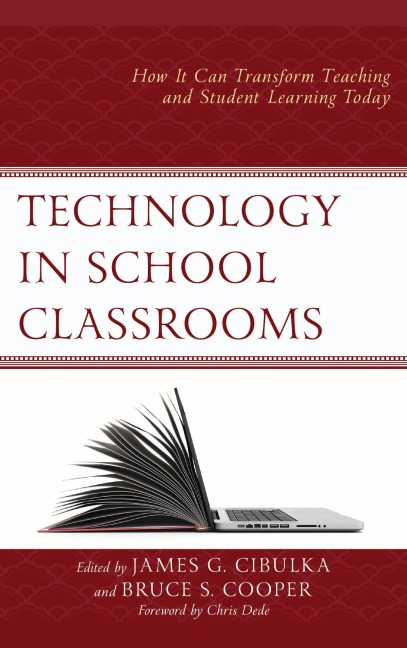
This book provides an excellent analysis of whether and how digital technologies can transform teaching and learning in classroom settings. The authors collectively provide a multi-dimensional perspective on how and under what conditions technology can be productively employed by teachers to more effectively meet the challenges presented by a rapidly evolving world.
James G. Cibulka, Ph.D. Throughout his career as an educator, Cibulka has advocated for reforms that support greater student learning opportunities, particularly for disadvantaged youth. He has been a K-12 teacher, university professor, dean, and founding president of the Council for Accreditation of Educator Preparation. He is a former president of the Politics of Education Association (PEA) and senior editor of Educational Administration Quarterly.
Bruce S. Cooper, Ph.D. is Professor Emeritus at Fordham University, a scholar and researcher in the areas of private and religious schools, with an interest in school administration and policy. He was President of the Politics of Education Association (PEA), a recipient of the Jay D. Scriber Mentoring Award, from University Council Educational Administration, 2008; and President: Associates for Research on Private Education (ARPE), SIG of AERA; and Editor of the Private School Monitor, 2007-2012.
Foreword. Next-Generation Learning in School
Chris Dede
Introduction to the Topic -- and the Book
James G. Cibulka and Bruce S. Cooper
Chapter 1: Technology's Role and Place in Student Learning: What We Have Learned from Research and Theories
Kui Xie and Nathan A. Hawk
Chapter 2: Teacher Professional Development in the Digital Age: Design and Implementation of Learning Without Limits
Stephanie Hirsh and Michelle Bowman King
Chapter 3: The State of K-12 Online Learning
Michael K. Barbour
Chapter 4: Building Foundational Skills in Learners with Special Needs Through the Use of Technology
Ted S. Hasselbring and Margaret E. Bausch
Chapter 5: Assessment Technology as a Tool to Strengthen Teaching and Student Learning
Michael Russell
Chapter 6: Emerging Technologies and Changing Practices in Science Classrooms
John A. Craven III and Tracy Hogan
Chapter 7: Economic Effects of Technology: Costs and Distribution of Resources to Support Student Learning
Lawrence O. Picus
Chapter 8: The Role of School Leaders in Leveraging Technology to Transform P-12 Classrooms
James G. Cibulka
Chapter 9: The Current Role of Schools of Education in Preparing a Technologically Literate Teaching Workforce
Karen Symms Gallagher
Chapter 10: Conclusion
James G. Cibulka
About the Authors
Index
Dieses eBook wird im PDF-Format geliefert und ist mit einem Adobe Kopierschutz (DRM) versehen. Sie können dieses eBook mit allen Geräten lesen, die das PDF-Format und den Adobe Kopierschutz (DRM) unterstützen.
Zum Beispiel mit den folgenden Geräten:
• tolino Reader
Laden Sie das eBook direkt über den Reader-Shop auf dem tolino herunter oder übertragen Sie das eBook auf Ihren tolino mit einer kostenlosen Software wie beispielsweise Adobe Digital Editions.
• Sony Reader & andere eBook Reader
Laden Sie das eBook direkt über den Reader-Shop herunter oder übertragen Sie das eBook mit der kostenlosen Software Sony READER FOR PC/Mac oder Adobe Digital Editions auf ein Standard-Lesegeräte mit epub- und Adobe DRM-Unterstützung.
• Tablets & Smartphones
Möchten Sie dieses eBook auf Ihrem Smartphone oder Tablet lesen, finden Sie hier unsere kostenlose Lese-App für iPhone/iPad und Android Smartphone/Tablets.
• PC & Mac
Lesen Sie das eBook direkt nach dem Herunterladen mit einer kostenlosen Lesesoftware, beispielsweise Adobe Digital Editions, Sony READER FOR PC/Mac oder direkt über Ihre eBook-Bibliothek in Ihrem Konto unter „Meine eBooks“ - „online lesen“.
Schalten Sie das eBook mit Ihrer persönlichen Adobe ID auf bis zu sechs Geräten gleichzeitig frei.
Bitte beachten Sie, dass die Kindle-Geräte das Format nicht unterstützen und dieses eBook somit nicht auf Kindle-Geräten lesbar ist.