Und dann auf "Zum Home-Bildschirm [+]".

Stöbern
genialokal zum Startbildschirm hinzufügen
Installieren Sie die genialokal App auf Ihrem Startbildschirm für einen schnellen Zugriff und eine komfortable Nutzung.
Installieren Sie die genialokal App auf Ihrem Startbildschirm für einen schnellen Zugriff und eine komfortable Nutzung.
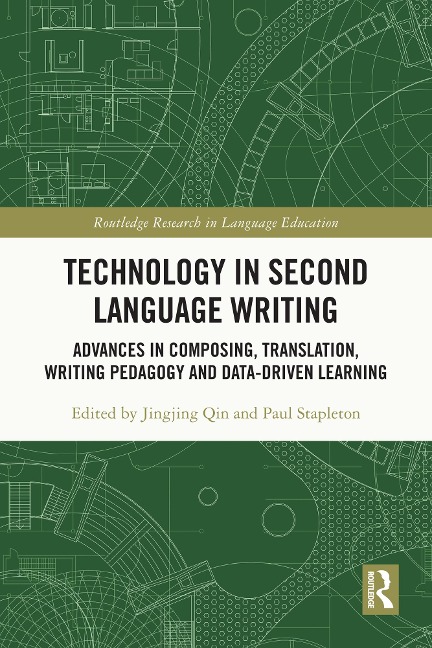
This edited volume showcases state-of-the-art research in technological applications in second language writing. It examines multimodal composing, digital feedback, data-driven learning, machine translation, and technological applications in writing pedagogy. Technology in Second Language Writing reflects the rapidly changing field of technology in second language learning and highlights technological advances across different areas relevant to L2 writing. Composed of empirical studies, reviews, and descriptive essays, this book covers a variety of topics across the areas of composing, pedagogy, and writing research. It includes discussion of computer-mediated communication, language learners' perceptions about using technology in their writing, the use of social media in writing, corpus learning, translation software, and the use of electronic feedback in language classrooms. Offering a multifaceted approach to technology in a wide variety of second language writing contexts, this cutting-edge book serves as essential reading for scholars and postgraduate students in the field of language teaching, applied linguistics, and TESOL.
Jingjing Qin is an Associate Professor in the Department of Language Studies at Zayed University, UAE. Paul Stapleton is an Independent Researcher. His academic interests include L2 writing, critical thinking, and research methods.
Chapter 1. Introduction: Advances in writing technology over the eons Paul Stapleton Chapter 2. Interactive academic EFL writing assisted by GT for Chinese non-English major students Shu-Chiao Tsai Chapter 3. The use of Google Translate and complementary resources by Chinese students: A case study writing in Catalan Ruocheng Ning Chapter 4. Using machine translation in EFL Writing: A scoping review Burcu Gokgoz-Kurt Chapter 5. Repeated academic writing with synchronous and asynchronous teacher electronic feedback: How are macro and micro aspects affected? Sima Khezrlou Chapter 6. Wiki writing in medicine and students' perceptions: The case of an English-in-the-Discipline course in Hong Kong Wenfeng Wang, Simon Boyton, Laura Wakeland, Daya Datwani, Juan Castillo, Letty Chan, and Simon Scanlon Chapter 7. Multimodal resemiotization: Examining one L2 writer's interactions with equity videos Emma R. Britton, Hengyi Liu, Xinyue Zuo, and Theresa Y. Austin Chapter 8. The dialogical conception of beginning L2 writing via social networking and telecollaboration Maria Bondarenko and Liudmila Klimanova Chapter 9. Examining directness with corpus tools in Iraqi EFL writing Ashleigh Cox, Eric Friginal, and Sabah S. Mustafa Chapter 10. L2 handwritten assignments for automated writing evaluation: A text recognition study Vahid Abolghasemi and Reza Falahati Chapter 11. Using computer keystroke logging in the second language composition classroom Hampus Holm, Etienne Skein, and Kirk P. H. Sullivan
Dieses eBook wird im PDF-Format geliefert und ist mit einem Adobe Kopierschutz (DRM) versehen. Sie können dieses eBook mit allen Geräten lesen, die das PDF-Format und den Adobe Kopierschutz (DRM) unterstützen.
Zum Beispiel mit den folgenden Geräten:
• tolino Reader
Laden Sie das eBook direkt über den Reader-Shop auf dem tolino herunter oder übertragen Sie das eBook auf Ihren tolino mit einer kostenlosen Software wie beispielsweise Adobe Digital Editions.
• Sony Reader & andere eBook Reader
Laden Sie das eBook direkt über den Reader-Shop herunter oder übertragen Sie das eBook mit der kostenlosen Software Sony READER FOR PC/Mac oder Adobe Digital Editions auf ein Standard-Lesegeräte mit epub- und Adobe DRM-Unterstützung.
• Tablets & Smartphones
Möchten Sie dieses eBook auf Ihrem Smartphone oder Tablet lesen, finden Sie hier unsere kostenlose Lese-App für iPhone/iPad und Android Smartphone/Tablets.
• PC & Mac
Lesen Sie das eBook direkt nach dem Herunterladen mit einer kostenlosen Lesesoftware, beispielsweise Adobe Digital Editions, Sony READER FOR PC/Mac oder direkt über Ihre eBook-Bibliothek in Ihrem Konto unter „Meine eBooks“ - „online lesen“.
Schalten Sie das eBook mit Ihrer persönlichen Adobe ID auf bis zu sechs Geräten gleichzeitig frei.
Bitte beachten Sie, dass die Kindle-Geräte das Format nicht unterstützen und dieses eBook somit nicht auf Kindle-Geräten lesbar ist.