Und dann auf "Zum Home-Bildschirm [+]".

Stöbern
genialokal zum Startbildschirm hinzufügen
Installieren Sie die genialokal App auf Ihrem Startbildschirm für einen schnellen Zugriff und eine komfortable Nutzung.
Installieren Sie die genialokal App auf Ihrem Startbildschirm für einen schnellen Zugriff und eine komfortable Nutzung.
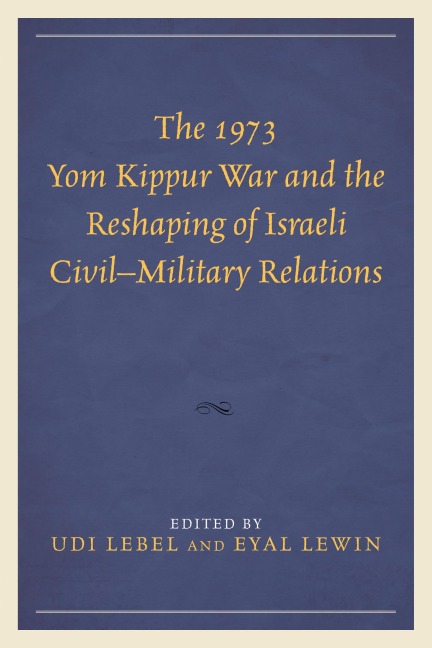
The 1973 Yom Kippur War did not only have external implications on Israel, but also some dramatic internal implications, particularly with regards to the civil-military relations as well as the fields of psychology and political sociology. To this day, the consequences of this war are still prevalent in Israel, in terms of drafting security policies and the military doctrine.
After the war, new identities were formed in the Israeli civil society, which began to function as active agents in shaping security policy. These players are not a unique Israeli case, yet their actions in Israel serve as a case study that illuminates their significant impact in other countries as well. This is due to the fact that the "Israeli Laboratory" is a liberal democratic society living with an ongoing conflict; it has a mandatory army that is sensitive to fluctuations in public opinion, culture and the media; and issues of national security and military conduct are always a top public concern.
Consequently, this book examines the rise of five identities and agents that were formed after the 1973 War and highlights the effects they had on the formation of Israeli defense policy from then on. The book also clarifies the importance of exposure to these agents' activities, referring to the psycho-political social factors that may actually dictate a state's international policies. It therefore forms a study that connects sociology, political psychology, international relations, the field of culture studies and studies of strategy planning. Thus, the book is of interest to both the domestic-Israeli field of research and to the global scholarly discourse, particularly to academic disciplines engaged in civil-military relations (political sociology, political science).
Udi Lebel is associate professor and chair of the Department of Sociology and Anthropology at Ariel University.
Eyal Lewin is assistant professor at the Department of Middle Eastern Studies and Political Science at Ariel University.
Chapter 1: Introduction Udi Lebel and Eyal Lewin
Chapter 2: The Combatants' Protest after the Yom Kippur War and the Transformation of the Protest Culture in Israel Eithan Orkibi
Chapter 3: The Significance of the Yom Kippur War as a Turning Point in the Religious-Zionist Society Nissim Leon
Chapter 4: From Domination to Competition: The Yom Kippur War (1973) and the Formation of a New Grief Community Udi Lebel
Chapter 5: Not Just Intermediaries: The Mediatization of Security Affairs in Israel since 1973 Rafi Mann
Chapter 6: The 1973 War and the Formation of Israeli POW Policy: A Watershed Line? Alexander Bligh
Chapter 7: The 1973 War as a Stimulator in the Reshaping of Israeli National Ethos Eyal Lewin
Dieses eBook wird im PDF-Format geliefert und ist mit einem Adobe Kopierschutz (DRM) versehen. Sie können dieses eBook mit allen Geräten lesen, die das PDF-Format und den Adobe Kopierschutz (DRM) unterstützen.
Zum Beispiel mit den folgenden Geräten:
• tolino Reader
Laden Sie das eBook direkt über den Reader-Shop auf dem tolino herunter oder übertragen Sie das eBook auf Ihren tolino mit einer kostenlosen Software wie beispielsweise Adobe Digital Editions.
• Sony Reader & andere eBook Reader
Laden Sie das eBook direkt über den Reader-Shop herunter oder übertragen Sie das eBook mit der kostenlosen Software Sony READER FOR PC/Mac oder Adobe Digital Editions auf ein Standard-Lesegeräte mit epub- und Adobe DRM-Unterstützung.
• Tablets & Smartphones
Möchten Sie dieses eBook auf Ihrem Smartphone oder Tablet lesen, finden Sie hier unsere kostenlose Lese-App für iPhone/iPad und Android Smartphone/Tablets.
• PC & Mac
Lesen Sie das eBook direkt nach dem Herunterladen mit einer kostenlosen Lesesoftware, beispielsweise Adobe Digital Editions, Sony READER FOR PC/Mac oder direkt über Ihre eBook-Bibliothek in Ihrem Konto unter „Meine eBooks“ - „online lesen“.
Schalten Sie das eBook mit Ihrer persönlichen Adobe ID auf bis zu sechs Geräten gleichzeitig frei.
Bitte beachten Sie, dass die Kindle-Geräte das Format nicht unterstützen und dieses eBook somit nicht auf Kindle-Geräten lesbar ist.