Und dann auf "Zum Home-Bildschirm [+]".

Stöbern
genialokal zum Startbildschirm hinzufügen
Installieren Sie die genialokal App auf Ihrem Startbildschirm für einen schnellen Zugriff und eine komfortable Nutzung.
Installieren Sie die genialokal App auf Ihrem Startbildschirm für einen schnellen Zugriff und eine komfortable Nutzung.


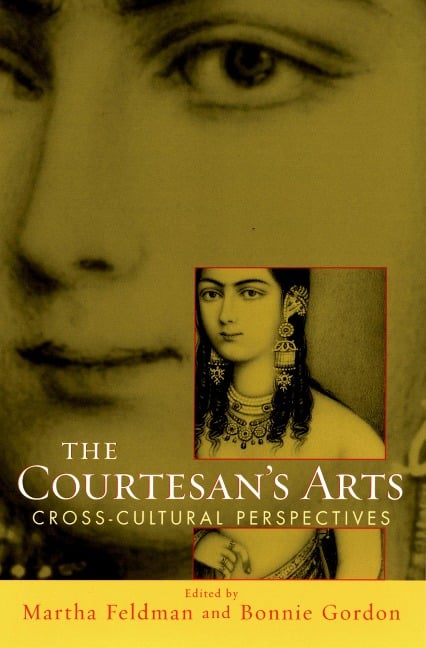
Courtesans, hetaeras, tawaif-s, ji-s--these women have exchanged artistic graces, elevated conversation, and sexual favors with male patrons throughout history and around the world. Of a different world than common prostitutes, courtesans deal in artistic and intellectual pleasures in ways that are wholly interdependent with their commerce in sex. In pre-colonial India, courtesans cultivated a wide variety of artistic skills, including magic, music, and chemistry. In Ming dynasty China, courtesans communicated with their patrons through poetry and music. Yet because these cultural practices have existed primarily outside our present-day canons of art and have often occurred through oral transmission, courtesans' arts have vanished almost without trace. The Courtesan's Arts delves into this hidden legacy, unveiling the artistic practices and cultural production of courtesan cultures with a sideways glance at the partly-related geisha. Balancing theoretical and empirical research, this interdisciplinary collection is the first of its kind to explore courtesan cultures through diverse case studies--the Edo period and modern Japan, 20th-century Korea, Ming dynasty China, ancient Greece, early modern Italy, and India, past and present. Each essay puts forward new perspectives on how the arts have figured in the courtesan's survival or demise. Though performative and often flamboyant, courtesans have been enigmatic and elusive to their beholders--including scholars. They have shaped cultures through art, yet their arts, often intangible, have all but faded from view. Often courtesans have hovered in the crevices of space, time, and practice--between gifts and money, courts and cities, feminine allure and masculine power, as substitutes for wives but keepers of culture. Reproductively irrelevant, they have tended to be ambiguous figures, thriving on social distinction while operating outside official familial relations. They have symbolized desirability and sophistication yet often been reviled as decadent. The Courtesan's Arts shows that while courtesans cultures have appeared regularly in various times and places, they are universal neither as a phenomenon nor as a type. To the contrary, when they do crop up, wide variations exist. What binds together courtesans and their arts in the present-day post-industrialized world of global services and commodities is their fragility. Once vital to cultures of leisure and pleasure, courtesans are now largely forgotten, transformed into national icons or historical curiosities, or reduced to prostitution.
Martha Feldman is Professor of Music and the Humanities at The University of Chicago. She is author of City Culture and the Madrigal at Venice (1995), Opera and Sovereignty: Sentiment, Myth, and Modernity in Eighteenth-Century Italy (forthcoming, 2006), and is currently at work on The Castrato as Myth: Symbolic Economy and Life Writing in Early Modern Italy. She was also a volume editor in the series Sixteenth-century Madrigal (1989-91) and general editor of the series Critical and Cultural Musicology (2000-2002). In 1998-99 she was appointed a Getty Scholar and in 2001, the Dent Medal was conferred on her by the Royal Musical Association, in collaboration with the International Musicological Society. Bonnie Gordon is Assistant Professor of Music at the State University of New York at Stony Brook. She has published on the female voice in early modern Italy and on contemporary female singer/songwriters and her book Monteverdi's Unruly Women: The Power of Song in Early Modern Europe was published in 2004. She has received awards from the American Association of University Women, the Radcliffe Institute for Advanced Study, and the Mellon Foundation.
Dieses eBook wird im PDF-Format geliefert und ist mit einem Adobe Kopierschutz (DRM) versehen. Sie können dieses eBook mit allen Geräten lesen, die das PDF-Format und den Adobe Kopierschutz (DRM) unterstützen.
Zum Beispiel mit den folgenden Geräten:
• tolino Reader
Laden Sie das eBook direkt über den Reader-Shop auf dem tolino herunter oder übertragen Sie das eBook auf Ihren tolino mit einer kostenlosen Software wie beispielsweise Adobe Digital Editions.
• Sony Reader & andere eBook Reader
Laden Sie das eBook direkt über den Reader-Shop herunter oder übertragen Sie das eBook mit der kostenlosen Software Sony READER FOR PC/Mac oder Adobe Digital Editions auf ein Standard-Lesegeräte mit epub- und Adobe DRM-Unterstützung.
• Tablets & Smartphones
Möchten Sie dieses eBook auf Ihrem Smartphone oder Tablet lesen, finden Sie hier unsere kostenlose Lese-App für iPhone/iPad und Android Smartphone/Tablets.
• PC & Mac
Lesen Sie das eBook direkt nach dem Herunterladen mit einer kostenlosen Lesesoftware, beispielsweise Adobe Digital Editions, Sony READER FOR PC/Mac oder direkt über Ihre eBook-Bibliothek in Ihrem Konto unter „Meine eBooks“ - „online lesen“.
Schalten Sie das eBook mit Ihrer persönlichen Adobe ID auf bis zu sechs Geräten gleichzeitig frei.
Bitte beachten Sie, dass die Kindle-Geräte das Format nicht unterstützen und dieses eBook somit nicht auf Kindle-Geräten lesbar ist.