Und dann auf "Zum Home-Bildschirm [+]".

Stöbern
genialokal zum Startbildschirm hinzufügen
Installieren Sie die genialokal App auf Ihrem Startbildschirm für einen schnellen Zugriff und eine komfortable Nutzung.
Installieren Sie die genialokal App auf Ihrem Startbildschirm für einen schnellen Zugriff und eine komfortable Nutzung.
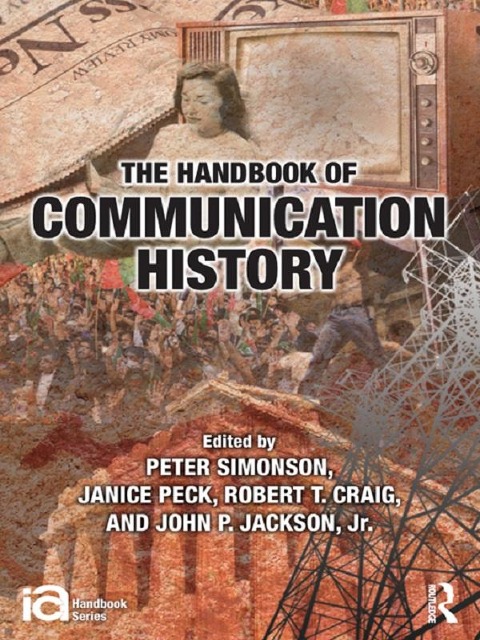
The Handbook of Communication History addresses central ideas, social practices, and media of communication as they have developed across time, cultures, and world geographical regions. It attends to both the varieties of communication in world history and the historical investigation of those forms in communication and media studies. The Handbook editors view communication as encompassing patterns, processes, and performances of social interaction, symbolic production, material exchange, institutional formation, social praxis, and discourse. As such, the history of communication cuts across social, cultural, intellectual, political, technological, institutional, and economic history. The volume examines the history of communication history; the history of ideas of communication; the history of communication media; and the history of the field of communication. Readers will explore the history of the object under consideration (relevant practices, media, and ideas), review its manifestations in different regions and cultures (comparative dimensions), and orient toward current thinking and historical research on the topic (current state of the field). As a whole, the volume gathers disparate strands of communication history into one volume, offering an accessible and panoramic view of the development of communication over time and geographical places, and providing a catalyst to further work in communication history.
Peter Simonson is an Associate Professor in the Department of Communication at the University of Colorado at Boulder. Janice Peck is Associate Professor in the School of Journalism and Mass Communication at UC Boulder. Robert T. Craig is Professor in the Department of Communication at UC Boulder. John P. Jackson, Jr., is Associate Professor in the Department of Communication at UC Boulder.
Series Editor's ForewordRobert T. Craig IntroductionPeter Simonson, Janice Peck, Robert T. Craig, and John P. Jackson, Jr. 1. FieldThe History of Communication History. Peter Simonson, Janice Peck, Robert T. Craig, and John P. Jackson, Jr.Media. David Crowley and Paul HeyerCommunication Research. Jefferson D. Pooley and David W. Park2. ModesAudiences: Publics, Crowds, Mass. Richard ButschRhetoric in Cross-Cultural Perspectives. C. Jan SwearingenConversation. Peter BurkeVisual Communication. Michael GriffinCommunication in Music. Christian Kaden 3. Media Print Culture. Ronald J. Zboray and Mary Saracino ZborayJournalism. John NeroneTelecommunications. Gabriele BalbiRadio Broadcasting. Christopher H. SterlingTelevision. Andreas FickersNew Media. Benjamin Peters and Rasmus Kleis Nielsen 4. Society The City. Juraj KittlerScience Communication. Joan LeachPolitics. Josef SeethalerLabor. Nathan GodfriedWar. Mette MortensenGender and Media: A Very Short Herstory. Karen RossRace. Murali Balaji and Letrell D. CrittendenOrganizing. Karen Lee Ashcraft and Pushkala Prasad 5. World Rhetoric in Latin America. Susan Romano'Cultural Imperialism' Revisited: The Case of Broadcasting in Latin America, India, and China. John SinclairCommunication in Colonial and Post-Colonial Southern Africa. Donal P. McCracken and Ruth E. Teer-TomaselliIslam, Mediation and Technology. Nabil EchchabiJewish Media and Communication in the Modern Age. Gideon KoutsEast Asian Communication Studies. Guo-Ming Chen, Akira Miyahara, and Min-Sun Kim Epilogue: The Futures of Communication. Lucien Sfez
Dieses eBook wird im PDF-Format geliefert und ist mit einem Adobe Kopierschutz (DRM) versehen. Sie können dieses eBook mit allen Geräten lesen, die das PDF-Format und den Adobe Kopierschutz (DRM) unterstützen.
Zum Beispiel mit den folgenden Geräten:
• tolino Reader
Laden Sie das eBook direkt über den Reader-Shop auf dem tolino herunter oder übertragen Sie das eBook auf Ihren tolino mit einer kostenlosen Software wie beispielsweise Adobe Digital Editions.
• Sony Reader & andere eBook Reader
Laden Sie das eBook direkt über den Reader-Shop herunter oder übertragen Sie das eBook mit der kostenlosen Software Sony READER FOR PC/Mac oder Adobe Digital Editions auf ein Standard-Lesegeräte mit epub- und Adobe DRM-Unterstützung.
• Tablets & Smartphones
Möchten Sie dieses eBook auf Ihrem Smartphone oder Tablet lesen, finden Sie hier unsere kostenlose Lese-App für iPhone/iPad und Android Smartphone/Tablets.
• PC & Mac
Lesen Sie das eBook direkt nach dem Herunterladen mit einer kostenlosen Lesesoftware, beispielsweise Adobe Digital Editions, Sony READER FOR PC/Mac oder direkt über Ihre eBook-Bibliothek in Ihrem Konto unter „Meine eBooks“ - „online lesen“.
Schalten Sie das eBook mit Ihrer persönlichen Adobe ID auf bis zu sechs Geräten gleichzeitig frei.
Bitte beachten Sie, dass die Kindle-Geräte das Format nicht unterstützen und dieses eBook somit nicht auf Kindle-Geräten lesbar ist.