Und dann auf "Zum Home-Bildschirm [+]".

Stöbern
genialokal zum Startbildschirm hinzufügen
Installieren Sie die genialokal App auf Ihrem Startbildschirm für einen schnellen Zugriff und eine komfortable Nutzung.
Installieren Sie die genialokal App auf Ihrem Startbildschirm für einen schnellen Zugriff und eine komfortable Nutzung.
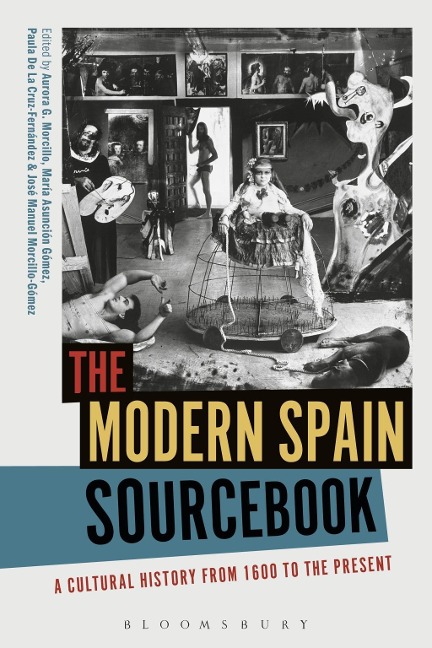
Incorporating a wide range of visual and translated written sources, The Modern Spain Sourcebook documents Spain's history from the Enlightenment to the present.
The book is thematically arranged and includes six key primary sources on ten significant areas of Spanish history, including the arts, work, education, religion, politics, sexuality and empire. As well as the book's overarching introduction, there are theme-specific introductions and vital historical context sections provided for the sources that are presented. There are also useful suggested analytical questions and helpful web link lists included throughout.
The Modern Spain Sourcebook covers political and economic history, but moves beyond this to provide a more complete picture of Spanish history through the sources selected with gender history, social history and cultural history coming to the fore. This is a crucial text containing a vital trove of primary material for all students of Spain and its history.
Aurora G. Morcillo was Professor of History at Florida International University, USA. She is the author of Cultural and Social Memory of the Spanish Civil War: Realms of Oblivion (2014), The Seduction of Modern Spain: The Female Body and the Francoist Body Politic (2010) and True Catholic Womanhood: Gender Ideology in Franco Spain (2000). She sadly passed away in 2020.
María Asunción Gómez is Professor of Spanish at Florida International University, USA. She is the author of La madre muerta: El mito matricida en la literatura y el cine españoles (2016) and Del escenario a la pantalla: La adaptación cinematográfica del teatro español (2000), and the co-editor, along with Santiago Juan-Navarro and Phyllis Zatlin, of History and Myth of the Mad Queen: Modern Representations of Juana of Castile (2008).
Paula De La Cruz-Fernández is instructor in history, research historian, and digital archivist.
José Manuel Morcillo-Gómez is Visiting Instructor in Spanish at the University of Qingdao, China. He is a PhD Candidate in Spanish at Florida International University, USA.
List of Illustrations
Introduction
1. Literature and Art
Document 1: Miguel de Cervantes, from The Ingenious Gentleman Don Quixote of La Mancha, 1605
Document 2: María de Zayas, from Exemplary Tales of Love and Disillusion, 1637
Document 3: Benito Feijóo y Montenegro, "A Defense or Vindication of Women," 1726 from Universal Theater of Criticism. First volume. 16th Treaty. 1726- 1740)
Document 4: Francisco de Goya y Lucientes, etching "The Sleep of Reason Produces Monsters," 1799
Document 5: Xavier Badia-Vilatò, poster "Ambition, Militarism, War. This Is Fascism. Unite to Destroy it", 1936
Document 6: María Zambrano, from For a History of Mercy, 1989
2. Labor and Business History
Document 1: Pedro Rodríguez Campomanes, Excerpts from "Treatise on The Education of Artisans and their Improvement", 1775
Document 2: Juan Álvarez Mendizábal, Decree of Disentailment of the Regular Clergy, 1836
Document 3: Chair Act 1912. Wednesday February 28, 1912
Document 4: "Labor Charter," 1938 and "Law of Political and Labor Rights of Women," 1961
Document 5: MATESA Scandal, 1969
Document 6: Table of Workers Salaries by provinces, 1973
3. Feminisms
Document 1: Josefa Amar y Borbón, "Prologue" from Discourse abut Women's Physical and Moral Education, 1790
Document 2: Concepción Arenal, from Women of the Future, 1861
Document 3: Carmen de Burgos, Divorce in Spain, 1904
Document 4: Consuelo Berges, "Republican Women's Union, Pathways" from
Cultura integral femenina, 1933
Document 5: Lidia Falcón, The Feminist Reason, 1981
Document 6: Law against gender violence. Ley Orgánica 1/2004
4. Everyday Life & Material Culture
Document 1: Singer sewing machine advertisement, ca. 1890
Document 2: Cover Blanco y Negro, 1936
Document 3: Ricard Terré, photograph Holy Week, 1957
Document 4: Carlos Giménez, comics from Paracuellos, 1975
Document 5: Spain, cover National Geographic, 1965
Document 6: Advertisement, Jabón Lagarto, 1960s
5. Education
Document 1: Juan Luis Vives, from The Education of the Christian Woman, 1523
Document 2: Gaspar Melchor de Jovellanos, from "Guidelines for the Creation of A Plan of Public Instruction to the Junta of this Matter," 1809
Document 3: Law of Public Instruction, Moyano Law, 1857
Document 4: Constitution 1931 Articles 48-50 & Constitution 1978 Article 27
Document 5: Secondary Education Law 1953
Document 6: Organic Law of Education 2006
6. Political Power and the Law
Document 1: Spanish Constitutions, 1812 and 1978
Document 2: Civil Code, 1889 and 1958
Document 3: Spanish Constitution 1931
Document 4: Law of Political Responsibilities 1939
Document 5: Fundamental Principles of the State, 1958
Document 6: Law of Historical Memory (Ley de recuperación de la memoria Histórica, 2007
7. Religion
Document 1: Concordat, 1851
Document 2: Spanish Bishops' from "Collective Letter", 1937
Document 3: Enrique Tarancón, from Pastoral Letter "Our daily bread," 1951
Document 4: Franco as Medieval Knight
Document 5: "The Socio-religious change in Spain" FOESSA, Estudios socisológicos sobre la situación social de España
Document 6: Gay Priest magazine Zero cover (2002)
8. Public Health and Welfare
Document 1: Count of Cobarrus, Letter I, On Public Health, 1808
Document 2: Juan Giné Partagás, from Lessons on elementary private and public hygiene, 1871-72
Document 3: Women's Section of Falange, Photographs of Gymnastics, 1960
Document 4: Tomás Caro Patón, The Fallen Woman. Memoirs and Reflections of a Physician in the Anti Venereal Struggle, 1959
Document 5: Sociology of Health Care. FOESSA, 1975 and Table on Causes of Death 1968-1970
Document 6: Organic Law for the Legalization of abortion 9/1985
9. Gendered Sexualities
Document 1: Gregorio Marañon, The Evolution of Sexuality and the Intersexual Conditions, 1930
Document 2: Hildegart Rodríguez, El problema sexual tratado por una mujer española, 1931
Document 3: Dr. Ramón Serrano Vicens, Informe Sexual de la Mujer Española, 1978
Document 4: Esperanza Vaello Esquerdo, The Crime of Adultery and Cohabitation, 1976
Document 5: Pedro Almodovar, movie still The Law of Desire, 1987
Document 6: Gay Marriage Law, 2005
10. Empires across Oceans
Document 1: Bartolomé de las Casas, Christopher Columbus Travels, 1566-1600
Document 2: Emilio Castelar, Speech against Slavery, 1870
Document 3: Manifesto of the revolutionary junta of the island of Cuba, addressed to its countrymen and to all nations, 1898
Document 4: Law of Paternal Dissent in Cuba and Puerto Rico 1882
Document 5: Political Cartoons from Gedeón, 1898
Document 6: Gumersindo Azcárate, Speech on the Political and Economic Interests of Spain in Morocco, 1910
Further Reading
Dieses eBook wird im PDF-Format geliefert und ist mit einem Adobe Kopierschutz (DRM) versehen. Sie können dieses eBook mit allen Geräten lesen, die das PDF-Format und den Adobe Kopierschutz (DRM) unterstützen.
Zum Beispiel mit den folgenden Geräten:
• tolino Reader
Laden Sie das eBook direkt über den Reader-Shop auf dem tolino herunter oder übertragen Sie das eBook auf Ihren tolino mit einer kostenlosen Software wie beispielsweise Adobe Digital Editions.
• Sony Reader & andere eBook Reader
Laden Sie das eBook direkt über den Reader-Shop herunter oder übertragen Sie das eBook mit der kostenlosen Software Sony READER FOR PC/Mac oder Adobe Digital Editions auf ein Standard-Lesegeräte mit epub- und Adobe DRM-Unterstützung.
• Tablets & Smartphones
Möchten Sie dieses eBook auf Ihrem Smartphone oder Tablet lesen, finden Sie hier unsere kostenlose Lese-App für iPhone/iPad und Android Smartphone/Tablets.
• PC & Mac
Lesen Sie das eBook direkt nach dem Herunterladen mit einer kostenlosen Lesesoftware, beispielsweise Adobe Digital Editions, Sony READER FOR PC/Mac oder direkt über Ihre eBook-Bibliothek in Ihrem Konto unter „Meine eBooks“ - „online lesen“.
Schalten Sie das eBook mit Ihrer persönlichen Adobe ID auf bis zu sechs Geräten gleichzeitig frei.
Bitte beachten Sie, dass die Kindle-Geräte das Format nicht unterstützen und dieses eBook somit nicht auf Kindle-Geräten lesbar ist.