Und dann auf "Zum Home-Bildschirm [+]".

Stöbern
genialokal zum Startbildschirm hinzufügen
Installieren Sie die genialokal App auf Ihrem Startbildschirm für einen schnellen Zugriff und eine komfortable Nutzung.
Installieren Sie die genialokal App auf Ihrem Startbildschirm für einen schnellen Zugriff und eine komfortable Nutzung.
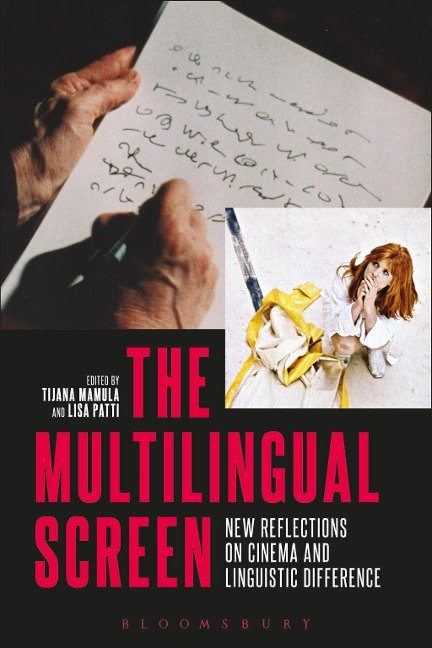
The Multilingual Screen is the first edited volume to offer a wide-ranging exploration of the place of multilingualism in cinema, investigating the ways in which linguistic difference and exchange have shaped, and continue to shape, the medium's history. Moving across a vast array of geographical, historical, and theoretical contexts-from Japanese colonial filmmaking to the French New Wave to contemporary artists' moving image-the essays collected here address the aesthetic, political, and industrial significance of multilingualism in film production and reception. In grouping these works together, The Multilingual Screen discerns and emphasizes the areas of study most crucial to forging a renewed understanding of the relationship between cinema and language diversity. In particular, it reassesses the methodologies and frameworks that have influenced the study of filmic multilingualism to propose that its force is also, and perhaps counterintuitively, a silent one. While most studies of the subject have explored linguistic difference as a largely audible phenomenon-manifested through polyglot dialogues, or through the translation of monolingual dialogues for international audiences-The Multilingual Screen traces some of its unheard histories, contributing to a new field of inquiry based on an attentiveness to multilingualism's work beyond the soundtrack.
Tijana Mamula teaches film studies at John Cabot University in Rome, Italy. She is the author of Cinema and Language Loss: Displacement, Visuality and the Filmic Image (2013).
Lisa Patti is an Assistant Professor in the Media and Society Program at Hobart and William Smith Colleges, USA. She is the co-author of Film Studies: A Global Introduction (2015).
Acknowledgements
Introduction
Tijana Mamula(John Cabot University, Rome, Italy) and Lisa Patti (Hobart and William Smith Colleges, USA)
Part 1 Theories
1 Translating the Academe: Conceptualizing the Transnational in Film and Media
Masha Salazkina (Concordia University, Canada)
2 Seven Types of Multilingualism: Or, Wim Wenders Enfilms Pina Bausch
David Gramling (University of Arizona, USA)
3 Post-anthropocentric Multilingualism in Contemporary Artists' Moving Image: An Interview with T.J. Demos
Tijana Mamula (John Cabot University, Rome, Italy)
4 Cinephilia as Multilingualism in The Artist (2011) and Blancanieves (2012)
Mary Harrod (University of Warwick, UK)
Part 2 Aesthetics
5 The Gift of Languages: Notes on Multilingualism in Experimental Cinema
Érik Bullot (École nationale supérieure d'art and The European School of Visual Arts, France)
6 Exile and the "Languages" of Color: 1960s European Cinema, Multilingualism, and Ontological Hesitation
Paul Coates (University of Western Ontario, Canada)
7 The Word in Pasolini's Cinema
Gian Piero Brunetta (University of Padova, Italy)
8 West African Francophone Cinema and the Mysteries of Language: From Ideological Struggle to Aesthetic Shudder
James S. Williams (Royal Holloway, University of London, UK)
Part 3 Histories
9 Language in Motion: The Sign Talk Films of Hugh Lenox Scott and Richard Sanderville
Brian Hochman (Georgetown University, USA)
10 Poorly Timed Campaigns: Versions, Dubbing, Subtitles
Juan Piqueras (Film critic and theorist, Spain)
11 The Multilingual New Wave
Alison Smith (University of Liverpool, UK)
12 Language and National Identity in New Tunisian Cinema: Moufida Tlatli's The Silences of the Palace (1994) and Férid Boughedir's A Summer in La Goulette (1996)
Robert Lang (University of Hartford, USA)
13 Cinema of Reindividuation and Cultural Extraterritoriality: "Chinese" Dialect Cinemas and Regional Politics
Victor Fan (King's College London, UK)
Part 4 Politics
14 Empire, Language and Nationhood: Japanese Colonial Cinema in Korea and
Manchuria
Kate Taylor-Jones (Sheffield University, UK)
15 Star Talk: Anna May Wong's Scriptural Orientalism and Poly-phonic (Dis-)play
Yiman Wang (University of California, Santa Cruz, USA)
16 Out of Many, One: The Dual Monolingualism of Contemporary Flemish Cinema
Jaap Verheul (New York University, USA)
17 Multilingualism and Indigenous Cinema in Northeast India: The Case of Kokborok Language Films
Mara Matta (University of Rome "La Sapienza," Italy)
18 Programming Latin American Cinema in the US: An Interview with Carlos A. Gutiérrez
Lisa Patti (Hobart and William Smith Colleges, USA)
Contributors
Index
Dieses eBook wird im PDF-Format geliefert und ist mit einem Adobe Kopierschutz (DRM) versehen. Sie können dieses eBook mit allen Geräten lesen, die das PDF-Format und den Adobe Kopierschutz (DRM) unterstützen.
Zum Beispiel mit den folgenden Geräten:
• tolino Reader
Laden Sie das eBook direkt über den Reader-Shop auf dem tolino herunter oder übertragen Sie das eBook auf Ihren tolino mit einer kostenlosen Software wie beispielsweise Adobe Digital Editions.
• Sony Reader & andere eBook Reader
Laden Sie das eBook direkt über den Reader-Shop herunter oder übertragen Sie das eBook mit der kostenlosen Software Sony READER FOR PC/Mac oder Adobe Digital Editions auf ein Standard-Lesegeräte mit epub- und Adobe DRM-Unterstützung.
• Tablets & Smartphones
Möchten Sie dieses eBook auf Ihrem Smartphone oder Tablet lesen, finden Sie hier unsere kostenlose Lese-App für iPhone/iPad und Android Smartphone/Tablets.
• PC & Mac
Lesen Sie das eBook direkt nach dem Herunterladen mit einer kostenlosen Lesesoftware, beispielsweise Adobe Digital Editions, Sony READER FOR PC/Mac oder direkt über Ihre eBook-Bibliothek in Ihrem Konto unter „Meine eBooks“ - „online lesen“.
Schalten Sie das eBook mit Ihrer persönlichen Adobe ID auf bis zu sechs Geräten gleichzeitig frei.
Bitte beachten Sie, dass die Kindle-Geräte das Format nicht unterstützen und dieses eBook somit nicht auf Kindle-Geräten lesbar ist.