Und dann auf "Zum Home-Bildschirm [+]".

Stöbern
genialokal zum Startbildschirm hinzufügen
Installieren Sie die genialokal App auf Ihrem Startbildschirm für einen schnellen Zugriff und eine komfortable Nutzung.
Installieren Sie die genialokal App auf Ihrem Startbildschirm für einen schnellen Zugriff und eine komfortable Nutzung.
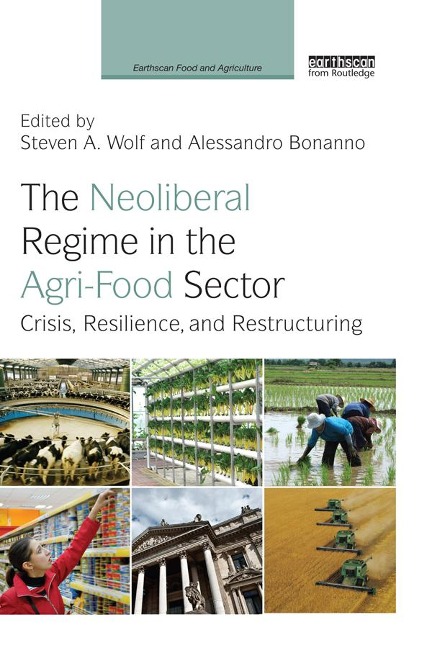
For the last three decades, the Neoliberal regime, emphasising economic growth through deregulation, market integration, expansion of the private sector, and contraction of the welfare state has shaped production and consumption processes in agriculture and food. These institutional arrangements emerged from and advanced academic and popular beliefs about the virtues of private, market-based coordination relative to public, state-based problem solving. This book presents an informed, constructive dialogue around the thesis that the Neoliberal mode of governance has reached some institutional and material limits. Is Neoliberalism exhausted? How should we understand crisis applied to Neoliberalism? What are the opportunities and risks linked to the construction of alternatives? The book advances a critical evaluation of the evidence supporting claims of rupture of, or incursions into, the Neoliberal model. It also analyzes pragmatic responses to these critiques including policy initiatives, social mobilization and experimentation at various scales and points of entry. The book surveys and synthesizes a range of sociological frames designed to grapple with the concepts of regimes, systemic crisis and transitions. Contributions include historical analysis, comparative analysis and case studies of food and agriculture from around the globe. These highlight particular aspects of crisis and responses, including the potential for continued resilience, a neo-productivist return, as well as the emergence and scaling up of alternative models.
Steven A. Wolf is Associate Professor in the Department of Natural Resources at Cornell University, New York, USA. He is also a Senior Lecturer in the Centre for Environmental Policy at Imperial College, University of London, UK. Alessandro Bonanno is Texas State University System Regents' Professor and Distinguished Professor of Sociology at Sam Houston State University, Texas, USA.
Introduction Part 1: Theoretical Analyses and Key Concepts 1. The Legitimation Crisis of Neoliberal Globalization: Instances from Agriculture and Food 2. How Neoliberal Myths Endanger Democracy and Open New Avenues for Democratic Action 3. Policing the New Enclosures: On Violence, Primitive Accumulation, and Crisis in the Neoliberal Food System Part 2: Case Studies 4. The Rise and Fall of a Prairie Giant: the Canadian Wheat Board in Food Regime History 5. Navigating the Neoliberal-Nativist Interface: Farmer Survival and the Construction of Racially Segregated Workplaces 6. Creating Rupture through Policy: Considering the Importance of Ideas in Agrifood Change 7. Beyond Farming: Cases of Revitalization of Rural Communities through Multi-Role Community Farming Enterprise as Social Service Provider Part 3: Research Opportunities 8. To Bt or not to Bt? State, Civil Society, and Firms Debate GM Seeds in Democratic India 9. Turning of the Tide: Rising Discontent over Transgenic Crops in Brazil 10. U.S. Agrienvironmental Policy: Neoliberalization of Nature Meets Old Public Management 11. For Competitiveness Sake?: Material Competition vs. Competitiveness as a National Project 12. The Neoliberal Food Regime in Latin America: State, Agribusiness Transnational Corporations and Biotechnology 13. 'Just Another Asset Class'?: Neoliberalism, Finance, and the Construction of Farmland Investment 14. Neoliberalism in the Antipodes: Understanding the Influence and Limits of the Neoliberal Political Project 15. Conclusion: The Plasticity and Contested Terrain of Neoliberalism
Dieses eBook wird im PDF-Format geliefert und ist mit einem Adobe Kopierschutz (DRM) versehen. Sie können dieses eBook mit allen Geräten lesen, die das PDF-Format und den Adobe Kopierschutz (DRM) unterstützen.
Zum Beispiel mit den folgenden Geräten:
• tolino Reader
Laden Sie das eBook direkt über den Reader-Shop auf dem tolino herunter oder übertragen Sie das eBook auf Ihren tolino mit einer kostenlosen Software wie beispielsweise Adobe Digital Editions.
• Sony Reader & andere eBook Reader
Laden Sie das eBook direkt über den Reader-Shop herunter oder übertragen Sie das eBook mit der kostenlosen Software Sony READER FOR PC/Mac oder Adobe Digital Editions auf ein Standard-Lesegeräte mit epub- und Adobe DRM-Unterstützung.
• Tablets & Smartphones
Möchten Sie dieses eBook auf Ihrem Smartphone oder Tablet lesen, finden Sie hier unsere kostenlose Lese-App für iPhone/iPad und Android Smartphone/Tablets.
• PC & Mac
Lesen Sie das eBook direkt nach dem Herunterladen mit einer kostenlosen Lesesoftware, beispielsweise Adobe Digital Editions, Sony READER FOR PC/Mac oder direkt über Ihre eBook-Bibliothek in Ihrem Konto unter „Meine eBooks“ - „online lesen“.
Schalten Sie das eBook mit Ihrer persönlichen Adobe ID auf bis zu sechs Geräten gleichzeitig frei.
Bitte beachten Sie, dass die Kindle-Geräte das Format nicht unterstützen und dieses eBook somit nicht auf Kindle-Geräten lesbar ist.