Und dann auf "Zum Home-Bildschirm [+]".

Stöbern
genialokal zum Startbildschirm hinzufügen
Installieren Sie die genialokal App auf Ihrem Startbildschirm für einen schnellen Zugriff und eine komfortable Nutzung.
Installieren Sie die genialokal App auf Ihrem Startbildschirm für einen schnellen Zugriff und eine komfortable Nutzung.
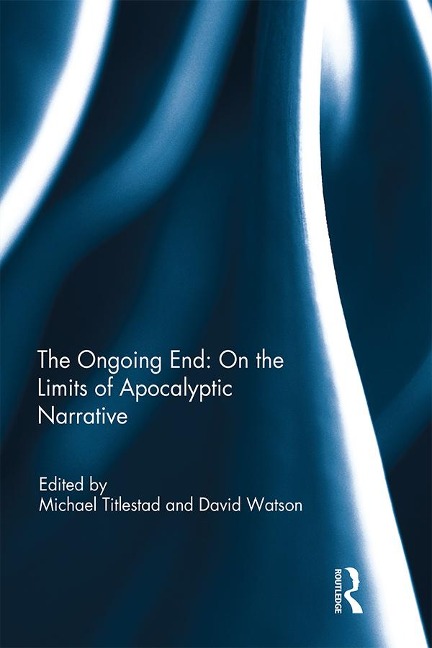
The world keeps turning to apocalypticism. Time is imagined as proceeding ineluctably to a catastrophic, perhaps revelatory conclusion. Even when evacuated of distinctly religious content, a broadly ecclesial structure persists in conceptions of our precarious life and our collective journey to an inevitable fate-the extinction of the human species. It is commonly believed that we are propelled along this course by human turpitude, myopia, hubris or ignorance, and by the irreparable damage we have wrought to the world we inhabit. Yet, this apprehension is insidious. Such teleological convictions and crises-laden narratives lead us to undervalue contingent, hesitant and provisional forms of experience and knowledge. The essays comprising this volume concern a range of writers' engagements with apocalyptic reasoning. Extending from a reading of Percy Bysshe Shelley's 'Triumph of Life' to critiques of contemporary American novels, they examine the ways in which 'end times' reasoning can inhibit imaginative reflection, blunt political advocacy or - more positively - provide a repertoire for the critique of complacency. By gathering essays concerning a wide range of periods and literary dispositions, this volume makes an important contribution to thinking about apocalypticism in literature but also as a social and political discourse. This book was originally published as a special issue of Studia Neophilologica.
Michael Titlestad is a Professor in the Department of English at the University of the Witwatersrand, Johannesburg, South Africa. He writes extensively on South African literature and culture, and also on modernist writing, particularly maritime fiction. In addition to co-editing English Studies in South Africa with Sofia Kostelac, he edits fiction. David Watson is an Associate Professor in the Department of English at Uppsala University, Sweden, where he specializes in American literature and culture. He has published on 19th century and modernist American poets, 19th century and contemporary novelists, and issues in transnational and translation studies, on which he has co-edited two volumes-Traversing Transnationalism (2010) and Literature, Geography, Translation: The New Comparative Horizons (2011).
Introduction: The Ongoing End: On the limits of apocalyptic narrative 1. 'A Shape ... Crouching within the shadow of a tomb': Shelley's Qualified Apocalypse in 'The Triumph of Life' 2. Between Apocalypse and Extinction: Eschatology in Ezra Pound's Poetry 3. This is not the way the world ends: Richard Hughes's rejoinder to William Golding's Lord of the Flies 4. Outlandish Apocalyptics and Creaturely Life in Nathaniel Hawthorne's 'My Kinsman, Major Molineux' 5. Vanishing Points; or, the Timescapes of the Contemporary American Novel 6. 'It's Not Dark Yet, but It's Getting There': Listening for the End Times in the Contemporary American Novel 7. Ecological Apocalypse in Margaret Atwood's MaddAddam trilogy 8. Citrus noir: Strange Fruit in Karen Tei Yamashita's Tropic of Orange
Dieses eBook wird im PDF-Format geliefert und ist mit einem Adobe Kopierschutz (DRM) versehen. Sie können dieses eBook mit allen Geräten lesen, die das PDF-Format und den Adobe Kopierschutz (DRM) unterstützen.
Zum Beispiel mit den folgenden Geräten:
• tolino Reader
Laden Sie das eBook direkt über den Reader-Shop auf dem tolino herunter oder übertragen Sie das eBook auf Ihren tolino mit einer kostenlosen Software wie beispielsweise Adobe Digital Editions.
• Sony Reader & andere eBook Reader
Laden Sie das eBook direkt über den Reader-Shop herunter oder übertragen Sie das eBook mit der kostenlosen Software Sony READER FOR PC/Mac oder Adobe Digital Editions auf ein Standard-Lesegeräte mit epub- und Adobe DRM-Unterstützung.
• Tablets & Smartphones
Möchten Sie dieses eBook auf Ihrem Smartphone oder Tablet lesen, finden Sie hier unsere kostenlose Lese-App für iPhone/iPad und Android Smartphone/Tablets.
• PC & Mac
Lesen Sie das eBook direkt nach dem Herunterladen mit einer kostenlosen Lesesoftware, beispielsweise Adobe Digital Editions, Sony READER FOR PC/Mac oder direkt über Ihre eBook-Bibliothek in Ihrem Konto unter „Meine eBooks“ - „online lesen“.
Schalten Sie das eBook mit Ihrer persönlichen Adobe ID auf bis zu sechs Geräten gleichzeitig frei.
Bitte beachten Sie, dass die Kindle-Geräte das Format nicht unterstützen und dieses eBook somit nicht auf Kindle-Geräten lesbar ist.