Und dann auf "Zum Home-Bildschirm [+]".

Stöbern
genialokal zum Startbildschirm hinzufügen
Installieren Sie die genialokal App auf Ihrem Startbildschirm für einen schnellen Zugriff und eine komfortable Nutzung.
Installieren Sie die genialokal App auf Ihrem Startbildschirm für einen schnellen Zugriff und eine komfortable Nutzung.

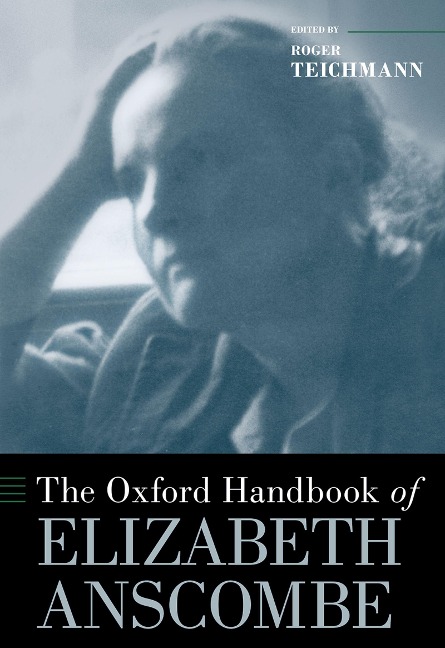
Elizabeth Anscombe is now recognised as one of the most important philosophers of the second half of the 20th century. She left a large corpus of work, wide-ranging in content, always original and bold. Her monograph Intention, published in 1957, is a modern classic, and was described by Donald Davidson as the most important treatment of action since Aristotle. Her writings in ethics have inspired countless discussions, and she has been credited with having changed the face of Anglophone moral philosophy by reviving and arguing for virtue ethics, now a major field. Since Anscombe's death in 2001, her philosophical work has received a steadily increasing level of attention worldwide. Anscombe is often difficult to read, and she has certainly been frequently misunderstood, but the sympathetic interest in her work which is now evident in so many quarters is making it possible for a true picture to begin to emerge of the range, depth, and power of her contribution to philosophy. The Oxford Handbook of Elizabeth Anscombe conveys something of that emerging picture of Anscombe's overall philosophy-showing the great fecundity of her ideas in essays that develop and expand on those ideas-and allows contributors to engage critically with Anscombe, not merely to expound what she said. The handbook opens with an introduction that addresses the question of the unity in diversity of Anscombe's philosophy, relating this to the twenty-two essays that follow. The handbook is divided into parts along broadly thematic lines, addressing: intention, ethical theory, human life, the first person, and Anscombe on other philosophers.
Roger Teichmann is Lecturer in Philosophy at St Hilda's College, Oxford. He is a leading authority on the work of Elizabeth Anscombe and the author of a number of books including The Philosophy of Elizabeth Anscombe (OUP, 2008) and Nature, Reason and the Good Life (OUP, 2011). A collection of his essays, Logos and Life, is forthcoming from Anthem Press. With John Berkman he is co-editing a volume of Anscombe's writings on Wittgenstein to be published by Oxford University Press.
Introduction, Roger Teichmann Part I: Intention 1. 'On Anscombe on Practical Knowledge and Practical Truth,' Lucy Campbell 2. 'Intention with Which,' Charles F. Capps 3. 'Intention, Knowledge and responsibility,' Rémi Clot-Goudard 4. '"Practical knowledge" and testimony, Johannes Roessler Part II: Ethical Theory 5. 'Anscombe's Three Theses After Sixty Years: modern moral philosophy, polemic, and "Modern Moral Philosophy,"' Sophie Grace Chappell 6. 'Practical Truth, Ethical Naturalism, and the Constitution of Agency in Anscombe's Ethics,' John Hacker-Wright 7. 'Criterialism and Contextualism,' Gavin Lawrence 8. 'Anscombe on Double Effect and Intended Consequences,' Cyrille Michon 9. 'Anscombe on Ought,' Anselm Mueller Part III: Human Life 10.'Justice and Murder: The Backstory to Anscombe's "Modern Moral Philosophy,"' John Berkman 11. 'Anscombe on euthanasia as murder,' David A. Jones 12. 'The Knowledge of Human Dignity,' Micah Lott 13. 'Life and Other Basic Rights in Anscombe,' Katharina Nieswandt 14. 'Anscombe: Sexual Ethics,' Duncan Richter 15. 'Linguistic idealism and human essence,' Rachael Wiseman Part IV: The First Person 16. 'The first person, self-consciousness and action,' Valerie Aucouturier 17. 'Anscombe and Self-consciousness,' Adrian Haddock 18. 'The first person and "The First person,"' Harold Noonan Part V: Anscombe on/and Other Philosophers 19. 'Anscombe's Wittgenstein,' Joel Backström 20. 'Anscombe and Aquinas,' John Haldane 21. 'Ethics and Action Theory: An Unhappy Divorce,' Constantine Sandis 22. 'Anscombe and Wittgenstein on Knowledge "without Observation,"' Harold Teichman