Und dann auf "Zum Home-Bildschirm [+]".

Stöbern
genialokal zum Startbildschirm hinzufügen
Installieren Sie die genialokal App auf Ihrem Startbildschirm für einen schnellen Zugriff und eine komfortable Nutzung.
Installieren Sie die genialokal App auf Ihrem Startbildschirm für einen schnellen Zugriff und eine komfortable Nutzung.
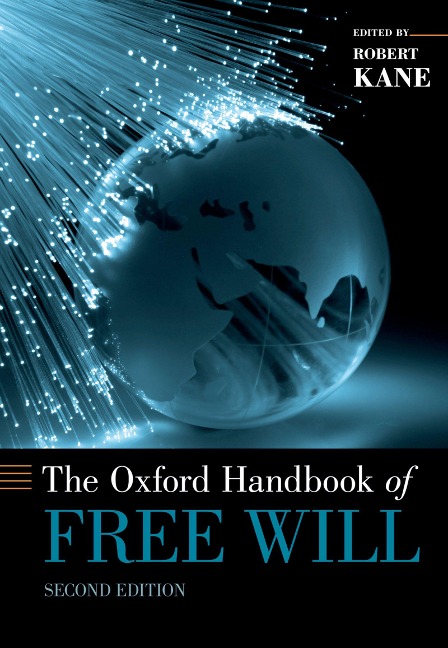
This second edition of the Oxford Handbook of Free Will is intended to be a sourcebook and guide to current work on free will and related subjects. Its focus is on writings of the past forty years, in which there has been a resurgence of interest in traditional issues about the freedom of the will in the light of new developments in the sciences, philosophy and humanistic studies. Special attention is given to research on free will of the first decade of the twenty-first century since the publication of the first edition of the Handbook. All the essays have been newly written or rewritten for this volume. In addition, there are new essayists and essays surveying topics that have become prominent in debates about free will in the past decade, including new work on the relation of free will to physics, the neurosciences, cognitive science, psychology and empirical philosophy, new versions of traditional views (compatibilist, incompatibilist, libertarian, etc.) and new views (e.g., revisionism) that have emerged. The twenty-eight essays by prominent international scholars and younger scholars cover a host of free will related issues, such as moral agency and responsibility, accountability and blameworthiness in ethics, autonomy, coercion and control in social theory, criminal liability, responsibility and punishment in legal theory, issues about the relation of mind to body, consciousness and the nature of action in philosophy of mind and the cognitive and neurosciences, questions about divine foreknowledge, providence and human freedom in philosophy of religion, and general metaphysical questions about necessity and possibility, determinism, time and chance, quantum reality, causation and explanation.
Robert Kane is University Distinguished Teaching Professor of Philosophy Emeritus and Professor of Law at the University of Texas at Austin. He is author of Free Will and Values, Through the Moral Maze, The Significance of Free Will, A Contemporary Introduction to Free Will, and Ethics and the Quest for Wisdom, among other works on mind and action, free will, ethics, and value theory.
Contributors1. Introduction: The Contours of Contemporary Free Will Debates PART I: THEOLOGY AND FREE WILL2. Divine Foreknowledge and Human FreedomPART II: PHYSICS, DETERMINISM AND INDETERMINISM3. Quantum Physics, Consciousness and Free Will4. Chaos, Indeterminism and Free Will5. The Causal Closure of PhysicsPART III: THE CONSEQUENCE ARGUMENT FOR INCOMPATIBILISM6. The Consequence Argument Revisited7. A Compatibilist Reply to the Consequence ArgumentPART IV: COMPATIBILIST PERSPECTIVES ON FREEDOM AND RESPONSIBILITY8. Compatibilism Without Frankfurt: Dispositional Analyses of Free Will9. Contemporary Compatibilism: Mesh Theories and Reasons-Responsive Theories10. Moral Sense and the Foundations of Responsibility11. Whose Still Afraid of Determinism? Rethinking Causes and PossibilitiesPART V: MORAL RESPONSIBILITY, ALTERNATIVE POSSIBILITIES AND FRANKFURT-TYPE EXAMPLES12. Frankfurt-type Examples and Semi-Compatibilism13. Frankfurt-friendly Libertarianism14. Obligation, Reason and Frankfurt ExamplesPART VI: LIBERTARIAN PERSPECTIVES ON FREE AGENCY AND FREE WILL15. Agent-Causal Theories of Freedom16. Alternatives for Liberarians17. Freedom and Action Without Causation: Noncausal Theories of Freedom and Purposive Agency18. Free Will is Not a Mystery19. Rethinking Free Will: New Perspectives on an Ancient ProblemPART VII: FURTHER VIEWS AND ISSUES: HARD DETERMINISM, HARD INCOMPATIBILISM, ILLUSIONISM, REVISIONISM, PROMISES AND ROLLBACKS20. Free Will Skepticism and Meaning in Life21. Free Will, Fundamental Dualism and the Centrality of Illusion22. Effects, Determinism, Neither Compatibilism Nor Incompatibilism, Consciousness23. Revisionist Accounts of Free Will: Origins, Varieties and Challenges24. A Promising Argument25. Rollbacks, Endorsement and Indeterminism26. Free Will and Science27. Contributions of Neuroscience to the Free Will Debate28. Free Will and the Bounds of the Self29. Intuitions about Free Will, Determinism and BypassingReferencesIndex
Dieses eBook wird im PDF-Format geliefert und ist mit einem Adobe Kopierschutz (DRM) versehen. Sie können dieses eBook mit allen Geräten lesen, die das PDF-Format und den Adobe Kopierschutz (DRM) unterstützen.
Zum Beispiel mit den folgenden Geräten:
• tolino Reader
Laden Sie das eBook direkt über den Reader-Shop auf dem tolino herunter oder übertragen Sie das eBook auf Ihren tolino mit einer kostenlosen Software wie beispielsweise Adobe Digital Editions.
• Sony Reader & andere eBook Reader
Laden Sie das eBook direkt über den Reader-Shop herunter oder übertragen Sie das eBook mit der kostenlosen Software Sony READER FOR PC/Mac oder Adobe Digital Editions auf ein Standard-Lesegeräte mit epub- und Adobe DRM-Unterstützung.
• Tablets & Smartphones
Möchten Sie dieses eBook auf Ihrem Smartphone oder Tablet lesen, finden Sie hier unsere kostenlose Lese-App für iPhone/iPad und Android Smartphone/Tablets.
• PC & Mac
Lesen Sie das eBook direkt nach dem Herunterladen mit einer kostenlosen Lesesoftware, beispielsweise Adobe Digital Editions, Sony READER FOR PC/Mac oder direkt über Ihre eBook-Bibliothek in Ihrem Konto unter „Meine eBooks“ - „online lesen“.
Schalten Sie das eBook mit Ihrer persönlichen Adobe ID auf bis zu sechs Geräten gleichzeitig frei.
Bitte beachten Sie, dass die Kindle-Geräte das Format nicht unterstützen und dieses eBook somit nicht auf Kindle-Geräten lesbar ist.