Und dann auf "Zum Home-Bildschirm [+]".

Stöbern
genialokal zum Startbildschirm hinzufügen
Installieren Sie die genialokal App auf Ihrem Startbildschirm für einen schnellen Zugriff und eine komfortable Nutzung.
Installieren Sie die genialokal App auf Ihrem Startbildschirm für einen schnellen Zugriff und eine komfortable Nutzung.



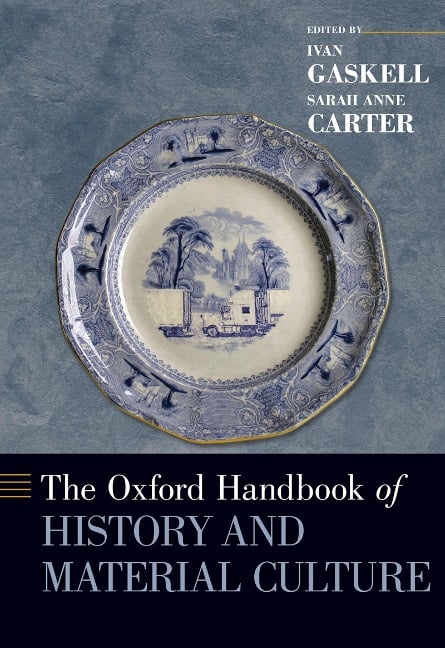
Most historians rely principally on written sources. Yet there are other traces of the past available to historians: the material things that people have chosen, made, and used. This book examines how material culture can enhance historians' understanding of the past, both worldwide and across time. The successful use of material culture in history depends on treating material things of many kinds not as illustrations, but as primary evidence. Each kind of material thing-and there are many-requires the application of interpretive skills appropriate to it. These skills overlap with those acquired by scholars in disciplines that may abut history but are often relatively unfamiliar to historians, including anthropology, archaeology, and art history. Creative historians can adapt and apply the same skills they honed while studying more traditional text-based documents even as they borrow methods from these fields. They can think through familiar historical problems in new ways. They can also deploy material culture to discover the pasts of constituencies who have left few or no traces in written records. The authors of this volume contribute case studies arranged thematically in six sections that respectively address the relationship of history and material culture to cognition, technology, the symbolic, social distinction, and memory. They range across time and space, from Paleolithic to Punk.
Ivan Gaskell is Professor of Cultural History and Museum Studies at Bard Graduate Center in New York City. Sarah Anne Carter is Visiting Executive Director of the Center for Design and Material Culture and Visiting Assistant Professor of Design Studies at the University of Wisconsin-Madison
Introduction: Why History and Material Culture? by Ivan Gaskell and Sarah Anne Carter
Part 1 History, Material Culture, and Cognition Chapter 1: Words or Things in American History? by Steven Conn Chapter 2: Artifacts and their Functions, by A.W. Eaton Chapter 3: Mastery, Artifice, and the Natural Order: A Jewel from the Early Modern Pearl Industry, by Mónica Domínguez Torres Chapter 4: Food and Cognition: Henry Norwood's A Voyage to Virginia, by Bernard L. Herman Chapter 5: On Pins and Needles: Straight Pins, Safety Pins, and Spectacularity, by Amber Jamilla Musser Chapter 6: Mind, Time, and Material Engagement, by Lambros Malafouris and Chris Gosden
Part 2 History, Material Culture, and Technology Chapter 7: Material Time, by John Robb Chapter 8: Remaking the Kitchen, 1800-1850, by J. Ritchie Garrison Chapter 9: Boston Electric: Science by "Mail Order" and Bricolage at Colonial Harvard, by Sara J. Schechner Chapter 10: Making Knowledge Claims in the Eighteenth-Century British Museum, by Ivan Gaskell Chapter 11: The Ever-Changing Technology and Significance of Silk on the Silk Road, by Zhao Feng Chapter 12: Science, Play, and the Material Culture of Twentieth-Century American Boyhood, by Rebecca Onion
Part 3 History, Material Culture, and the Symbolic Chapter 13: The Sensory Web of Vision: Enchantment and Agency in Religious Material Culture, by David Morgan Chapter 14: Sensiotics, or the Study of the Senses in Material Culture and History in Africa and Beyond, by Henry John Drewal Chapter 15: The Numinous Body and the Symbolism of Human Remains, by Christopher Allison Chapter 16: Symbolic Things and Social Performance: Christmas Nativity Scenes in Late Nineteenth-Century Santiago de Chile, by Olaya Sanfuentes Chapter 17: Heritage Religion and the Mormons, by Colleen McDannell Chapter 18: From Confiscation to Collection: The Objects of China's Cultural Revolution, by Denise Y. Ho
Part 4 History, Material Culture, and Social Distinction Chapter 19: Persons and Things in Marseille and Lucca, 1300-1450, by Daniel Lord Smail Chapter 20: Cloth and the Rituals of Encounter in La Florida: Weaving and Unraveling the Code, by Laura Johnson Chapter 21: Street "Luxuries": Food Hawking in Early Modern Rome, by Melissa Calaresu Chapter 22: Ebony and Ivory: Pianos, People, Property, and Freedom on the Plantation, 1861-1870, by Dana E. Byrd Chapter 23: The Material Culture of Furniture Production in the British Colonies, by Edward S. Cooke, Jr. Chapter 24: Material Culture, Museums and the Creation of Multiple Meanings, by Neil G. W. Curtis
Part 5 History, Material Culture, and Memory Chapter 25: Chronology and Time: Northern European Coastal Settlements and Societies, c. 500-1050, by Christopher Loveluck Chapter 26: Materialities in the Making of World Histories: South Asia and the South Pacific, by Sujit Sivasundaram Chapter 27: Mapping History in Clay and Skin: Strategies for Remembrance among Ga'anda of Northeastern Nigeria, by Marla C. Berns Chapter 28: Remember Me: Sensibility and the Sacred in Early Mormonism, by Laurel Thatcher Ulrich Chapter 29: Housing History: The Colonial Revival as Consumer Culture, by Thomas Denenberg Chapter 30: Collecting as Historical Practice and the Conundrum of the Unmoored Object, by Catherine Whalen
Conclusion: The Meaning of Things, by Peter Burke