Und dann auf "Zum Home-Bildschirm [+]".

Stöbern
genialokal zum Startbildschirm hinzufügen
Installieren Sie die genialokal App auf Ihrem Startbildschirm für einen schnellen Zugriff und eine komfortable Nutzung.
Installieren Sie die genialokal App auf Ihrem Startbildschirm für einen schnellen Zugriff und eine komfortable Nutzung.
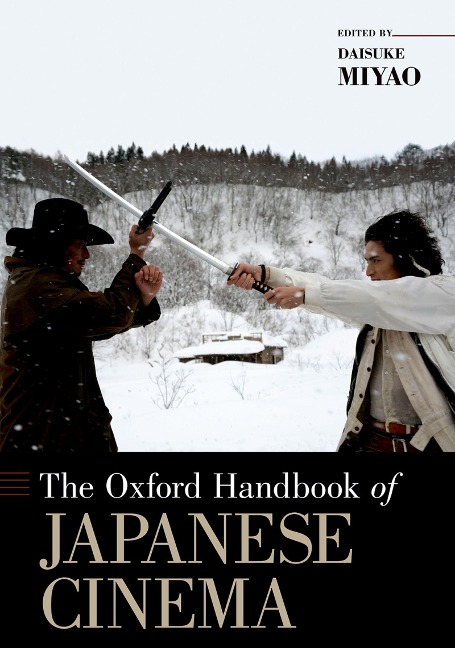
The reality of transnational innovation and dissemination of new technologies, including digital media, has yet to make a dent in the deep-seated culturalism that insists on reinscribing a divide between the West and Japan. The Oxford Handbook of Japanese Cinema aims to counter this trend toward dichotomizing the West and Japan and to challenge the pervasive culturalism of today's film and media studies. Featuring twenty essays, each authored by a leading researcher in the field, this volume addresses productive debates about where Japanese cinema is and where Japanese cinema is going at the period of crisis of national boundary under globalization. It reevaluates the position of Japanese cinema within the discipline of cinema and media studies and beyond, and situates Japanese cinema within the broader fields of transnational film history. Likewise, it examines the materiality of Japanese cinema, scrutinizes cinema's relationship to other media, and identifies the specific practices of film production and reception. As a whole, the volume fosters a dialogue between Japanese scholars of Japanese cinema, film scholars of Japanese cinema based in Anglo-American and European countries, film scholars of non-Japanese cinema, film archivists, film critics, and filmmakers familiar with film scholarship. A comprehensive volume that grasps Japanese cinema under the rubric of the global and also fills the gap between Japanese and non-Japanese film studies and between theories and practices, The Oxford Handbook of Japanese Cinema challenges and responds to the major developments underfoot in this rapidly changing field.
Daisuke Miyao is Associate Professor of Japanese Film and Cinema Studies at the University of Oregon. He is the author of The Aesthetics of Shadow: Lighting and Japanese Cinema, Eiga wa neko dearu: Hajimete no cinema sutadizu [Cinema Is a Cat: Introduction to Cinema Studies], and Sessue Hayakawa: Silent Cinema and Transnational Stardom.
Introduction Part 1: What Is Japanese Cinema Studies?: Japanese Cinema and Cinema Studies Chapter 1: Japanese Film Without Japan: Toward an Undisciplined Film Studies (Eric Cazdyn) Chapter 2: Triangulating Japanese Film Style (Ben Singer) Chapter 3: Critical Reception: Historical Conceptions of Japanese Film Criticism (Aaron Gerow) Chapter 4: Creating the Audience: Cinema as Popular Recreation and Social Education in Modern Japan (Hideaki Fujiki) Part 2: What Is Japanese Cinema?: Japanese Cinema and the Transnational Network Chapter 5 Adaptation As "Transcultural Mimesis" (Michael Raine) Chapter 6 The Edge of Montage: A Case of Modernism/Modanizumu in Japanese Cinema (Chika Kinoshita) Chapter 7 Nationalizing Madame Butterfly: The Formation of Female Stars in Japanese Cinema (Daisuke Miyao) Chapter 8 Performing Colonial Identity: Byeonsa, Colonial Film Spectatorship, and the Formation of National Cinema in Korea under Japanese Colonial Rule (Dong Hoon Kim) Chapter 9 Outpost of Hybridity: Paramount's Campaign in Japan, 1952-1962 (Hiroshi Kitamura) Chapter 10 Erasing China in Japan's "Hong Kong Films" (Kwai Cheung Lo) Chapter 11 The Emergence of the Asian Film Festival: Cold War Asia and Japan's Re-entrance to the Regional Film Industry in the 1950s (Sang Joon Lee) Chapter 12 Yamagata - Asia - Europe: International Film Festival Short-Circuit (Abé Mark Nornes) Part 3: What Japanese Cinema Is!: Japanese Cinema and the Intermedial Practices Chapter 13 Nitrate Film Production in Japan: a Historical Background of the Early Days (Okada Hidenori - Translated by Ayako Saito) Chapter 14 Sketches of Silent Film Sound in Japan: Theatrical Functions of Ballyhoo, Orchestras and Kabuki Ensambles (Hosokawa Shuhei) Chapter 15 The Jidaigeki Film Genre: Twilight Samurai and Its Contexts (Yamamoto Ichiro - Translated by Diane Wei Lewis) Chapter 16 Occupation and Memory: the Representation of Woman's Body in Postwar Japanese (Ayako Saito) Chapter 17 Cinema and Memory: Confabulated Memories, Nishijin (1961) (Mitsuyo Wada-Marciano) Chapter 18 By Other Hands: Environment and Apparatus in 1960s Intermedia (Myriam Sas) Chapter 19 Viral Contagion in the Ringu Intertext (Carlos Rojas) Chapter 20 Manga/Anime/Games (the Media Mix) and the Metaphoric Economy of World (Alexander Zahlten)
Dieses eBook wird im PDF-Format geliefert und ist mit einem Adobe Kopierschutz (DRM) versehen. Sie können dieses eBook mit allen Geräten lesen, die das PDF-Format und den Adobe Kopierschutz (DRM) unterstützen.
Zum Beispiel mit den folgenden Geräten:
• tolino Reader
Laden Sie das eBook direkt über den Reader-Shop auf dem tolino herunter oder übertragen Sie das eBook auf Ihren tolino mit einer kostenlosen Software wie beispielsweise Adobe Digital Editions.
• Sony Reader & andere eBook Reader
Laden Sie das eBook direkt über den Reader-Shop herunter oder übertragen Sie das eBook mit der kostenlosen Software Sony READER FOR PC/Mac oder Adobe Digital Editions auf ein Standard-Lesegeräte mit epub- und Adobe DRM-Unterstützung.
• Tablets & Smartphones
Möchten Sie dieses eBook auf Ihrem Smartphone oder Tablet lesen, finden Sie hier unsere kostenlose Lese-App für iPhone/iPad und Android Smartphone/Tablets.
• PC & Mac
Lesen Sie das eBook direkt nach dem Herunterladen mit einer kostenlosen Lesesoftware, beispielsweise Adobe Digital Editions, Sony READER FOR PC/Mac oder direkt über Ihre eBook-Bibliothek in Ihrem Konto unter „Meine eBooks“ - „online lesen“.
Schalten Sie das eBook mit Ihrer persönlichen Adobe ID auf bis zu sechs Geräten gleichzeitig frei.
Bitte beachten Sie, dass die Kindle-Geräte das Format nicht unterstützen und dieses eBook somit nicht auf Kindle-Geräten lesbar ist.