Und dann auf "Zum Home-Bildschirm [+]".

Stöbern
genialokal zum Startbildschirm hinzufügen
Installieren Sie die genialokal App auf Ihrem Startbildschirm für einen schnellen Zugriff und eine komfortable Nutzung.
Installieren Sie die genialokal App auf Ihrem Startbildschirm für einen schnellen Zugriff und eine komfortable Nutzung.
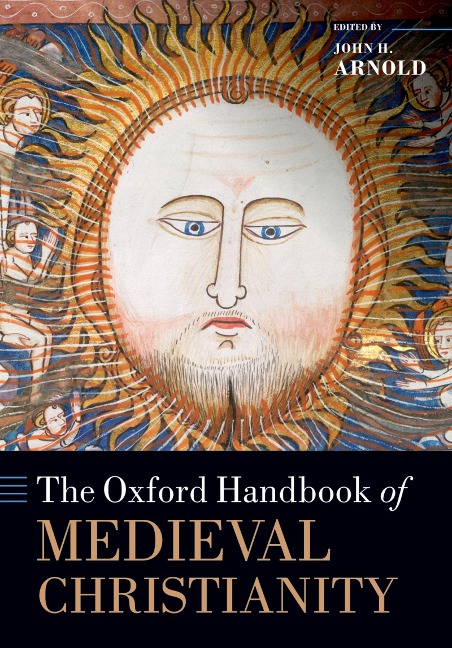
The Oxford Handbook of Medieval Christianity takes as its subject the beliefs, practices, and institutions of the Christian Church between 400 and 1500AD. It addresses topics ranging from early medieval monasticism to late medieval mysticism, from the material wealth of the Church to the spiritual exercises through which certain believers might attempt to improve their souls. Each chapter tells a story, but seeks also to ask how and why 'Christianity' took particular forms at particular moments in history, paying attention to both the spiritual and otherwordly aspects of religion, and the material and political contexts in which they were often embedded. This Handbook is a landmark academic collection that presents cutting-edge interpretive perspectives on medieval religion for a wide academic audience, drawing together thirty key scholars in the field from the United States, the UK, and Europe. Notably, the Handbook is arranged thematically, and focusses on an analytical, rather than narrative, approach, seeking to demonstrate the variety, change, and complexity of religion throughout this long period, and the numerous different ways in which modern scholarship can approach it. While providing a very wide-ranging view of the subject, it also offers an important agenda for further study in the field.
John H. Arnold studied at the Centre for Medieval Studies, University of York, and worked first at UEA and then at Birkbeck, University of London. He became Professor of Medieval History at Birkbeck in 2007. He is author of various books and articles on medieval history, and has published also on modern historiography and the history of gender.
- Abbreviations and conventions - List of Contributors - Introduction - 1: John H. Arnold: Introduction: A History of Medieval Christianity - Methods - 2: John H. Arnold: Histories and Historiographies of Medieval Christianity - 3: Simon Yarrow: Religion, Belief, and Society: Anthropological Approaches - 4: Beth Williamson: Material Culture and Medieval Christianity - 5: R. I. Moore: Medieval Christianity in a World Historical Perspective - Spaces - 6: Amy Remensnyder: The Boundaries of Christendom and Islam: Iberia and the Latin Levant - 7: Sverre Bagge: Christianizing Kingdoms - 8: Wendy Davies: Monastic Landscapes and Society - 9: Nicholas Terpstra: Civic Religion - 10: Katherine L. French: Localized Faith: parochial and domestic spaces - Practices - 11: Ian Forrest: Continuity and Change in the Institutional Church - 12: Marcus Bull: Pilgrimage - 13: Gábor Klaniczay: Using Saints: Intercession, Healing, Sanctity - 14: Eric Palazzo: Missarum sollemnia: Eucharistic Rituals in the Middle Ages - 15: Rob Meens: Penitential Varieties - 16: Robert L. A. Clark: Spiritual Exercises: The Making of Interior Faith - Ideas - 17: Arnold Angenendt: Fear, Hope, Death, and Salvation - 18: Maureen C. Miller: Reform, Clerical Culture, and Politics - 19: Peter Biller: Intellectuals and the Masses: Oxen and she-asses in the medieval Church - 20: Laura A. Smoller: 'Popular' religious culture(s) - 21: Dorothea Weltecke: Doubts and the absence of faith - Identities - 22: Constance H. Berman: Medieval Monasticisms - 23: Rosalynn Voaden: Mysticism and the Body - 24: Sara Lipton: Christianity and Its Others: Jews, Muslims, and Pagans - 25: Grado Giovanni Merlo: Christian experiences of religious non-conformism - Power - 26: George Dameron: The Church as Lord - 27: Geoffrey Koziol: Christianizing Political Discourses - 28: Janet L. Nelson: Religion in the age of Charlemagne - 29: Kathleen G. Cushing: Papal Authority and Its Limitations - 30: Sarah Hamilton: Bishops, Education and Discipline - Conclusion - 31: R. Po-chia Hsia: Looking back from the Reformation - Index
Dieses eBook wird im PDF-Format geliefert und ist mit einem Adobe Kopierschutz (DRM) versehen. Sie können dieses eBook mit allen Geräten lesen, die das PDF-Format und den Adobe Kopierschutz (DRM) unterstützen.
Zum Beispiel mit den folgenden Geräten:
• tolino Reader
Laden Sie das eBook direkt über den Reader-Shop auf dem tolino herunter oder übertragen Sie das eBook auf Ihren tolino mit einer kostenlosen Software wie beispielsweise Adobe Digital Editions.
• Sony Reader & andere eBook Reader
Laden Sie das eBook direkt über den Reader-Shop herunter oder übertragen Sie das eBook mit der kostenlosen Software Sony READER FOR PC/Mac oder Adobe Digital Editions auf ein Standard-Lesegeräte mit epub- und Adobe DRM-Unterstützung.
• Tablets & Smartphones
Möchten Sie dieses eBook auf Ihrem Smartphone oder Tablet lesen, finden Sie hier unsere kostenlose Lese-App für iPhone/iPad und Android Smartphone/Tablets.
• PC & Mac
Lesen Sie das eBook direkt nach dem Herunterladen mit einer kostenlosen Lesesoftware, beispielsweise Adobe Digital Editions, Sony READER FOR PC/Mac oder direkt über Ihre eBook-Bibliothek in Ihrem Konto unter „Meine eBooks“ - „online lesen“.
Schalten Sie das eBook mit Ihrer persönlichen Adobe ID auf bis zu sechs Geräten gleichzeitig frei.
Bitte beachten Sie, dass die Kindle-Geräte das Format nicht unterstützen und dieses eBook somit nicht auf Kindle-Geräten lesbar ist.