Und dann auf "Zum Home-Bildschirm [+]".

Stöbern
genialokal zum Startbildschirm hinzufügen
Installieren Sie die genialokal App auf Ihrem Startbildschirm für einen schnellen Zugriff und eine komfortable Nutzung.
Installieren Sie die genialokal App auf Ihrem Startbildschirm für einen schnellen Zugriff und eine komfortable Nutzung.
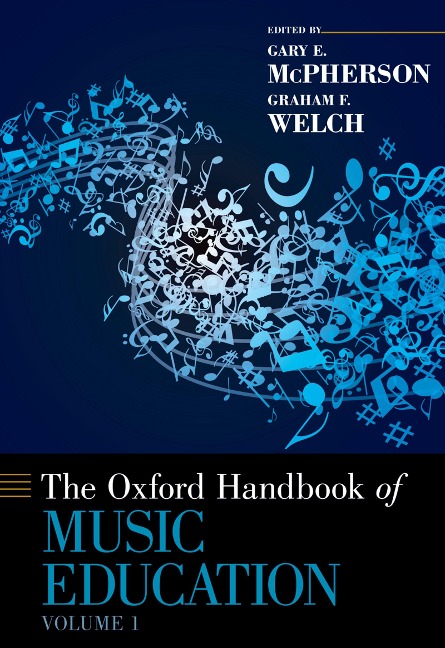
Music education takes place in many contexts, both formal and informal. Be it in a school or music studio, while making music with friends or family, or even while travelling in a car, walking through a shopping mall or watching television, our myriad sonic experiences accumulate from the earliest months of life to foster our facility for making sense of the sound worlds in which we live. The Oxford Handbook of Music Education offers a comprehensive overview of the many facets of musical experience, behavior and development in relation to this diverse variety of contexts. In this first of two volumes, an international list of contributors discuss a range of key issues and concepts associated with music learning and teaching. The volume then focuses on these processes as they take place during childhood, from infancy through adolescence and primarily in the school-age years. Exploring how children across the globe learn and make music and the skills and attributes gained when they do so, these chapters examine the means through which music educators can best meet young people's musical needs. The second volume of the set brings the exploration beyond the classroom and into later life. Whether they are used individually or in tandem, the two volumes of The Oxford Handbook of Music Education update and redefine the discipline, and show how individuals across the world learn, enjoy and share the power and uniqueness of music.
Gary E. McPherson is Ormond Chair and Director of the Melbourne Conservatorium of Music, University of Melbourne. He is editor of The Science and Psychology of Music Performance (OUP, 2002, with Richard Parncutt) and The Child as Musician: A Handbook of Musical Development (2006) and co-author of Music in our lives: Rethinking musical ability, development and identity. A past President of the International Society for Music Education, he has published well over 100 publications across a range of music education and music psychology topics. Graham Welch is Chair of Music Education at the Institute of Education, University of London. He is elected Chair of the internationally based Society for Education, Music and Psychology Research (SEMPRE) and Immediate Past President of the International Society for Music Education (ISME). His publications number over three hundred and embrace musical development and music education, teacher education, the psychology of music, singing and voice science and music in special education and disability.
Handbook Preface § Acknowledgments § External referees
Section 1: Music education and the role of music in people's lives Section Editor: Graham F. Welch and Gary E. McPherson
Chapter 1: introduction and commentary: Music education and the role of music in people's lives Graham F. Welch and Gary E. McPherson
Chapter 2: Music's place in education Wayne Bowman
Chapter 3: International perspectives Marie McCarthy
Chapter 4: A philosophy of music education David J. Elliott
Chapter 5: Cultural diversity: Beyond 'songs from every land' Huib Schippers and Patricia Shehan Campbell
Chapter 6: Some contributions of ethnomusicology Bruno Nettl
Chapter 7: Musical identities mediate musical development David J. Hargreaves, Raymond MacDonald and Dorothy Miell
Chapter 8: Supporting motivation in music education Authors: James M. Renwick and Johnmarshall Reeve
Chapter 9: Becoming a music learner: Towards a theory of transformative music engagement Susan A. O'Neill
Chapter 10: Initiating music programs in new contexts: In search of a democratic music education Graça Mota and Sérgio Figueiredo
Chapter 11: Implications of neurosciences and brain research for music teaching and learning Donald Hodges and Wilfried Gruhn
Section 2: Music learning and teaching in infancy and early childhood Section Editor: Margaret Barrett
Chapter 12: Commentary: Music learning and teaching in infancy and early childhood Margaret S. Barrett
Chapter 13: Musical lives of infants Mayumi Adachi (Japan) and Sandra E. Trehub Chapter 14: Musicality and musical culture: Sharing narratives of sound from early childhood Colwyn Trevarthen and Stephen Malloch
Chapter 15: Music and language in early childhood development and learning Lily Chen-Hafteck and Esther Mang
Chapter 16: Musical participation from birth to three: Towards a global perspective Susan Young and Beatriz Ilari
Chapter 16: Creative meaning-making in infants' and young children's musical cultures Margaret S. Barrett and Johannella Tafuri
Section 3: Music learning and teaching during childhood: Ages 5-12 Section Editor: Kathryn Marsh
Chapter 17: Commentary: Music learning and teaching during childhood: Ages 5-12 Kathryn Marsh
Chapter 18: Children's ways of learning inside and outside the classroom Eve Harwood and Kathryn Marsh
Chapter 19: Creating in music learning contexts Jackie Wiggins and Magne Espeland
Chapter 20: Meaningful connections in a comprehensive approach to the music curriculum Janet R. Barrett and Kari K. Veblen
Chapter 21: Multiple worlds of childhood: Culture and the classroom Chee-Hoo Lum and Kathryn Marsh
Chapter 22: Music education in the generalist classroom Neryl Jeanneret and George DeGraffenreid
Chapter 23: Instrumental ensemble learning and performance in primary school Sharon G. Davis (USA)
Section 4: Music learning and teaching during adolescence: Ages 12-18 Section Editor: Oscar Odena and Gary Spruce
Chapter 24: Commentary: Music learning and teaching during adolescence: Ages 12-18 Gary Spruce and Oscar Odena
Chapter 25: Teaching, learning and curriculum content Chris Philpott and Ruth Wright
Chapter 26: Youth culture and secondary education Randall Everett Allsup, Heidi Westerlund and Eric Shieh
Chapter 27: Assessment in the secondary music classroom Martin Fautley and Richard Colwell
Chapter 28: The community music facilitator and school music education Lee Higgins and Brydie-Leigh Bartleet
Chapter 29: Creativity in the secondary music classroom Oscar Odena
Chapter 30: Technology in the lives and schools of adolescents S. Alex Ruthmann and Steven C. Dillon
Section 5: Vocal and Choral Music Section Editor: John Nix
Chapter 31: Commentary: Vocal and choral music John Nix
Chapter 32: Solo voice pedagogy Jean Callaghan, Shirlee Emmons and Lisa Popeil
Chapter 33: Group and ensemble vocal music Sten Ternström, Harald Jers and John Nix
Chapter 34: The young singer Ken Phillips , Jenevora Williams and Robert Edwin
Chapter 35: The older singer Robert T. Sataloff and Jane Davidson
Chapter 36: Voice health and vocal education John Nix and Nelson Roy
Section 6: Instrumental Music Section Editor - Susan Hallam
Chapter 37: Commentary: Instrumental music Susan Hallam
Chapter 38: Processes of instrumental learning: The development of musical expertise Susan Hallam and Alfredo Bautista
Chapter 39: Practice Andreas C. Lehmann and Harald Jorgensen
Chapter 40: The changing face of individual instrumental tuition: Value, purpose and potential Andrea Creech and Helena Gaunt
Chapter 41: Building musicianship in the instrumental classroom Robert A. Duke and James L. Byo
Chapter 42: Psychological and physiological aspects of learning to perform Ioulia Papageorgi and Reinhard Kopiez
Chapter 43: Musical instrument learning, music ensembles, and musicianship in a global and digital age Frederick Seddon and Michael Webb
Chapter 44: The role of bodily movement in learning and performing music: Applications for education Jane Davidson
Section 7: Ensembles Section Editor - Jere T. Humphreys
Chapter 45: Commentary: Ensembles Jere T. Humphreys
Chapter 46: The sociology and policy of ensembles John W. Richmond
Chapter 47: North American school ensembles William R. Lee with Michael D. Worthy
Chapter 48: Once from the top: Reframing the role of the conductor in ensemble teaching Steven J. Morrison and Steven M. Demorest
Chapter 49: Community music ensembles Don Coffman and Lee Higgins
Chapter 50: Youth orchestras Margaret Kartomi
Chapter 51: Popular music ensembles Carlos Xavier Rodriguez
Chapter 52: Pathways to learning and teaching Indigenous and World Music ensembles Robert Burke and Sam Evans
Dieses eBook wird im PDF-Format geliefert und ist mit einem Adobe Kopierschutz (DRM) versehen. Sie können dieses eBook mit allen Geräten lesen, die das PDF-Format und den Adobe Kopierschutz (DRM) unterstützen.
Zum Beispiel mit den folgenden Geräten:
• tolino Reader
Laden Sie das eBook direkt über den Reader-Shop auf dem tolino herunter oder übertragen Sie das eBook auf Ihren tolino mit einer kostenlosen Software wie beispielsweise Adobe Digital Editions.
• Sony Reader & andere eBook Reader
Laden Sie das eBook direkt über den Reader-Shop herunter oder übertragen Sie das eBook mit der kostenlosen Software Sony READER FOR PC/Mac oder Adobe Digital Editions auf ein Standard-Lesegeräte mit epub- und Adobe DRM-Unterstützung.
• Tablets & Smartphones
Möchten Sie dieses eBook auf Ihrem Smartphone oder Tablet lesen, finden Sie hier unsere kostenlose Lese-App für iPhone/iPad und Android Smartphone/Tablets.
• PC & Mac
Lesen Sie das eBook direkt nach dem Herunterladen mit einer kostenlosen Lesesoftware, beispielsweise Adobe Digital Editions, Sony READER FOR PC/Mac oder direkt über Ihre eBook-Bibliothek in Ihrem Konto unter „Meine eBooks“ - „online lesen“.
Schalten Sie das eBook mit Ihrer persönlichen Adobe ID auf bis zu sechs Geräten gleichzeitig frei.
Bitte beachten Sie, dass die Kindle-Geräte das Format nicht unterstützen und dieses eBook somit nicht auf Kindle-Geräten lesbar ist.