Und dann auf "Zum Home-Bildschirm [+]".

Stöbern
genialokal zum Startbildschirm hinzufügen
Installieren Sie die genialokal App auf Ihrem Startbildschirm für einen schnellen Zugriff und eine komfortable Nutzung.
Installieren Sie die genialokal App auf Ihrem Startbildschirm für einen schnellen Zugriff und eine komfortable Nutzung.

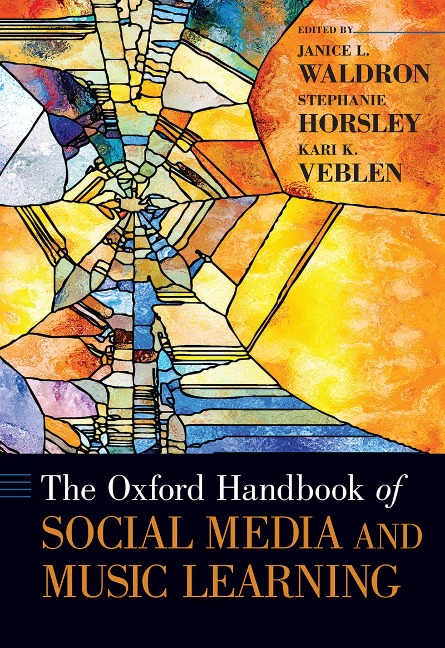
The rapid pace of technological change over the last decade, particularly the rise of social media, has deeply affected the ways in which we interact as individuals, in groups, and among institutions to the point that it is difficult to grasp what it would be like to lose access to this everyday aspect of modern life. The Oxford Handbook of Social Media and Music Learning investigates the ways in which social media is now firmly engrained in all aspects of music education, providing fascinating insights into the ways in which social media, musical participation, and musical learning are increasingly entwined. In five sections of newly commissioned chapters, a refreshing mix of junior and senior scholars tackle questions concerning the potential for formal and informal musical learning in a networked society. Beginning with an overview of community identity and the new musical self through social media, scholars explore intersections between digital, musical, and social constructs including the vernacular of born-digital performance, musical identity and projection, and the expanding definition of musical empowerment. The fifth section brings this handbook to full practical fruition, featuring firsthand accounts of digital musicians, students, and teachers in the field. The Oxford Handbook of Social Media and Music Learning opens up an international discussion of what it means to be a musical community member in an age of technologically mediated relationships that break down the limits of geographical, cultural, political, and economic place.
Janice L. Waldron is Associate Professor of music education at the University of Windsor, Windsor, Canada with research interests in informal music learning practices, online music communities, social media and music learning, vernacular musics, and participatory cultures. Published in Music Education Research, The International Journal of Music Education, Action, Criticism, and Theory in Music Education, The Journal of Music, Education, and Technology and The Philosophy of Music Education Review, Dr. Waldron also has authored several Oxford Handbook chapters in its Music Education series. She serves on the editorial boards of Action, Theory, and Criticism in Music Education, The International Journal of Music Education, The Journal of Music, Education, and Technology, and T.O.P.I.C.S. Stephanie Horsley is Acting Associate Director, eLearning at the Centre for Teaching and Learning at Western University, Canada, where she is also Adjunct Assistant Professor of music education in the Don Wright Faculty of Music. Her research interests include music education policy, democratizing access to sites of music education, and "fringe" musical learning spaces. Her latest publications include chapters in The Oxford Handbook of Social Justice and Music Education and Policy and the Political Life of the Music Educator. Her work has been presented at various international conferences. Kari K. Veblen is Professor Emerita of Music Education, Western University in Canada where she teaches cultural perspectives, music for children, and graduate research methods. Thus far her career spans four decades of work as: an elementary public school music teacher, community musician, faculty member at University of Wisconsin-Stevens Point, curriculum consultant to orchestras and schools, visiting scholar at University of Toronto, and research associate at University of Limerick. Veblen has served in numerous professional capacities, including the International Society for Music Education board, and as co-founder and now board member of the International Journal of Community Music. Author and co-author of five books and 90 peer-reviewed works, Veblen's research interests include community music networks, lifespan music learning, traditional transmission, vernacular genres, interdisciplinary curriculum, musical play, and social media and music learning.
Foreword Huib Schippers Introduction Why Should We Care About Social Media? Janice L. Waldron, Stephanie Horsley, & Kari K.Veblen Part I. Community Identity and Social Media 1. Social Media and Theoretical Approaches to Music Learning in Networked Communities Janice L. Waldron 2. Envisioning Pedagogical Possibilities of Social Media and Sonic Participatory Cultures Evan S. Tobias 3. Application of Affinity Space Characteristics in Music Education Jared O'Leary 4. Creating Multiple Sites of Engagement for Music Learning Jonathan Savage Reflections from the Field of New Media and Sociology: Networked Music Learning Somrita Ganchoudhuri & Barry Wellman 5. Diaspora, Transnational Networks, and Socially-Mediated Musical Belonging John O'Flynn Part II: Convergent Music Making and Social Media 6. 21st-Century Implications for Media Literacy and Music Education Daniel A. Walzer 7. Online Collaboration in Supporting Music Teaching and Learning Radio Cremata & Bryan Powell 8. Swedish Hip-Hop Youth Association "The Movement" Goes Online Alexandra Söderman & Johan Söderman 9. The Disquiet Junto as an Online Community of Practice Ethan Hein Reports From the Field: Genres of Classical Music 10. Building a New Social Contract for Community Engagement Through Music Virtual Hangouts Patrick Schmidt 11. The Multiple Affordances of Social Media for Classical Composers Heidi Partti Reports From the Field: Genres of Popular Music 12. Confessions of a Facebook Punk or How Not To Do Social Media Gareth Dylan Smith 13. Learning to Play the Guitar with the Novaxe Online Learning Platform Anne-Marie Burns & Caroline Traube Reports From the Field: Supportive Networks 14. Connect Resound as a Support for Music Making in Rural England Andrew King, Helen M. Prior, & Caroline Waddington-Jones 15. "Vini Ansanm" Come Together for Inclusive Community Music Development in Port Au Prince, Haiti Gertrude Bien-Aime Donald DeVito, Hannah Ehrli, & Jamie Schumacher Part III: Musical Identity and Social Media 16. Feminist Cyber-Artivism, Musicing, and Teaching and Learning Marissa Silverman 17. A Content Analysis of Creating and Curating a Musical Identity on Social Media Julie Derges Kastner 18. Cultivating Meaningful Personal Learning Networks in an Era of Multimodal and Globalized Music Learning and Education Deanna C. C. Peluso 19. Musical (Dis)Empowerment in the Digital Age? Ketil Thorgersen 20. Learning by Lip-Synching Patricia G. Lange 21. Fanception and Musical Fan Activity on YouTube Christopher Cayari Reflections from the Field of Communications and Anthropology: Learning to Dream and Dreaming to Learn Patricia G. Lange Part IV: Continuity and Change in Teaching and Learning Through Social Media 22. Social and Informational Affordances of Social Media in Music Learning and Teaching Anabel Quan-Haase 23. "Tradition," Vernacularism, and Learning to be a Folk Musician with Social Media Simon Keegan-Phipps & Lucy Wright 24. Ethnomusicology, Music Education, and the Power and Limitations of Social Media David G. Hebert & Sean Williams 25. New Materiality and Young People's Connectedness Across Online and Offline Life Spaces Susan O'Neill Reflections from the Field of Communications: Weird Materiality Jeremy Hunsinger 26. Learning from Japanese Vocaloid Hatsune Miku Matthew D. Thibeault & Koji Matsunobu 27. Children's Musical Play in a Digital Era Kari K. Veblen & Nathan B. Kruse Part V: Provocations and Social Media 28. Social Media, Social Justice, and Music Learning Joseph Abramo 29. Can the Disabled Musician Sing? Songs, Stories, and Identities of Disabled Persons In/Through/With Social Media adam patrick bell & Jesse Rathgeber 30. Nurturing Vulnerability to Develop Pedagogical Change Through MOOC Participation and Public Blogging James Humberstone, Catherine Zhao, & Danny Liu 31. The Good, The Bad, and The Ugly of Social Media in Music Education Vincent C. Bates & Daniel J. Shevock 32. Educating Musical Prosumers for the Economic Conditions of the 21st Century Lauri Väkavä 33. Creativity and Commerce in Social Media, Digital Technology and Music Education David Lines Afterword Janice L. Waldron, Stephanie Horsley, & Kari K. Veblen