Und dann auf "Zum Home-Bildschirm [+]".

Stöbern
genialokal zum Startbildschirm hinzufügen
Installieren Sie die genialokal App auf Ihrem Startbildschirm für einen schnellen Zugriff und eine komfortable Nutzung.
Installieren Sie die genialokal App auf Ihrem Startbildschirm für einen schnellen Zugriff und eine komfortable Nutzung.

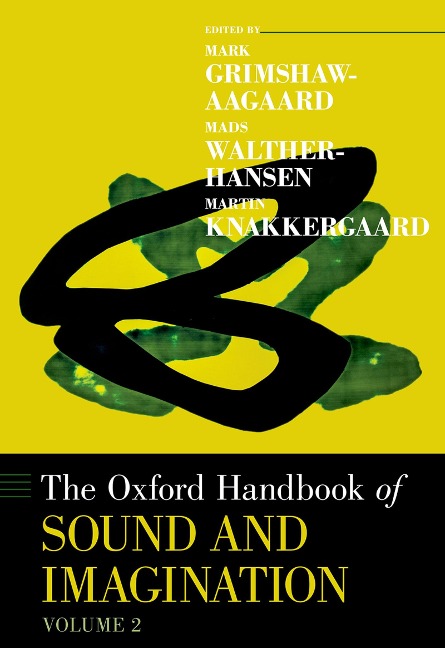
Whether social, cultural, or individual, the act of imagination always derives from a pre-existing context. For example, we can conjure an alien's scream from previously heard wildlife recordings or mentally rehearse a piece of music while waiting for a train. This process is no less true for the role of imagination in sonic events and artifacts. Many existing works on sonic imagination tend to discuss musical imagination through terms like compositional creativity or performance technique. In this two-volume Handbook, contributors shift the focus of imagination away from the visual by addressing the topic of sonic imagination and expanding the field beyond musical compositional creativity and performance technique into other aural arenas where the imagination holds similar power. Topics covered include auditory imagery and the neurology of sonic imagination; aural hallucination and illusion; use of metaphor in the recording studio; the projection of acoustic imagination in architectural design; and the design of sound artifacts for cinema and computer games.
Mark Grimshaw-Aagaard is Obel Professor of Music and head of the Music and Sound Knowledge Group (MaSK) at Aalborg University, Denmark. He has published widely across subjects as diverse as sound, biofeedback in computer games, presence, virtuality, the Uncanny Valley, and IT systems and also writes free, open source software for virtual research environments (WIKINDX). Mark is series editor for the Palgrave Macmillan series Studies in Sound, and his books include the anthologies Game Sound Technology & Player Interaction (2011) and The Oxford Handbook of Virtuality (OUP 2014) and, with co-author Tom Garner, a monograph entitled Sonic Virtuality (OUP 2015). Mads Walther-Hansen is Associate Professor and head of the Music Programme at Aalborg University, Denmark. He writes on music listening, music production, sound technology, and sound analysis, and he has published several articles, chapters, and conference papers on cognition and language in relation to music production which examine the conceptualization of sound and the effect of recording technology on the listening experience. Martin Knakkergaard is Senior Lecturer in the Music Programme at Aaborg University, Denmark. He is currently the leader of the Obel Music Project and was former head of the Music Programme at Aalborg University for more than 12 years. His research interests are primarily within the field of Music Technology. Martin has in recent years turned towards the study of musicological questions of a more fundamental nature. He is also the editor of the Danish Dictionary of Music, Gads Musikleksikon (2003 and 2005) and editor of the music periodical Col Legno (1993-1999), and the music journal Danish Musicology Online (2010-2015).
Contributor Affiliations Acknowledgments Introduction MARK GRIMSHAW-AAGAARD MADS WALTHER-HANSEN MARTIN KNAKKERGAARD PART I. MUSICAL PERFORMANCE Chapter 1. Improvisation: An Ideal Display of Embodied Imagination JUSTIN CHRISTENSEN Chapter 2. Anticipated Sonic Actions and Sounds in Performance CLEMENS WÖLLNER Chapter 3. Motor Imagery in Perception and Performance of Sound and Music JAN SCHACHER Chapter 4. Music and Emergence JOHN M. CARVALHO Chapter 5. Affordances in Real, Virtual, and Imaginary Musical Performance MARC DUBY PART II. SYSTEMS AND TECHNOLOGIES Chapter 6. Systemic Abstractions: The Imaginary Regime MARTIN KNAKKERGAARD Chapter 7. From Rays to Ra: Music, Physics, and the Mind JANNA K. SASLAW AND JAMES P. WALSH Chapter 8. Music Analysis and Data Compression DAVID MEREDITH Chapter 9. Bioacoustics: Imaging and Imagining the Animal World MICKEY VALLEE Chapter 10. Musical Notation as the Externalization of Imagined, Complex Sound HENRIK SINDING-LARSEN Chapter 11. ". . . they call us by our name . . .": Technology, Memory, and Metempsychosis BENNETT HOGG Chapter 12. Musical Shape Cognition ROLF INGE GODØY Chapter 13. Playing the Inner Ear: Performing the Imagination SIMON EMMERSON PART III. PSYCHOLOGY Chapter 14. Music in Detention and Interrogation: The Musical Ecology of Fear W. LUKE WINDSOR Chapter 15. Augmented Unreality: Synesthetic Artworks and Audio-Visual Hallucinations JONATHAN WEINEL Chapter 16. Consumer Sound SØREN BECH AND JON FRANCOMBE Chapter 17. Creating a Brand Image through Music: Understanding the Psychological Mechanisms Behind Audio Branding HAUKE EGERMANN Chapter 18. Sound and Emotion ERKIN ASUTAY AND DANIEL VÄSTFJÄLL Chapter 19. Voluntary Auditory Imagery and Music Pedagogy ANDREA R. HALPERN AND KATIE OVERY Chapter 20. A Different Way of Imagining Sound: Probing the Inner Auditory Worlds of Some Children on the Autism Spectrum ADAM OCKELFORD Chapter 21. Multi-Modal Imagery in the Receptive Music Therapy Model Guided Imagery and Music (GIM) LARS OLE BONDE Chapter 22. Empirical Musical Imagery Beyond the 'Mind's Ear' FREYA BAILES PART IV. AESTHETICS Chapter 23. Imaginative Listening to Music THEODORE GRACYK Chapter 24. A Hopeful Tone: A Waltonian Reconstruction of Bloch's Musical Aesthetics BRYAN PARKHURST Chapter 25. Sound as Environmental Presence: Towards an Aesthetics of Sonic Atmospheres ULRIK SCHMIDT Chapter 26. The Aesthetics of Improvisation ANDY HAMILTON PART V. POSTHUMANISM Chapter 27. Sonic Materialism: Hearing the Arche-Sonic SALOMÉ VOEGELIN Chapter 28. Imagining the Seamless Cyborg: Computer System Sounds as Embodying Technologies DANIËL PLOEGER Chapter 29. Glitched and Warped: Transformations of Rhythm in the Age of the Digital Audio Workstation ANNE DANIELSEN Chapter 30. On the Other Side of Time: Afrofuturism and the Sounds of the Future ERIK STEINSKOG Chapter 31. Posthumanist Voices in Literature and Opera JASON R. D'AOUST Index