Und dann auf "Zum Home-Bildschirm [+]".

Stöbern
genialokal zum Startbildschirm hinzufügen
Installieren Sie die genialokal App auf Ihrem Startbildschirm für einen schnellen Zugriff und eine komfortable Nutzung.
Installieren Sie die genialokal App auf Ihrem Startbildschirm für einen schnellen Zugriff und eine komfortable Nutzung.
Ihr gewünschter Artikel ist in 0 Buchhandlungen vorrätig - wählen Sie hier eine Buchhandlung in Ihrer Nähe aus:

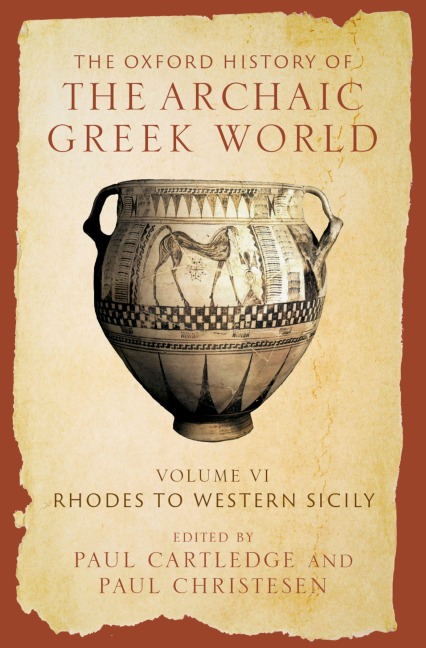
The ancient Greek world consisted of approximately 1,000 autonomous polities scattered across the Mediterranean basin, and each one developed its own, unique set of socio-political institutions and social practices. The Oxford History of the Archaic Greek World offers twenty-two detailed studies of key sites from across the Greek world between c. 750 and c. 480 BCE--a crucial period when much of what is now seen as distinctive about Greek culture emerged. All the studies in this seven-volume series use the same structure and methodology so that readers can easily compare a wide range of Greek communities. The series thus offers a new and unique resource for the study of ancient Greece that will transform how we study and think about a crucial era in ancient Greek history. Volume VI contains detailed and up-to-date studies of Rhodes, Sicyon, Syracuse, Thebes, and Western Sicily.
Paul Cartledge is A.G. Leventis Senior Research Fellow of Clare College, Cambridge and Inaugural A.G. Leventis Professor of Greek Culture emeritus in the Faculty of Classics at the University of Cambridge. His most recent books are Democracy: A Life and Thebes: The Forgotten City of Ancient Greece.
Paul Christesen is William R. Kenan Professor of Ancient Greek History at Dartmouth College. He is the author of three books, including most recently A New Reading of the Damonon Stele (2019).
- Series Editors' Preface
- Acknowledgements
- List of Contributors
- Note to the Reader
- Chapter 1: Rhodes
- Lone Wriedt Sørensen and Adam Schwartz
- with the assistance of Thomas Heine Nielsen
- List of Illustrations
- List of Abbreviations
- 1.1 Introduction
- 1.2 Sources
- 1.3 Natural Setting
- 1,4 Material Culture
- 1.5 Political History
- 1.6 Legal History
- 1.7 Diplomatic History
- 1.8 Economic History
- 1.9 Familial/Demographic History
- 1.10 Social Customs and Institutions
- 1.11 Religious Customs and Institutions
- 1.12 Cultural History
- 1.13 Conclusion
- Guide to Further Reading
- Gazetteer
- Bibliography
- Chapter 2: Sicyon
- Yiannis Lolos
- List of Illustrations
- List of Abbreviations
- 2.1 Introduction
- 2.2 Sources
- 2.3 Natural Setting
- 2,4 Material Culture
- 2.5 Political History
- 2.6 Legal History
- 2.7 Diplomatic History
- 2.8 Economic History
- 2.9 Demographic History
- 2.10 Social Customs and Institutions
- 2.11 Religious Customs and Institutions
- 2.12 Cultural History
- 2.13 Conclusion
- Guide to Further Reading
- Gazetteer
- Bibliography
- Chapter 3: Syracuse
- Franco De Angelis and Valentina Mignosa
- List of Illustrations
- List of Abbreviations
- 3.1 Introduction
- 3.2 Sources
- 3.3 Natural Setting
- 3,4 Material Culture
- 3.5 Political History
- 3.6 Legal History
- 3.7 Diplomatic History
- 3.8 Economic History
- 3.9 Demographic History
- 3.10 Social Customs and Institutions
- 3.11 Religious Customs and Institutions
- 3.12 Cultural History
- 3.13 General Conclusion
- Guide to Further Reading
- Gazetteer
- Bibliography
- Chapter 4: Thebes
- Hans Beck
- List of Illustrations
- List of Abbreviations
- 4.1 Introduction
- 4.2 Sources
- 4.3 Natural Setting
- 4,4 Material Culture
- 4.5 Political History
- 4.6 Legal History
- 4.7 Diplomatic History
- 4.8 Economic History
- 4.9 Familial and Demographic History
- 4.10 Social Customs and Institutions
- 4.11 Religious Customs and Institutions
- 4.12 Cultural History
- 4.13 Conclusion
- Guide to Further Reading
- Gazetteer
- Bibliography
- Chapter 5: Western Sicily
- Clemente Marconi and Andrew Farinholt Ward
- List of Illustrations
- List of Abbreviations
- 5.1 Introduction
- 5.2 Sources
- 5.3 Natural Setting
- 5,4 Material Culture
- 5.5 Political History
- 5.6 Legal History
- 5.7 Diplomatic History
- 5.8 Economic History
- 5.9 Familial and Demographic History
- 5.10 Social Customs and Institutions
- 5.11 Religious Customs and Institutions
- 5.12 Cultural History
- 5.13 Conclusion
- Guide to Further Reading
- Gazetteer
- Bibliography