Und dann auf "Zum Home-Bildschirm [+]".

Stöbern
genialokal zum Startbildschirm hinzufügen
Installieren Sie die genialokal App auf Ihrem Startbildschirm für einen schnellen Zugriff und eine komfortable Nutzung.
Installieren Sie die genialokal App auf Ihrem Startbildschirm für einen schnellen Zugriff und eine komfortable Nutzung.
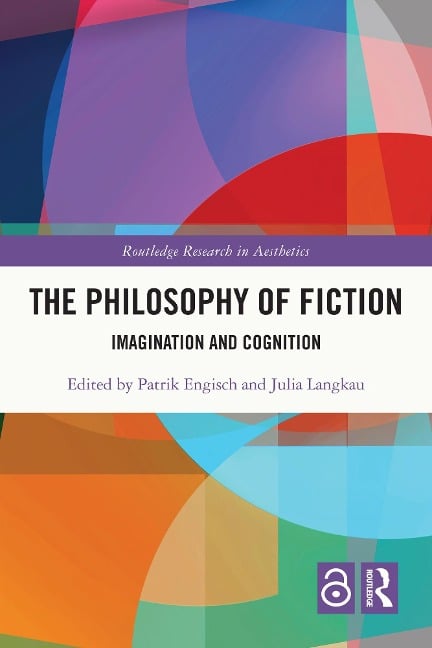
This book presents new research on the crucial role that imagination plays in contemporary philosophy of fiction. The first part of the book challenges the main paradigm set by Kendall Walton and Gregory Currie, according to which there is a necessary connection between fiction and a prescription that we engage imaginatively with its content. The contributors address the fundamental questions of how we can define fiction, and especially whether we can define fiction in terms of imagination. The second part focuses on a distinct but related question: can we point to some distinctive experiential features of our engagement with fiction? In the third part, the focus lies on the cognitive value of fiction and on the role that imagination plays in that respect. The chapters in this part discuss the cognitive value of fiction with respect to issues such as the training of the faculty of imagination, phenomenal experience, empathy, and the emotions. The Philosophy of Fiction will be of interest to scholars and advanced students working in aesthetics, philosophy of mind, epistemology, and literary studies. Chapter 13 of this book is available for free in PDF format as Open Access from the individual product page at www.routledge.com. It has been made available under a Creative Commons Attribution-Non Commercial-No Derivatives 4.0 license.
Patrik Engisch is SNF Post-Doctoral Researcher at the University of Geneva. He works in the philosophy of mind, aesthetics, and the philosophy of food. He is the co-editor of A Philosophy of Recipes: Making, Experiencing, and Valuing (Bloomsbury, 2022). Julia Langkau is Assistant Professor at the University of Geneva. Her main research areas are the philosophy of mind, epistemology, and aesthetics. She is working on a project titled Creativity, Imagination and Tradition, funded by the Swiss National Science Foundation (SNSF PRIMA grant).
Introduction Patrik Engisch and Julia Langkau I. Imagination and the Definition of Fiction 1 Projecting Fiction Richard Woodward 2 Fiction, Imagination, and Narrative Patrik Engisch 3 Fiction and the Actual World Derek Matravers 4 The Creative Side of Recreative Imagination Margherita Arcangeli II. Imagination and Engagement with Fiction 5 Fictional Narrators and Normative Fiction-Making Manuel García-Carpintero 6 The Experience of Fiction Eileen John 7 Literary Fiction and Imagination Magdalena Balcerak Jackson and Julia Langkau 8 The Gift of the Lyric Anna Ribeiro 9 Keeping it Simple: Fiction, Imagination, and the Emotions Fiora Salis III. Imagination and the Cognitive Role of Fiction 10 More than Make-Believe: On the Uses of Imagination in Experiencing Fictional Artworks María José Alcaraz León 11 Empathy, Sensibility, and the Novelist's Imagination Olivia Bailey 12 Conspiracy Theories as Walt-Fiction Anna Ichino 13 Fiction and the Cultivation of Imagination Amy Kind
Dieses eBook wird im PDF-Format geliefert und ist mit einem Adobe Kopierschutz (DRM) versehen. Sie können dieses eBook mit allen Geräten lesen, die das PDF-Format und den Adobe Kopierschutz (DRM) unterstützen.
Zum Beispiel mit den folgenden Geräten:
• tolino Reader
Laden Sie das eBook direkt über den Reader-Shop auf dem tolino herunter oder übertragen Sie das eBook auf Ihren tolino mit einer kostenlosen Software wie beispielsweise Adobe Digital Editions.
• Sony Reader & andere eBook Reader
Laden Sie das eBook direkt über den Reader-Shop herunter oder übertragen Sie das eBook mit der kostenlosen Software Sony READER FOR PC/Mac oder Adobe Digital Editions auf ein Standard-Lesegeräte mit epub- und Adobe DRM-Unterstützung.
• Tablets & Smartphones
Möchten Sie dieses eBook auf Ihrem Smartphone oder Tablet lesen, finden Sie hier unsere kostenlose Lese-App für iPhone/iPad und Android Smartphone/Tablets.
• PC & Mac
Lesen Sie das eBook direkt nach dem Herunterladen mit einer kostenlosen Lesesoftware, beispielsweise Adobe Digital Editions, Sony READER FOR PC/Mac oder direkt über Ihre eBook-Bibliothek in Ihrem Konto unter „Meine eBooks“ - „online lesen“.
Schalten Sie das eBook mit Ihrer persönlichen Adobe ID auf bis zu sechs Geräten gleichzeitig frei.
Bitte beachten Sie, dass die Kindle-Geräte das Format nicht unterstützen und dieses eBook somit nicht auf Kindle-Geräten lesbar ist.