Und dann auf "Zum Home-Bildschirm [+]".

Stöbern
genialokal zum Startbildschirm hinzufügen
Installieren Sie die genialokal App auf Ihrem Startbildschirm für einen schnellen Zugriff und eine komfortable Nutzung.
Installieren Sie die genialokal App auf Ihrem Startbildschirm für einen schnellen Zugriff und eine komfortable Nutzung.

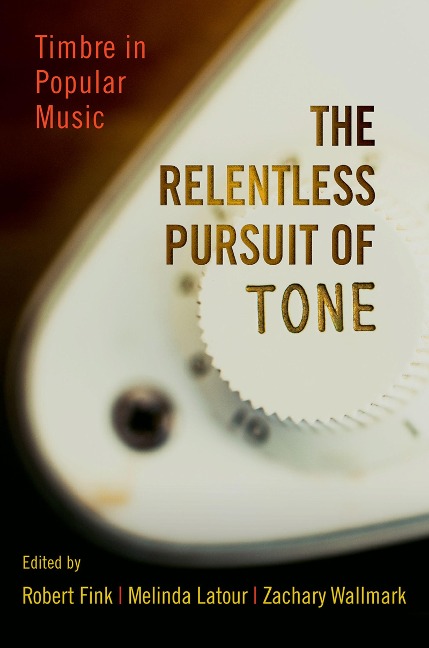
The Relentless Pursuit of Tone: Timbre in Popular Music assembles a broad spectrum of contemporary perspectives on how "sound" functions in an equally wide array of popular music. Ranging from the twang of country banjoes and the sheen of hip-hop strings to the crunch of amplified guitars and the thump of subwoofers on the dance floor, this volume bridges the gap between timbre, our name for the purely acoustic characteristics of sound waves, and tone, an emergent musical construct that straddles the borderline between the perceptual and the political. Essays engage with the entire history of popular music as recorded sound, from the 1930s to the present day, under four large categories. "Genre" asks how sonic signatures define musical identities and publics; "Voice" considers the most naturalized musical instrument, the human voice, as racial and gendered signifier, as property or likeness, and as raw material for algorithmic perfection through software; "Instrument" tells stories of the way some iconic pop music machines-guitars, strings, synthesizers-got (or lost) their distinctive sounds; "Production" then puts it all together, asking structural questions about what happens in a recording studio, what is produced (sonic cartoons? rockist authenticity? empty space?) and what it all might mean.
Robert Fink is Professor of Musicology at UCLA and a past President of IASPM-US. He focuses on music after 1965, with special interests in minimalism, popular music, and the intersection of cultural and music-analytical theory. He has published widely in musicological journals, and is the author of Repeating Ourselves (2005), a book-length study of the minimal music of Steve Reich, Philip Glass, and others as a cultural reflection of American consumer society in the mass-media age. Melinda Latour is Rumsey Family Assistant Professor of Musicology at Tufts University. She has received numerous awards, including the Mellon/ACLS Dissertation Completion Fellowship, and the Newberry Library École nationale des chartes Exchange Fellowship. Her work appears in the Journal of Musicology (2015), the Revue de musicologie (2016), and the Cambridge History of Sixteenth-Century Music (forthcoming). Zachary Wallmark is Assistant Professor of Musicology at SMU Meadows School of the Arts. His research explores the contribution of timbre to affective response, aesthetic judgment, and empathy in popular music and jazz, using methods from musicology and the cognitive sciences. He is currently at work on a monograph tentatively titled Nothing but Noise: Timbre and Musical Meaning at the Edge (Oxford). Wallmark is the recipient of an NEH Fellowship (2017-18).
Introduction Chasing the Dragon: In Search of Tone in Popular Music Robert Fink, Zachary Wallmark, and Melinda Latour
I. Genre Chapter 1 Hearing Timbre: Perceptual Learning Among Early Bay Area Ravers Cornelia Fales Chapter 2 The Twang Factor in Country Music Jocelyn R. Neal Chapter 3 The Sound of Evil: Timbre, Body, and Sacred Violence in Death Metal Zachary Wallmark Chapter 4 Below 100 Hz: Toward a Musicology of Subbass Robert Fink
II. Voice Chapter 5 Timbre and Legal Likeness: The Case of Tom Waits Mark C. Samples Chapter 6 "The Triumph of Jimmy Scott": A Voice Beyond Category Nina Sun Eidsheim Chapter 7 Auto-tune, Labor, and the Pop Music Voice Catherine Provenzano
III. Instrument Chapter 8 Hearing Luxe Pop: Jay Z, Isaac Hayes, and the Six Degrees of Symphonic Soul John Howland Chapter 9 Santana and the Metaphysics of Tone: Feedback Loops, Volume Knobs and the Quest for Transcendence Melinda Latour Chapter 10 Synthesizers as Social Protest in Early 1970s Funk Griffin Woodworth Chapter 11 Crossing the Electronic Divide: Guitars, Synthesizers, and the Shifting Sound Field of Fusion Steve Waksman
IV. Production Chapter 12 Clash of the Timbres: Recording Authenticity in the California Rock Scene, 1966-68 Jan Butler Chapter 13 The Death Rattle of a Laughing Hyena: The Sound of Musical Democracy Albin J. Zak III Chapter 14 The Sound of Nowhere: Reverb and the Construction of Sonic Space Paul Théberge Chapter 15 The Spectromorphology of Recorded Popular Music: The Shaping of Sonic Cartoons Through Record Production Simon Zagorski-Thomas Afterword Simon Frith