Und dann auf "Zum Home-Bildschirm [+]".

Stöbern
genialokal zum Startbildschirm hinzufügen
Installieren Sie die genialokal App auf Ihrem Startbildschirm für einen schnellen Zugriff und eine komfortable Nutzung.
Installieren Sie die genialokal App auf Ihrem Startbildschirm für einen schnellen Zugriff und eine komfortable Nutzung.
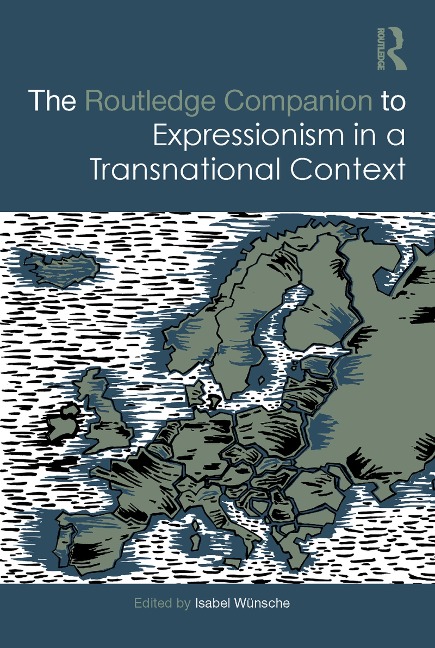
The Routledge Companion to Expressionism in a Transnational Context is a challenging exploration of the transnational formation, dissemination, and transformation of expressionism outside of the German-speaking world, in regions such as Central and Eastern Europe, the Baltics and Scandinavia, Western and Southern Europe, North and Latin America, and South Africa, in the first half of the twentieth century. Comprising a series of essays by an international group of scholars in the fields of art history and literary and cultural studies, the volume addresses the intellectual discussions and artistic developments arising in the context of the expressionist movement in the various art centers and cultural regions. The authors also examine the implications of expressionism in artistic practice and its influence on modern and contemporary cultural production. Essential for an in-depth understanding and discussion of expressionism, this volume opens up new perspectives on developments in the visual arts of this period and challenges the traditional narratives that have predominantly focused on artistic styles and national movements.
Isabel Wünsche is a professor of art and art history at Jacobs University Bremen. She specializes in European modernism, the avant-garde movements, and abstract art. Her book publications include Galka E. Scheyer & The Blue Four: Correspondence, 1924-1945 (Benteli, 2006), Biocentrism and Modernism (with Oliver A. I. Botar, Ashgate, 2011), Meanings of Abstract Art: Between Nature and Theory (with Paul Crowther, Routledge, 2012), The Organic School of the Russian Avant-Garde (Ashgate, 2015), Marianne Werefkin and the Women Artists in Her Circle (with Tanja Malycheva, Brill/Rodopi, 2016), and Practices of Abstract Art: Between Anarchism and Appropriation (with Wiebke Gronemeyer, Cambridge Scholars Publishing, 2016).
Expressionist Networks, Cultural Debates, and Artistic Practices: A Conceptual Introduction Isabel Wünsche Part I: Central and Eastern Europe and the Baltic States - Prague - Brno: Expressionism in Context Marie RakuSanová - KoSice Modernism and Anton Jaszusch's Expressionism Zsófia Kiss-Szemán - Expressionism in Hungary: From the Neukunstgruppe to Der Sturm András Zwickl - Poznan Expressionism and Its Connections with the German and International Avant-garde Lidia Gluchowska - Expressionist Networks in the Russian Empire, Soviet Russia, and the Soviet Union Isabel Wünsche - Expressionism in Lithuania: From German Artistic Import to National Art Giedre Jankeviciute and Laima Lauckaite - Expressionist Originality in Latvia: Between Confirmation and Destruction Ginta Gerharde-Upeniece - The Ambivalent Affair of Estonian Expressionism Tiina Abel Part II: Scandinavia - Expressionism in Denmark: Art and Discourse Torben Jelsbak - Expressionisms in Sweden: Anti-realism, Primitivism, and Politics in Painting and Print Margareta Wallin Wictorin - Nationalism, Transnationalism, and the Discourses on Expressionism in Finland: From the November Group to Ina Behrsen-Colliander Timo Huusko and Tutta Palin - Expressionism in Sámi Art: John Savio's Woodcuts of the 1920s and 1930s Tuija Hautala-Hirvioja - Early Expressionism in Icelandic Art: Jón Stefánsson, Jóhannes Kjarval, and Finnur Jónsson Margrét Elísabet Ólafsdóttir Part III: Western Europe - Early Engagements: Peripheral British Responses to German Expressionism Christian Weikop - Expressionism in the Netherlands Gert Imanse and Gregor Langfeld - Flemish Expressionism in Belgium Cathérine Verleysen - Jewish Expressionists in France, 1900-1940 Richard D. Sonn - German Expressionism in Italy: Herwarth Walden's Der Sturm, the Berlin Novembergruppe, and the Modernist Circles of Florence, Turin, and Rome Irene Chytraeus-Auerbach - Expressionism and the Spanish Avant-garde between Restoration and Renovation Wiebke Gronemeyer - Portuguese Expressionism, or German Expressionism in Portugal? Nina Blum de Almeida Part IV: Southeastern Europe - Expressionism in Slovenia: The Aspects of a Term Marko Jenko - From Anxiety to Rebellion: Expressionism in Croatian Art Petar Prelog - On New Art and its Manifestations: Rethinking Expressionism in Visual Arts in Belgrade Ana Bogdanovic - Tokens of Identity: Expressionisms in Romania around the First World War Erwin Kessler - Expressionism in Bulgaria: Critical Reflections in Art Magazines and the Graphic Arts Irina Genova Part V: Beyond Europe - Expressionism in Canada and the United States Oliver A.I. Botar and Herbert R. Hartel, Jr. - Expressionism in Latin America and Its Contribution to the Modernist Discourse Maria Frick - The Expressionist Roots of South African Modernism Lisa Hörstmann Selected Bibliography Index
Dieses eBook wird im PDF-Format geliefert und ist mit einem Adobe Kopierschutz (DRM) versehen. Sie können dieses eBook mit allen Geräten lesen, die das PDF-Format und den Adobe Kopierschutz (DRM) unterstützen.
Zum Beispiel mit den folgenden Geräten:
• tolino Reader
Laden Sie das eBook direkt über den Reader-Shop auf dem tolino herunter oder übertragen Sie das eBook auf Ihren tolino mit einer kostenlosen Software wie beispielsweise Adobe Digital Editions.
• Sony Reader & andere eBook Reader
Laden Sie das eBook direkt über den Reader-Shop herunter oder übertragen Sie das eBook mit der kostenlosen Software Sony READER FOR PC/Mac oder Adobe Digital Editions auf ein Standard-Lesegeräte mit epub- und Adobe DRM-Unterstützung.
• Tablets & Smartphones
Möchten Sie dieses eBook auf Ihrem Smartphone oder Tablet lesen, finden Sie hier unsere kostenlose Lese-App für iPhone/iPad und Android Smartphone/Tablets.
• PC & Mac
Lesen Sie das eBook direkt nach dem Herunterladen mit einer kostenlosen Lesesoftware, beispielsweise Adobe Digital Editions, Sony READER FOR PC/Mac oder direkt über Ihre eBook-Bibliothek in Ihrem Konto unter „Meine eBooks“ - „online lesen“.
Schalten Sie das eBook mit Ihrer persönlichen Adobe ID auf bis zu sechs Geräten gleichzeitig frei.
Bitte beachten Sie, dass die Kindle-Geräte das Format nicht unterstützen und dieses eBook somit nicht auf Kindle-Geräten lesbar ist.