Und dann auf "Zum Home-Bildschirm [+]".

Stöbern
genialokal zum Startbildschirm hinzufügen
Installieren Sie die genialokal App auf Ihrem Startbildschirm für einen schnellen Zugriff und eine komfortable Nutzung.
Installieren Sie die genialokal App auf Ihrem Startbildschirm für einen schnellen Zugriff und eine komfortable Nutzung.
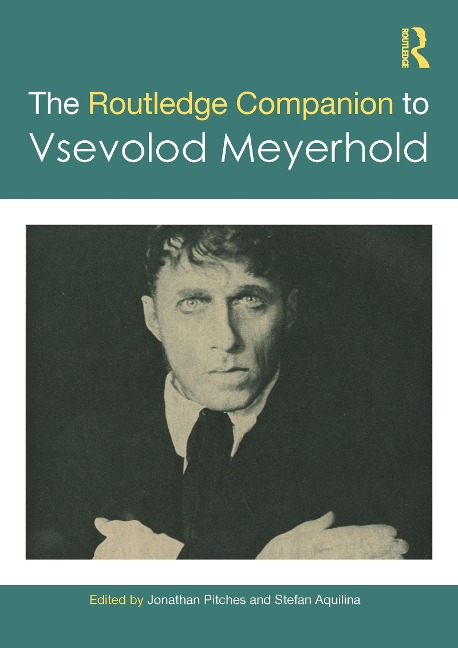
The Routledge Companion to Vsevolod Meyerhold brings together a wealth of scholarship on one of the foremost innovators in European theatre. It presents a detailed picture of the Russian director's work from when it first emerged on the modern stage to its multifarious present-day manifestations. By combining an historical focus with the latest contemporary research from an international range of perspectives and authors, this collection marks an important moment in Meyerhold studies as well as offering a new assessment of his relation to today's theatre-making. Its dynamic blend of research is presented in five sections: Histories enlarges on more conventional subjects like the grotesque and Biomechanics, to overlooked topics such as Meyerhold's 'failed' projects and his work in film; Collaborations and Connections extends understandings of Meyerhold's well-known collaborative capacities to consider new cultural influences and lesser known working relationships; Sources engages with hitherto untapped material in Meyerhold's oeuvre by reproducing and contextualising previously untranslated primary sources on his work; Practitioner Voices offer lively, on the ground, testimony of the contemporary impact of Meyerhold's practice; Meyerhold in New Contexts maps the routes of his practice across continents and examines ways in which his work is being applied in a number of contemporary scenarios, such as motion capture, computer-based 3D visualisations, and the 'new normal' of digital pedagogy. This is a key resource for students and scholars of European Theatre, acting theory, and actor training, as well as for those more broadly interested in the socio-political impact of theatre.
Jonathan Pitches is Professor of Theatre and Performance and Head of the School of Performance and Cultural Industries at the University of Leeds. He specialises in performer training, ecocriticism, and blended learning. He is founding co-editor of the journal of Theatre, Dance and Performance Training. Stefan Aquilina is a Senior Lecturer in Theatre Studies at the University of Malta and Co-Director of the Stanislavsky Research Centre. He has published extensively on modern theatre (especially Stanislavsky, Meyerhold, and amateur theatre), the transmission of embodied practice, and interdisciplinary performance.
Part I: Histories Part I: Histories Introduction Stefan Aquilina 1. Vsevolod Meyerhold and Cinema Anna Kovalova 2. Meyerhold, the Musician Nathan Thomas 3. Meyerhold in the 1930s: Language, Text, Performance Anna Muza 4. Meyerhold's Hamlet: An Unrealised Dream Michelle Assay 5. Looking at Meyerhold's Unseen Theatre Amy Skinner 6. Performing Communism, or, What if we Took Meyerhold's Politics Seriously? Teemu Paavolainen Part II: Collaborations and Connections Introduction Stefan Aquilina 7. Meyerhold and Stanislavsky: Forty Years of Cordial Disagreement Marie-Christine Autant-Mathieu 8. An Unknown Legacy: Uncovering Traces of Savva Mamontov's Work in Meyerhold's Conditional Theatre Donatella Gavrilovich 9. Meyerhold's Female Collaborators Stefan Aquilina 10. The Influence of Giovanni Grasso on Meyerhold's Works, Theories, and Biography Gabriele Sofia 11. Toward Conscious and Independent Action: Pyotr Lesgaft's System of Physical Education as Inspiration for Meyerhold's Biomechanics Malgorzata Jablonska 12. Meyerhold and Trotsky Robert Leach Part III: Sources Introduction Jonathan Pitches 13. The Commedia Dell'arte Origins of Biomechanics: Actor Training and Collective Creation at the Borodinskaia Street Studio Dassia N. Posner The Borodinskaia Street Studio: Documents on Actor Training and Collective Creation Translated and edited by Dassia N. Posner 14. Fragments of a Creative life: Introduction to Five New SourcesStefan Aquilina Letters to Anton Chekhov, 1899-1904 Comments by Doctor Dapertutto on 'The Denial of Theatre' by Yury Aikhenvald, 1914 Theatre Pamphlets I: On Dramaturgy and Theatre Culture, 1921 From Meyerhold's Speech at the Discussion 'Creative Methods at the Meyerhold Theatre', 25 December 1930 On the Spatial Composition of Performance, 2 April 1936 Part IV: Practitioner Voices Introduction Jonathan Pitches 15. A Theatre Company as a Meyerholdian Experiment in Grotesque Paul Stebbings and Phil Smith 16. The Evolution of Proper Job: Working with Meyerhold in the Contemporary British Theatre James Beale, Franc Chamberlain, and Chloe Whitehead 17. Biomechanical diasporas: Practitioner Perspectives on the Transmission of Meyerhold's TechniquesMarcelo Bulgarelli, Terence Mann (Chapman), Claudio Massimo Paternò, and Robert Reid 18. Transmission Impossible Ralph Räuker 19. Decoding the Riddle: Applying Meyerhold's Conception of the Director's Explication Bryan Brown and Olya Petrakova Part Vi: Meyerhold in New Contexts: Transnational Migrations Introduction Stefan Aquilina 20. Meyerhold's Influence on Twentieth-century Japanese Theatre Min Tian 21. Nesting dolls: Sketches in Search of Meyerhold in Australia Ian Maxwell and Chris Hay 22. An Unexpected Triangle: Politis, Meyerhold, and Karaghiozis in Interwar Greece Antonis Glytzouris 23. Biomechanical Resonances in Turkey: The Working Method of Studio Oyunculari Burç Idem Dinçel 24. Meyerhold's Influence on the Production Processes of PERFORMA TEATRO (Brazil) Arlete Cavaliere Interdisciplinarities Jonathan Pitches Part Vii: Meyerhold in New Contexts: Interdisciplinarities Introduction Jonathan Pitches 25. Meyerhold in the 21st Century: The Meeting Points of Biomechanics and Postdramatic Performance Diana Monteiro Toombs 26. The New Meyerhold Theatre: Visualising a Lost Architectural Experiment Rachel Hann 27. Theatrical Biomechanics and Movement Science Darren Tunstall 28. Biomechanics in Lockdown: Teaching Meyerhold in the age of COVID-19 Jonathan Pitches
Dieses eBook wird im PDF-Format geliefert und ist mit einem Adobe Kopierschutz (DRM) versehen. Sie können dieses eBook mit allen Geräten lesen, die das PDF-Format und den Adobe Kopierschutz (DRM) unterstützen.
Zum Beispiel mit den folgenden Geräten:
• tolino Reader
Laden Sie das eBook direkt über den Reader-Shop auf dem tolino herunter oder übertragen Sie das eBook auf Ihren tolino mit einer kostenlosen Software wie beispielsweise Adobe Digital Editions.
• Sony Reader & andere eBook Reader
Laden Sie das eBook direkt über den Reader-Shop herunter oder übertragen Sie das eBook mit der kostenlosen Software Sony READER FOR PC/Mac oder Adobe Digital Editions auf ein Standard-Lesegeräte mit epub- und Adobe DRM-Unterstützung.
• Tablets & Smartphones
Möchten Sie dieses eBook auf Ihrem Smartphone oder Tablet lesen, finden Sie hier unsere kostenlose Lese-App für iPhone/iPad und Android Smartphone/Tablets.
• PC & Mac
Lesen Sie das eBook direkt nach dem Herunterladen mit einer kostenlosen Lesesoftware, beispielsweise Adobe Digital Editions, Sony READER FOR PC/Mac oder direkt über Ihre eBook-Bibliothek in Ihrem Konto unter „Meine eBooks“ - „online lesen“.
Schalten Sie das eBook mit Ihrer persönlichen Adobe ID auf bis zu sechs Geräten gleichzeitig frei.
Bitte beachten Sie, dass die Kindle-Geräte das Format nicht unterstützen und dieses eBook somit nicht auf Kindle-Geräten lesbar ist.