Und dann auf "Zum Home-Bildschirm [+]".

Stöbern
genialokal zum Startbildschirm hinzufügen
Installieren Sie die genialokal App auf Ihrem Startbildschirm für einen schnellen Zugriff und eine komfortable Nutzung.
Installieren Sie die genialokal App auf Ihrem Startbildschirm für einen schnellen Zugriff und eine komfortable Nutzung.
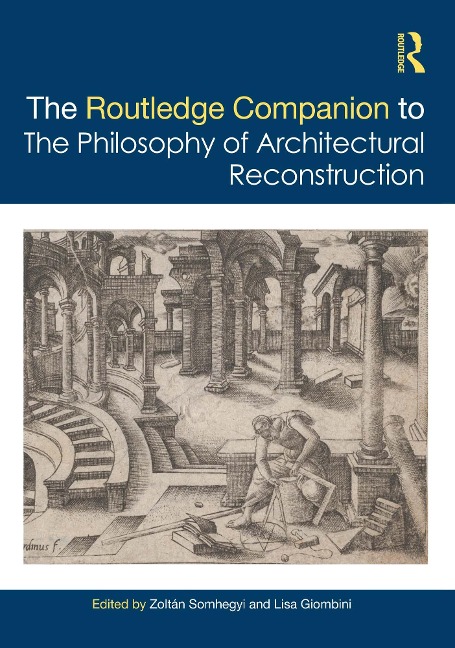
This companion investigates the philosophical and theoretical foundations determining the conditions of possibility and the limits that make the conservation, readaptation, and transformation of past buildings legitimate operations. As increasing ecological and economic challenges question opportunities for new construction, the process of restoring, transforming, and readapting buildings for new or continued use is becoming an essential part of architectural practice. At the same time, the role of building conservation is changing from mere material preservation to being part of a broader strategy for social regeneration, eco-awareness, and inclusive urban planning. Chapters of this volume explore the complex set of considerations that inform decisions to merely preserve, accurately restore or variously reuse a building. They also look at the broader philosophical concerns such as ethical and aesthetic values, combined with ideas of heritage, history, and collective identity. Case studies on reconstruction after war, gentrification, the restoration of ancient edifices, reconstruction following the effects of climate change, and the use of technology solutions among many others, make this a timely and urgent volume. Adopting a broad transcultural perspective with contributions from five continents, the volume combines theoretical approaches with more practical, case study-based investigations and will be of great interest to upper-level students and academics working in the fields of architecture, conservation, urban design, aesthetics, and heritage management.
Zoltán Somhegyi is an art historian, holding a Ph.D. in Aesthetics and a Habilitation (venia legendi) in Philosophy. Currently he is Associate Professor of Art History at the Károli Gáspár University of the Reformed Church in Hungary. Lisa Giombini is a Research Fellow in Aesthetics in the Department of Philosophy, Communication, and Performing Arts at Roma Tre University.
Rethinking, restoring, readapting: An introduction to the philosophy of architectural reconstruction PART I: Theoretical inquiries 1. Theory and practice in heritage decision-making 2. Lives and afterlives of architectural objects 3. Integrity in cultural heritage preservation: Unveiling the challenges 4. Preservation as a moral disposition: The values embedded within cultural heritage 5. Narrative meaning and the reconstruction of architectural heritage 6. Questioning heritage PART II: Applying theories 7. Regenerating heritage processes and practices in historical reconstruction 8. Narrative and the legitimacy of change to historic buildings 9. How to conserve a fake ruin? Heritage dilemmas between aesthetics and practice 10. Heritage, biophilic reconstruction, and climate change 11. The use of light installations in architectural reconstruction: New technological solutions for the public sphere 12. Reusing Roosevelt? Tainted monuments and the architectural reuse strategy PART III: Areas and districts 13. Aesthetics in a renovated city: Historical view of mundane Cityscape in Modern Japan 14. The transformation trap: Redeveloping the historic Chinese Baroque area in Harbin 15. The question of Al Seef in Dubai. A case of historicist architecture compared to the global principles of architectural heritage 16. The Swahili House - a heritage in the East African City 17. Post-war ruins: Relics of the past or unwanted "urban scars." Reconstruction of the dissonant heritage of the Recovered Territories in Poland 18. Architectural reconstruction reconsidered: Cases from the postwar reconstruction of Germany 19. Miami Art Deco architecture, climate change, and puzzles for historic preservation PART IV: Buildings 20. "This magnificent pile". The cathedral of Trondheim from ruin to heritage 21. The restoration of Chartres Cathedral: Theories and practices 22. "To build still more deliberately": Architectural reconstruction and the house that Thoreau built 23. When memory fades and resources run dry: Three cases of neglect and loss 24. Restoration and adaptive reuse of the Fisekhane (cartridge factory) in Istanbul - a case of sustainable rehabilitation in the context of a profit-seeking real estate development scheme 25. An imitation game: Restoration and intangible heritage at the Bletchley Park Huts, UK 26. Architectural conservation in Nairobi: The Don Bosco shrine
Dieses eBook wird im PDF-Format geliefert und ist mit einem Adobe Kopierschutz (DRM) versehen. Sie können dieses eBook mit allen Geräten lesen, die das PDF-Format und den Adobe Kopierschutz (DRM) unterstützen.
Zum Beispiel mit den folgenden Geräten:
• tolino Reader
Laden Sie das eBook direkt über den Reader-Shop auf dem tolino herunter oder übertragen Sie das eBook auf Ihren tolino mit einer kostenlosen Software wie beispielsweise Adobe Digital Editions.
• Sony Reader & andere eBook Reader
Laden Sie das eBook direkt über den Reader-Shop herunter oder übertragen Sie das eBook mit der kostenlosen Software Sony READER FOR PC/Mac oder Adobe Digital Editions auf ein Standard-Lesegeräte mit epub- und Adobe DRM-Unterstützung.
• Tablets & Smartphones
Möchten Sie dieses eBook auf Ihrem Smartphone oder Tablet lesen, finden Sie hier unsere kostenlose Lese-App für iPhone/iPad und Android Smartphone/Tablets.
• PC & Mac
Lesen Sie das eBook direkt nach dem Herunterladen mit einer kostenlosen Lesesoftware, beispielsweise Adobe Digital Editions, Sony READER FOR PC/Mac oder direkt über Ihre eBook-Bibliothek in Ihrem Konto unter „Meine eBooks“ - „online lesen“.
Schalten Sie das eBook mit Ihrer persönlichen Adobe ID auf bis zu sechs Geräten gleichzeitig frei.
Bitte beachten Sie, dass die Kindle-Geräte das Format nicht unterstützen und dieses eBook somit nicht auf Kindle-Geräten lesbar ist.